BIS Certification
 CDSCO
CDSCO
 PESO
PESO
 CPCB
CPCB
 LMPC
LMPC
 WPC Approval
 Global Approvals
 TEC
TEC
 ARAI
ARAI
 BEE
BEE
 ISO Certification
 DGCA Certification
 NOC For Steel
 APEDA Registration























 Business Registration
 FSSAI Mark Certification












 (32).jpg)
 Legal Services
 Trademark Registration
 Copyright Registration
 Patent Registration
 By
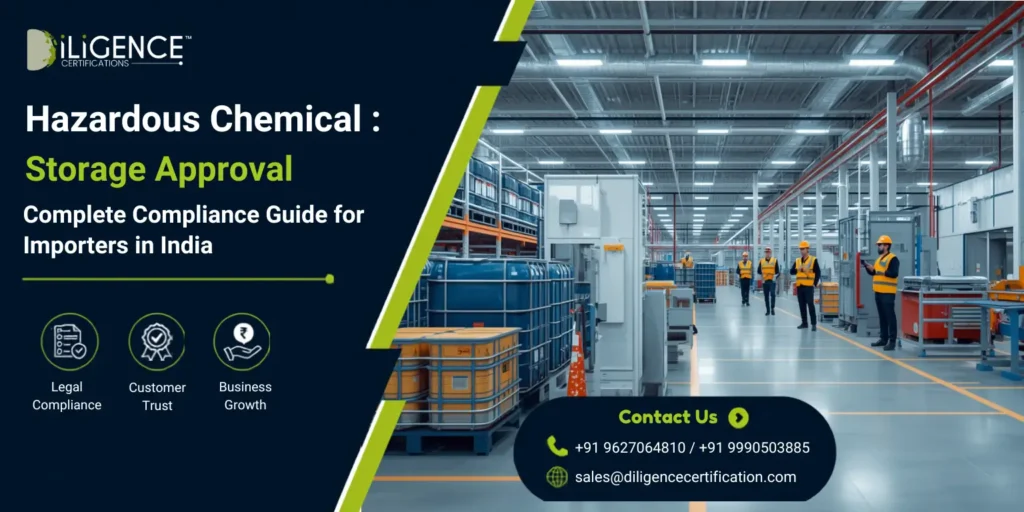
By - The Hazardous Chemical Storage Approval is essential for any company that wishes to store hazardous chemicals as per the safety regulations and procedures.
- It is advisable for any manufacturer, importer, distributor, warehouse owner or industrial user to seek Hazardous Chemical Storage Approval before undertaking any commercial storage operations.
- Diligence Certifications assists with all the process of Hazardous Chemical Storage Approval.
Introduction
A chemical trading firm from Gujarat has recently approached Diligence Certifications after entering into an agreement with its large manufacturing client. The company had already procured imports, rented a warehouse and made arrangements for transporting the dangerous chemicals. All seemed to be in place for business operations except when the client asked for proof of storage approval and compliance.
It became apparent that renting a warehouse was just one of the many steps required for the company. In order to store any chemicals, the warehouse needed to comply with all the regulatory standards and get the relevant Hazardous Chemical Storage Approval. As the process had not been started before, the delivery of products was delayed until the warehouse became compliant.
This scenario often repeats itself in the chemical industry. Many companies concentrate on procurement and logistics but ignore storage compliance till a customer, auditor, or the regulatory body asks for it. Getting Hazardous Chemical Storage Approval before starting the operations can help businesses avoid unnecessary delays and demonstrate their dedication to compliance.
What is Hazardous Chemical Storage Approval?
Hazardous Chemical Storage Approval is the necessary clearance required by organizations dealing with hazardous chemical storage in commercial amounts. It verifies the storage site’s compliance with the relevant safety standards for storing flammable, explosive, poisonous, corrosive, or any other harmful substance.
In India, depending upon the category of hazardous chemical stored and quantity thereof, organizations may require approvals from the Petroleum & Explosives Safety Organization (PESO) and/or any other competent regulatory bodies. PESO is one of the prominent bodies regulating the safe storage and handling of hazardous chemicals falling under its purview.
Before issuing the approval, the concerned body determines if the warehouse has all the necessary fire safety mechanisms, ventilation, chemical segregation, emergency exits, hazard signages, spill containment, and emergency management procedures. All such measures ensure minimizing chances of any accidents, protection of personnel working there or living nearby, and compliance with the legal regulations.
Therefore, in case of importers, manufacturers, distributors, and warehouse operators, Hazardous Chemical Storage Approval prior to storage is not only mandatory but an important step for safe operations, business continuity, and successful regulatory audits.
Why is Hazardous Chemical Storage Approval Important?
Hazardous chemicals are used across industries such as manufacturing, pharmaceuticals, petrochemicals, paints, agriculture, mining, and engineering. While these chemicals support industrial growth, improper storage can create serious safety and environmental risks.
Many hazardous substances are:
- Flammable
- Toxic
- Corrosive
- Oxidising
- Reactive
- Environmentally hazardous
Improper segregation, inadequate ventilation, or poor emergency planning can increase the likelihood of workplace incidents and regulatory action.
Obtaining Hazardous Chemical Storage Approval demonstrates that the business has implemented suitable safety measures to manage these risks responsibly.
Who Needs Hazardous Chemical Storage Approval?
The approval generally applies to organisations storing hazardous chemicals as part of their commercial or industrial operations.
Typical applicants include:
Chemical Importers
Businesses importing hazardous chemicals require compliant storage facilities before distributing products within India.
Chemical Manufacturers
Manufacturing units storing raw materials, intermediates, or finished hazardous chemicals should ensure compliance with applicable storage requirements.
Chemical Distributors
Wholesale suppliers maintaining chemical inventories should obtain the necessary approvals before commencing storage activities.
Warehouse Operators
Third-party logistics companies and warehouse operators storing hazardous chemicals on behalf of clients may require approval depending on the nature of the stored substances.
Industrial Users
Industries using hazardous chemicals in manufacturing or processing operations should evaluate their storage obligations under applicable regulations.
Industries Covered
Hazardous Chemical Storage Approval is commonly relevant to:
- Chemical manufacturing
- Petrochemical industries
- Pharmaceutical manufacturing
- Paint and coating industries
- Fertiliser manufacturers
- Industrial gas companies
- Mining operations
- Metal processing industries
- Engineering companies
- Hazardous goods logistics providers
- Warehousing and distribution centres
Common Compliance Mistakes Businesses Make
Many organisations invest heavily in inventory, warehouse rentals, and transportation but underestimate the importance of storage compliance. This often results in project delays that could have been avoided with proper planning.
Common mistakes include:
- Leasing warehouses without compliance assessment
- Ignoring chemical compatibility requirements
- Inadequate ventilation systems
- Poor fire protection arrangements
- Missing emergency response procedures
- Improper chemical segregation
- Incomplete technical documentation
- Delaying the approval process until chemicals arrive
- Insufficient employee safety training
Correcting these issues before submitting an application generally leads to a smoother approval process and reduces the likelihood of regulatory observations.
Eligibility Criteria for Hazardous Chemical Storage Approval
Obtaining Hazardous Chemical Storage Approval requires businesses to demonstrate that their storage facility, operational practices, and safety systems comply with the applicable regulatory requirements. Proper planning before applying can significantly reduce approval delays.
Registered Business Entity
The applicant should be a legally registered organisation, such as:
- Proprietorship
- Partnership Firm
- LLP
- Private Limited Company
- Public Limited Company
- Government Organisation
Suitable Storage Facility
The warehouse should be designed for hazardous chemical storage with:
- Adequate ventilation
- Moisture protection
- Safe access
- Fire safety systems
- Emergency exits
- Hazard signage
Safety Infrastructure
Businesses should implement appropriate safety measures, including emergency response plans, firefighting equipment, spill control systems, and employee safety procedures.
Trained Personnel
Employees handling hazardous chemicals should receive training on safe handling practices, emergency response, and the proper use of personal protective equipment (PPE).
Documents Required for Hazardous Chemical Storage Approval
Accurate documentation plays a critical role in obtaining approval. Depending on the project, applicants may generally require:
Business Documents
- Certificate of Incorporation or Registration
- PAN Card
- GST Registration
- Import Export Code (if applicable)
- Address proof
- Authorisation Letter
Warehouse Documents
- Ownership or Lease Agreement
- Site Layout Plan
- Warehouse Layout Drawing
- Storage Capacity Details
- Location Map
- Warehouse Photographs
Technical Documents
- Fire Safety Details
- Risk Assessment Report
- Emergency Response Plan
- Standard Operating Procedures (SOPs)
- Safety Training Records
- Hazard Management Plan
Step-by-Step Application Process for Hazardous Chemical Storage Approval
Obtaining Hazardous Chemical Storage Approval requires an evaluation and documentation process. Careful adherence to the steps ensures timely approval of the process.
Step 1: Approval Requirements Assessment
Assessment of the need for the hazardous chemical storage approval in view of the current regulation.
Step 2: Warehouse Evaluation
Evaluation of the warehouse for ventilation, fire safety measures, segregation of chemicals, emergency exits, moisture protection, and structural appropriateness of the warehouse.
Step 3: Preparation of Documents
Documentation of the business records, warehouse plans, safety documents, technical documents, and all other necessary declarations.
Step 4: Submission of Application
Submission of the completed application to the competent regulatory authority together with all supporting documents for the technical assessment.
Step 5: Technical Scrutiny
Scrutiny of the application by officials along with the design of warehouse, safety arrangements, and compliance documents.
Step 6: Site Visit
Visit the site to assess the safety systems, warehouse, and preparation for emergencies.
Step 7: Grant of Approval
Granting of Hazardous Chemical Storage Approval once the technical and safety compliances have been satisfied. Compliance with the safety standards should be maintained even after the approval.
Storage Safety Requirements
Businesses storing hazardous chemicals should maintain continuous compliance by following recognised safety practices.
Proper Chemical Segregation
Store incompatible chemicals separately to minimise the risk of dangerous reactions.
Adequate Ventilation
Ensure sufficient ventilation to reduce the accumulation of hazardous vapours or gases.
Fire Protection Systems
Install appropriate firefighting equipment, alarm systems, and emergency response arrangements.
Hazard Signage
Display clear warning signs, safety instructions, and emergency contact information throughout the storage area.
Restricted Access
Limit entry to authorised and trained personnel to reduce operational risks.
Emergency Preparedness
Maintain spill response kits, first-aid equipment, evacuation plans, and emergency procedures to respond effectively during incidents.
What Happens During the Inspection?
Regulatory inspections are conducted to verify whether the storage facility complies with applicable safety and operational requirements.
Inspectors generally assess:
| Inspection Area | Purpose |
| Warehouse structure | Verify facility suitability |
| Fire safety systems | Emergency preparedness |
| Ventilation | Safe air circulation |
| Chemical segregation | Prevent hazardous reactions |
| Hazard signage | Improve workplace awareness |
| Emergency exits | Safe evacuation |
| Housekeeping | Operational safety |
| Safety records | Compliance verification |
Common Reasons for Application Delay or Rejection
Many approval delays occur due to preventable compliance issues rather than applicant eligibility.
Common reasons include:
- Incomplete documentation
- Incorrect warehouse layout drawings
- Poor ventilation
- Inadequate fire protection
- Improper chemical segregation
- Missing emergency response plans
- Inaccurate storage details
- Delayed response to regulatory observations
- Non-compliant warehouse infrastructure
Benefits of Hazardous Chemical Storage Approval
While many companies see Hazardous Chemical Storage Approval as simply a regulatory requirement, it makes sense in terms of operational safety, regulation, and business reputation. Companies that receive approval prior to conducting storage are usually more ready for inspections and further operations.
Guarantees Regulatory Compliance
Hazardous Chemical Storage Approval assists companies in complying with appropriate regulations related to the storage of hazardous chemicals. This means there is a decreased chance of regulatory observations, enforcement actions, and disruptions in operations.
Increases Workplace Safety
The approved hazardous storage facility operates in accordance with appropriate safety requirements, such as proper ventilation, fire safety, segregation of chemicals, and emergency procedures.
Promotes Credibility with Customers
A great number of manufacturers, exporters, and industrial buyers tend to choose suppliers who have the necessary statutory approvals.
Helps With Growing the Business
Regulatory compliance builds up vendor credibility and allows businesses to join big commercial projects.
Prevents Operational Disruptions
Receiving approval prior to conducting storage prevents problems related to inspections, compliance actions, or corrections while performing operations.
Comparison: Approved vs Non-Compliant Storage
| Approved Storage | Non-Compliant Storage |
| Meets regulatory requirements | Higher compliance risk |
| Improved workplace safety | Greater operational hazards |
| Better customer confidence | Lower business credibility |
| Easier regulatory inspections | Increased inspection observations |
| Supports business continuity | Risk of operational disruptions |
Processing Time
The processing time for Hazardous Chemical Storage Approval depends on factors such as:
- Completeness of documentation
- Warehouse readiness
- Technical scrutiny
- Site inspection requirements
- Timely response to regulatory observations
Applications submitted with accurate documentation and compliant infrastructure generally move through the approval process more efficiently.
Factors Affecting Cost
The overall cost varies depending on the project and storage facility.
Common factors include:
- Storage capacity
- Warehouse size
- Safety infrastructure
- Technical documentation
- Compliance modifications
- Professional consultancy services
Validity and Renewal of Hazardous Chemical Storage Approval
Once the Hazardous Chemical Storage Approval is awarded, it is necessary for companies to comply with all applicable rules regarding safety and other requirements provided by the approval. Having received the approval does not mean that it is sufficient for the companies to keep working as before. It is vital to continue to comply with safety regulations to maintain safe storage operation and perform business activities without problems.Duration of the validity of the approval may depend on applicable rules, kinds of hazardous chemicals being stored, and the relevant body which awards the approval. Companies should check the validity duration and renew the approval before it expires to prevent any difficulties.Before the renewal of the approval, the competent authority may assess the compliance of the company with safety requirements related to storing the hazardous chemicals. The assessment may include checking warehouse facilities, fire equipment, ventilation, emergency measures, hazard warning signs, safety of employees, and other documents. Significant changes in storage facilities, storage capacity, or chemicals may be reported by companies to the authority.
Penalties for Non-Compliance
Failure to obtain the required approval may result in:
- Regulatory inspections
- Compliance notices
- Operational delays
- Suspension of storage activities
- Increased business risk
- Reputational damage
- Other actions under applicable regulations
Proactive compliance helps businesses avoid these issues and maintain safe operations.
Why Choose Diligence Certifications?
Obtaining Hazardous Chemical Storage Approval requires technical knowledge, accurate documentation, and careful coordination with regulatory authorities. Even minor documentation errors or warehouse deficiencies can delay approvals.
Diligence Certifications provides complete compliance support, including:
- Regulatory requirement assessment
- Documentation preparation
- Warehouse compliance review
- Application assistance
- Technical guidance
- Inspection readiness support
- Ongoing compliance consultation
Our experienced consultants work closely with businesses to simplify the approval process and help achieve regulatory compliance with minimal delays.
Conclusion
Hazardous Chemical Storage Approval is an important requirement for organizations storing hazardous chemicals in India. Apart from adhering to legal requirements, this service will ensure the safety of employees, safe operation, customer trust, and smooth business functioning. Organizations that seek hazardous chemical storage approval before starting storage operations will be well-equipped for compliance and business success.
For those who intend to set up a hazardous chemical storage facility or expand their existing business operations, Diligence Certifications can assist them in getting Hazardous Chemical Storage Approval through their compliance services.
Frequently Asked Questions
What is Hazardous Chemical Storage Approval?
It is a regulatory approval required for businesses storing hazardous chemicals in compliance with applicable safety requirements.
Who needs Hazardous Chemical Storage Approval?
Manufacturers, importers, distributors, warehouse operators, and industrial users storing hazardous chemicals may require this approval.
Which authority regulates Hazardous Chemical Storage Approval?
Depending on the chemical and storage activity, the applicable regulatory authority, including PESO where relevant, oversees the approval process.
What documents are required for Hazardous Chemical Storage Approval?
Typical documents include business registration records, warehouse drawings, fire safety details, risk assessment reports, and technical documents.
Why is Hazardous Chemical Storage Approval important?
It helps ensure legal compliance, workplace safety, operational continuity, and customer confidence.
Is a site inspection required before approval?
Yes, the competent authority may inspect the storage facility to verify compliance with applicable safety standards.
How long does the approval process take?
The timeline depends on documentation quality, technical scrutiny, and inspection requirements.
Can a leased warehouse be used for hazardous chemical storage?
Yes, provided the warehouse complies with the applicable safety and regulatory requirements.
9. What happens if hazardous chemicals are stored without approval?
Businesses may face inspections, compliance notices, operational restrictions, or other actions under applicable regulations.
How can Diligence Certifications help?
Diligence Certifications provides end-to-end support for documentation, compliance assessment, application submission, and inspection readiness.