BIS Certification
 CDSCO
CDSCO
 PESO
PESO
 CPCB
CPCB
 LMPC
LMPC
 WPC Approval
 Global Approvals
 TEC
TEC
 ARAI
ARAI
 BEE
BEE
 ISO Certification
 DGCA Certification
 NOC For Steel
 APEDA Registration























 Business Registration
 FSSAI Mark Certification












 (32).jpg)
 Legal Services
 Trademark Registration
 Copyright Registration
 Patent Registration
 By
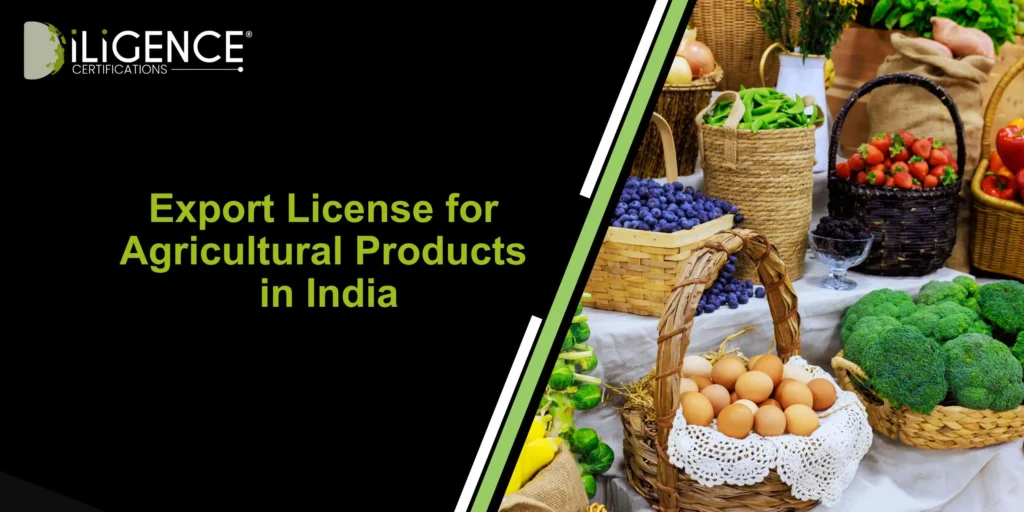
By - Export License for Agricultural products from India requires mandatory registration with APEDA in most cases.
- An Import Export Code (IEC) from DGFT is the first step for any exporter.
- Compliance depends on the type of product (fresh, processed, organic, etc.).
- Quality standards, packaging, and labeling play a critical role in export approval.
- Without proper guidance, documentation errors and compliance gaps often delay or reject applications.
Introduction | Export License for Agricultural products
India is one of the largest producers of agricultural products globally, including rice, spices, fruits, vegetables, and pulses. With increasing global demand, many Indian businesses are entering the export market. However, exporting agricultural goods is not just about supply it requires strict compliance with government regulations, quality standards, and licensing procedures.
Export License for Agricultural APEDA stands for the Agricultural and Processed Food Products Export Development Authority.you are a manufacturer, trader, or exporter, understanding the export lic ense process is essential. Missing even one requirement can delay shipments, cause penalties, or lead to rejection in international markets.
This guide explains everything in a simple and practical way what an export license is, why it is required, the process, benefits, and common challenges.
What is Export License for Agricultural products?
An Export License for Agricultural products is not a single document but a combination of mandatory registrations and approvals required to legally export goods from India.
Key Components of Export License for Agricultural products
- Import Export Code (IEC): Issued by DGFT, mandatory for all exporters
- APEDA Registration (RCMC): Required for most agricultural and processed food products
- FSSAI License: Needed for processed food exports
- Phytosanitary Certificate: Ensures plant products are pest-free
- Export Inspection Certification: Confirms product quality
Types of Agricultural Products Covered
- Fresh fruits and vegetables
- Cereals and grains
- Spices and herbs
- Processed food products
- Organic agricultural products
Why Export License for Agricultural products is Required?
Export License for Agricultural products ensures that Indian agricultural products meet international standards and are safe for consumption.
Key Reasons
1. Legal Compliance Without proper licensing, exporting goods is illegal and can result in penalties or shipment seizure.
2. Quality Assurance Authorities ensure that exported products meet global quality and safety standards.
3. International Market Access Many countries only accept products certified by recognized authorities.
4. Trade Regulation The government monitors exports to maintain balance in domestic supply and international trade.
5. Credibility and Trust Licensed exporters are more trusted by international buyers.
Important Benefits of Export License
| Benefit | Description |
| Legal Authorization | Allows you to export goods without legal issues |
| Global Market Access | Enables entry into international markets |
| Government Support | Access to export incentives and schemes |
| Business Growth | Expands customer base globally |
| Quality Recognition | Builds trust with foreign buyers |
| Financial Benefits | Eligibility for subsidies and tax benefits |
| Risk Reduction | Minimizes chances of rejection or penalties |
Process to Get Export License for Agricultural Products
Step 1: Obtain Import Export Code (IEC)
Apply through DGFT portal. This is mandatory for any export business.
Step 2: Register with APEDA
If your product falls under APEDA, apply for Registration-Cum-Membership Certificate (RCMC).
Step 3: Get FSSAI License (if applicable)
Required for processed or packaged food items.
Step 4: Product Testing and Certification
Get quality checks from authorized laboratories.
Step 5: Phytosanitary Certification
Issued by plant quarantine authorities for plant-based products.
Step 6: Export Documentation
Prepare documents like:
- Commercial invoice
- Packing list
- Bill of lading
- Certificate of origin
Step 7: Customs Clearance
File shipping bill and complete customs procedures.
Step 8: Shipment and Delivery
After approval, goods are shipped to the destination country.
Challenges of Getting This Certification Without a Consultant
Many businesses assume the process is simple, but in reality, it involves multiple authorities and compliance layers.
Common Problems
1. Incorrect Documentation Even small errors can lead to rejection or delays.
2. Lack of Regulatory Knowledge Different products require different certifications.
3. Time-Consuming Process Handling multiple approvals takes significant time.
4. Compliance Mistakes Failure to meet packaging or labeling standards can block exports.
5. Coordination Issues Managing DGFT, APEDA, FSSAI, and customs together is complex.
Why Choose Diligence Certification?
Choosing the right consultant directly affects approval speed, compliance accuracy, and long-term export success. Diligence Certification focuses on practical execution, not just documentation.
1. End-to-End Support From IEC to APEDA registration and final export compliance.
2. Documentation Accuracy Zero-error filing reduces rejection chances.
3. Faster Approvals Experienced handling speeds up the process.
4. Compliance Expertise Proper guidance based on your product category.
5. Ongoing Support Help with renewals, updates, and future exports.
Additional Important Considerations
Packaging and Labeling Requirements
- Must comply with importing country standards
- Include product details, origin, expiry date
- Use export-grade packaging to prevent damage
Country-Specific Regulations
Different countries have different import rules. For example:
- EU requires strict pesticide limits
- USA requires FDA compliance
Export Incentives
Exporters can benefit from:
- Duty drawback schemes
- RoDTEP scheme
- Subsidies under APEDA
Conclusion
Export License for Agricultural products from India offers significant business opportunities, but it requires strict compliance with licensing and regulatory requirements. From obtaining IEC to APEDA registration and quality certifications, each step plays a critical role in ensuring smooth export operations.
Businesses that try to manage everything without proper knowledge often face delays, rejections, and financial losses. A structured approach, combined with expert guidance, ensures faster approvals and long-term success in international markets.
If your goal is to build a sustainable export business, focus on compliance first-because in exports, one mistake can cost an entire shipment.
Frequently Asked Questions (FAQs)
Is IEC mandatory for agricultural exports?
Yes, Import Export Code is compulsory for all exporters in India.
What is APEDA registration?
It is a mandatory registration for exporters dealing in agricultural and processed food products.
How long does it take to get an export license?
It usually takes 7-15 days, depending on documentation and approvals.
Can I export without APEDA registration?
No, if your product falls under APEDA, registration is mandatory.
Is FSSAI required for agricultural exports?
Only for processed or packaged food products.
What is a phytosanitary certificate?
It certifies that plant products are free from pests and diseases.
What are the main documents required for export?
IEC, invoice, packing list, shipping bill, and certificate of origin.
Are there government benefits for exporters?
Yes, exporters can avail incentives like RoDTEP and duty drawback.
Can small businesses export agricultural products?
Yes, even MSMEs can export after completing required registrations.
What is the biggest mistake exporters make?
Incorrect documentation and lack of compliance knowledge.