BIS Certification
 CDSCO
CDSCO
 PESO
PESO
 CPCB
CPCB
 LMPC
LMPC
 WPC Approval
 Global Approvals
 TEC
TEC
 ARAI
ARAI
 BEE
BEE
 ISO Certification
 DGCA Certification
 NOC For Steel
 APEDA Registration























 Business Registration
 FSSAI Mark Certification












 (32).jpg)
 Legal Services
 Trademark Registration
 Copyright Registration
 Patent Registration
 By
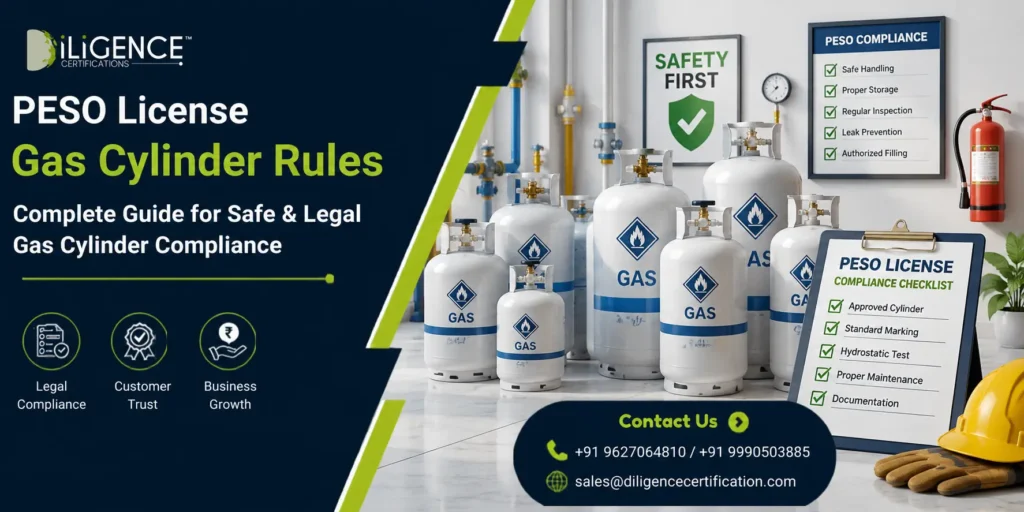
By - Gas Cylinder Rules in India make sure that the handling, storage, transport, charging, testing, and usage of gas cylinders is done according to safety standards and requirements laid down.
- Gas Cylinder Rules in India will assist businesses and manufacturers and others in maintaining safety and minimizing any risks of accidents.
- Get expert help for Gas Cylinder Rules in India with full support for compliance and other aspects.
Introduction
Gas cylinders have various uses within homes, industries, hospitals, and businesses for storage and transportation of compressed gases. Due to their high-pressure nature, incorrect handling, storage, or transportation may pose grave dangers. Therefore, the Indian government has formulated strict rules that govern all aspects relating to a gas cylinder from manufacturing to operation.
There are various Gas Cylinder Rules in India that guide the manufacturing, importation, filling, possession, transportation, testing, storage, and operation of gas cylinders. This rule has been put in place to ensure the safety of people and properties through adherence to technical and safety standards of gas cylinders.
The compliance to Gas Cylinder Rules in India is not only a mandatory procedure but also ensures safety and continuity in business operations.
What are Gas Cylinder Rules in India?
Gas Cylinder Rules in India are a set of safety laws made under the Explosives Act and implemented by Petroleum and Explosives Safety Organization (PESO). The safety rules specify safety aspects that have to be followed during manufacture, import, filling, storage, transportation, testing, possession, and use of compressed gas cylinders in India.
The rules lay down technical specifications, inspections, testing, safety measures, approvals, and operation requirements to be met by enterprises working with gas cylinders.
It is also necessary for manufacturers, importers, gas filling plants, testing agencies, transporters, distributors, and users to make sure that gas cylinders are safe during storage, transportation, and use.
Adherence to Gas Cylinder Rules in India ensures compliance with laws and safety of compressed gases.
Who Needs to Comply with Gas Cylinder Rules in India?
Businesses that handle manufacturing, storage, transportation, filling, testing, distribution, and utilization of compressed gas cylinders in India are required to conform to Gas Cylinder Rules in India, depending on the type of gas, nature of business, storage capacity, infrastructure, etc.
Some of the common businesses that are required to conform include:
- LPG Bottling Plants
- Industrial Gas Manufacturers
- Medical Gas Providers
- Gas Cylinder Filling Plants
- Gas Cylinder Testing Plants
- Gas Cylinder Manufacturing Plants
- Gas Cylinder Repair Plants
- Manufacturing Industries that Use Gas Cylinders
- Chemical Manufacturing Industries
- Petroleum Storage Plants
- Oxygen Cylinder Providers
- Nitrogen Gas Providers
- Hydrogen Gas Handling Plants
- LPG Providers
- CNG Cascade Providers
- Cryogenic Gas Storage Plants
- Fire Safety Equipment Providers
- Welding Gas Providers
- Hospitals that use Medical Gas Cylinders
- Laboratories that Use Compressed Gases
Whether establishing a new gas cylinder plant or expanding an existing one, conformity to Gas Cylinder Rules in India becomes very important.
Types of Gas Cylinder Compliance Under Gas Cylinder Rules in India
Compliance rules for Gas Cylinder Regulations in India may change according to the type of business operation, gas used, mode of storage, and safety regulations. Choosing the right compliance class ensures that businesses can conduct their activities in accordance with the law.
Gas Cylinder Manufacturing Compliance
This is applicable to organizations that manufacture gas cylinders meant to hold compressed gases. The manufacturers are supposed to conform to the design specifications, standards of quality, tests and safety requirements of these cylinders before they enter the market.
Applicable To:
- Manufacturers of Gas Cylinders
- Industrial Cylinder Manufacturing Organizations
- LPG Cylinder Manufacturing Organizations
- Manufacturers of High Pressure Cylinders
- Manufacturers of Composite Cylinders
Gas Cylinder Filling Plant Compliance
Companies involved in the process of cylinder gas filling have to follow the safety operating guidelines, safety filling practices, trained staff, safety devices, and inspection criteria laid down in the Gas Cylinder Rules in India.
Application:
- LPG Gas Filling Plants
- Industrial Gas Filling Stations
- Medical Oxygen Gas Filling Plants
- CNG Cylinder Gas Filling Plants
- Gas Refilling Plants
Gas Cylinder Storage & Handling Compliance
Facilities for the storage and handling of compressed gas cylinders must adhere to specified safety distances, fire protection methods, ventilation systems, emergency procedures, and proper storage techniques to minimize risks.
This applies to:
- LPG Storage Facilities
- Industrial Warehouses
- Medical Gas Storage Facilities
- Chemical Industries
- Bulk Gas Storage Facilities
Importance & Benefits of Gas Cylinder Rules in India
| Importance | Benefits |
| Ensures compliance with applicable safety regulations governing the storage, handling, transportation, filling, testing, and use of gas cylinders. | Helps build trust among regulatory authorities, customers, suppliers, and business partners through proper regulatory compliance. |
| Provides legal authorization to carry out gas cylinder-related operations in accordance with prescribed technical and safety standards. | Enhances the credibility and professional reputation of the organization within the gas and petroleum industry. |
| Promotes the safe handling, storage, transportation, inspection, and use of gas cylinders to minimize operational risks. | Supports uninterrupted business operations by reducing compliance-related issues and regulatory interruptions. |
| Helps maintain approved safety equipment, emergency response systems, operational procedures, and quality standards. | Reduces the risk of penalties, legal complications, or operational restrictions arising from non-compliance. |
| Protects workers, customers, storage facilities, surrounding property, and the environment from potential gas-related hazards. | Simplifies future approvals, licence renewals, facility upgrades, and expansion of business operations. |
| Ensures that storage facilities, filling systems, transportation arrangements, testing procedures, and associated infrastructure comply with approved safety standards. | Demonstrates the organization’s commitment to safety, legal compliance, and responsible gas cylinder management practices. |
Documents Required for Compliance with Gas Cylinder Rules in India
The documents that are required for adherence to the rules for gas cylinders in India depend upon the kind of business activities conducted, the type of gas used, storage capacity, facilities used, and regulatory compliance. In general, the following documents
can be required:
- Identity proof of the applicant (Aadhaar Card, PAN Card, Passport, etc.)
- Passport size photo of the applicant
- Address proof of the applicant and business premises
- Documents relating to registration of the business (Proprietorship, Partnership, LLP, or Company)
- Certificate of Incorporation where ever necessary
- Proof of property ownership, lease deed, or rent agreement of premises
- Plan of the site and drawing of layout
- Details regarding gas storage tanks, cylinders, and equipment
- Technical details about the gas cylinders and storage systems
- Details of safety equipment & fire protection system
- Fire Safety Clearance from the competent authority
- Electrical Safety Certificate, if any
- Factory Licence, if any
- Details of technically qualified manpower
- Standard Operating Procedure (SOP)
- Emergency Response & Disaster Management Plan
- Risk Assessment Report, if any
- Calibration certificate of test/measuring instruments
- Quality control & maintenance procedures
- Environmental Clearance/NOC, if any
Statement about compliance of Gas Cylinders Rules and Petroleum Act/Regulations, if any
Other documents may be required as per the nature of business.
Step-by-Step Compliance Process Under Gas Cylinder Rules in India
Gas Cylinder Compliance in India becomes an easy task for companies that have proper documentation, technical facilities, and safety measures in place. This is possible through the application of a step-by-step procedure.
Step 1: Identification of Applicable Requirements
Step 1 entails determination of the particular compliance standards that are required, depending on the nature of the gas, the nature of the business, storage capacity, filling process, transportation, testing facilities, among others.
Step 2: Preparation of Required Documents
Ensure that all business-related documents, technical drawings, safety plans, equipment specifications, operational procedures, and other required documents are ready before beginning the approval or licensing process.
Step 3: Application for Approval
Apply for the approval along with the documents as required according to the Gas Cylinder Rules applicable.
Step 4: Document Verification
The concerned authority verifies the application and documents provided. The clarification or further document or any kind of information as required by the authority has to be provided by the applicant in due time.
Step 5: Technical Inspection of the Facility
Technical inspection may be performed in order to determine whether the storage facilities, gas handling equipment, filling equipment, fire safety equipment, testing facilities, emergency preparedness, operating procedures, and compliance with the safety standards are being met.
Step 6: Granting of Approval, Licence or Permission by the Competent Authority
Once the document verification and technical inspection are successful, then the required approval, license, or permission shall be granted by the competent authority under the Gas Cylinder Rules.
Step 7: Compliant Operation
The business has to continue to be in compliance with all safety standards after getting the approval.
Timeline, Cost & Validity of Compliance with Gas Cylinder Rules in India
The timeline, cost, and validity related to compliance under Gas Cylinder Rules in India depend on various factors, including the type of gas cylinder operations, applicable approvals or licences, document verification, technical inspection, storage capacity, and compliance with prescribed safety regulations.
| Timeline | Cost | Validity |
| The approval timeline depends on document verification, technical evaluation, and inspection of the facility. | The cost depends on the type of approval, licence, or compliance applicable to the business operations. | The validity depends on the applicable Gas Cylinder Rules, licence conditions, and regulatory requirements. |
| Technical inspection and safety assessment may influence the overall processing period. | Government application fees and professional consultancy charges may apply. | Renewal is required within the prescribed period to continue legal operations. |
| Complete and accurate documentation helps avoid unnecessary delays during the approval process. | Additional expenses may vary depending on inspections, technical requirements, and compliance obligations. | Businesses must continue complying with prescribed safety and operational standards throughout the validity period. |
| Processing time may vary depending on the complexity and operational scale of the facility. | Proper planning and documentation help manage the overall compliance cost efficiently. | Maintaining updated records and continuous compliance supports a smooth renewal process. |
Why are Gas Cylinder Rules in India Important?
The significance of Gas Cylinder Rules in India is to guarantee that gas cylinders are handled safely from the time of manufacture, filling, storage, transport, testing to usage during its operational period. This is because gas cylinders hold compressed gas, which may be highly flammable or toxic. Even a minor negligence in safety could lead to accidents, destruction, pollution, and even death.
Why Gas Cylinder Rules in India are highly necessary:
- Secure the proper storing, transporting, handling, filling, and utilization of gas cylinders.
- Aid companies to conform to their respective petroleum safety regulations and requirements.
- Minimize the likelihood of any gas leakage, fires, explosions, equipment breakdowns, and accidents.
- Gain confidence from the regulators, customers, suppliers, and other business partners.
- Enhance the safety and efficiency of gas cylinders operations.
Consequences of Non-Compliance with Gas Cylinder Rules in India
Failure to adhere to the Gas Cylinder Rules in India poses significant risks to businesses from both a legal and financial standpoint. Given the need for careful handling and control in the use of compressed gases, non-compliance with these regulations may lead to accidents, regulatory intervention, and disruption of business operations.
Some of the possible outcomes of non-compliance include:
- Intervention by the relevant regulatory body.
- Suspend or revoke relevant approvals and licenses.
- Violation of relevant petroleum safety laws.
- Increased chances of gas leakage, fires, explosions, and accidents in the place of work.
- Difficulties in getting future approvals or operating permits.
- Damage to business reputation.
- Financial loss due to regulatory and legal costs, among others.
Adherence to the Gas Cylinder Rules in India ensures that businesses do not face these risks.
Renewal of Compliance Under Gas Cylinder Rules in India
Businesses operating under Gas Cylinder Rules in India must renew their applicable licences or approvals within the prescribed validity period to continue operating legally. During the renewal process, the competent authority may evaluate whether the business continues to comply with all prescribed safety and technical requirements.
The authority may review several aspects, including:
- Existing approval or licence details.
- Compliance with applicable Gas Cylinder Rules and petroleum safety standards.
- Condition and maintenance of gas cylinders, storage systems, and associated equipment.
- Inspection, testing, and maintenance records.
- Fire protection systems and emergency preparedness.
- Operational safety procedures and quality control measures.
- Modifications, expansions, or changes made to the facility.
- Records demonstrating continued compliance with applicable regulations.
Maintaining proper documentation and regular safety inspections significantly simplifies the renewal process.
How Professional Assistance Helps in Complying with Gas Cylinder Rules in India?
Gas Cylinder Compliance Regulations in India consist of technical documentation, approvals from the concerned authorities, safety planning, inspection, and constant adherence to relevant standards. Professional consultancy aids companies to meet compliance requirements effectively by avoiding delays and compliance problems.
Professional consultancy normally consists of:
- Advice on relevant compliance requirements depending upon the company’s activities.
- Technical preparation of necessary documentation.
- Aid in making technical drawings and other safety related documentation.
- Filing of applications to the concerned authority.
- Co-ordination during the process of documentation verification and technical inspection.
- Aid in licence renewal and amendment.
- Constant advice for compliance to changing requirements.
Professional consultancy enables companies to concentrate on its primary activities by complying with all compliance requirements effectively.
Why Choose Diligence Certifications for Compliance with Gas Cylinder Rules in India?
Compliance with Gas Cylinder Rules in India involves the need for a detailed understanding of petroleum safety rules, technical guidelines, documentation, inspections, and other approvals. Diligence Certifications facilitates business organizations in achieving compliance without any hindrance and also helps them comply with all legal requirements.
Advantages of professional consultancy services are as follows:
- Fewer chances of any error and delay in documentation process.
- Full assistance in preparing and filing the required documentation.
- Better compliance with the relevant Gas Cylinder Rules and petroleum safety guidelines.
- Professional coordination with the relevant authority during compliance process.
- Professional assistance in license renewal and amendment process.
- Regular professional guidance for compliance.
Professional consultancy helps business organizations to concentrate on their primary activities while the experts take care of the entire compliance process.
Conclusion
Gas Cylinder Rules in India have a crucial part to play in the safe production, storage, transportation, filling, testing, handling, and usage of compressed gas cylinders in different sectors. Given the fact that the gas cylinders have gases at high pressures, it becomes important to adhere to certain safety standards.
Observance of the Gas Cylinder Rules in India ensures that a company can function legally, safely, efficiently, and in compliance with the set regulations. The rules make sure that the organization carries out proper inspection, maintenance, testing, and preparation for emergencies, thus minimizing chances of accidents or interruptions in its operations.
It becomes easy to follow this compliance procedure with professional assistance through documentation, approvals, inspections, renewals, and compliance management. Organizations will be able to observe the Gas Cylinder Rules in India without any problems.
Frequently Asked Questions