BIS Certification
 CDSCO
CDSCO
 PESO
PESO
 CPCB
CPCB
 LMPC
LMPC
 WPC Approval
 Global Approvals
 TEC
TEC
 ARAI
ARAI
 BEE
BEE
 ISO Certification
 DGCA Certification
 NOC For Steel
 APEDA Registration























 Business Registration
 FSSAI Mark Certification












 (32).jpg)
 Legal Services
 Trademark Registration
 Copyright Registration
 Patent Registration

 By
By - Bis on machinery import is now mandatory under the revamped 2025 BIS Scheme X for ensuring safety and quality.
- Indian importers must secure BIS certification before shipment; post-arrival testing isn’t sufficient.
- The Bureau of Indian Standards has introduced new Quality Control Orders affecting machinery and electrical safety.
- The process includes application via BIS portal, factory inspection, sample testing, and grant of ISI licence.
- BIS certification ensures compliance with Machinery and Electrical Safety Rules under the Legal Metrology Act.
- Many Indian clients avoid border detentions and penalties by proactively obtaining BIS on machinery import.
- For seamless supply chains, understanding BIS Scheme X, import license for machinery, and QC Orders is critical.
Introduction
Mr. Mehta, a Pune‑based food‑processing equipment importer, faced repeated customs detentions in early 2025. He’d shipped a flour‑milling machine from Germany, but without BIS on machinery import clearance under the new Scheme X, customs stopped delivery, and demurrage charges piled up. He turned to us, and within weeks, secured (BIS ) Bureau of Indian Standards certification and avoided further losses.
If you’re importing machinery today-or planning to-understanding the 2025 BIS framework is not optional. With new Quality Control Orders tightening rules on Machinery and Electrical Safety, delays and penalties are real risks. This guide helps you navigate: bis certification for machinery import, import license for machinery, Bureau of Indian Standards compliance, and the new machinery‑safety Quality Control Orders.
What Is BIS on Machinery Import under Scheme X?
“BIS on machinery import” refers to mandatory certification issued under BIS Scheme X (2025), which applies to all mechanical and electrical machinery categories. Under this rule:
- Import license for machinery is tied to BIS certification.
- Factory audits and sample testing are pre‑shipment-post‑arrival checks no longer suffice.
- This ensures Machinery and Electrical Safety before goods enter India.
Before you ship, get BIS certification-importing machinery without it invites customs detention, fines, and delays.
What is BIS Certification?

Quality assurance mark from the Bureau of Indian Standards (BIS) is called BIS certification, the national standards body of India, indicating a product meets Indian standards for safety and quality and a level of consistent performance. Simply, BIS certification is an assurance that specific products have been quality tested and approved by the laboratories authorized by the Bureau to carry out the testing and the product has met the applicable Indian Standard (IS) specifications.
BIS certification is either voluntary or mandatory under Quality Control Orders (QCOs) for specified products like steel, electronics, cement and specified machinery. Certified products are certified as ISI - Indian Standards Institute, which is certified by BIS. BIS certification aims to: protect health and safety for consumers, curtail the trade of substandard products, and ensure fair trade practices.
What is Scheme X Certification ?
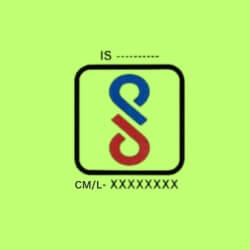
Scheme X Certification is a simplified option with BIS for BIS certification for imported machinery. It demonstrates compliance with Indian Machinery and Electrical Safety in accordance with the mandated Quality Control Orders (QCOs). Scheme X is a necessary certification for an import license for machinery, and it ensures that all imported equipment meets specified safety and quality requirements before it enters the Indian marketplace.
Why Bureau of Indian Standards (BIS) Matters
You may wonder: “Can’t I get compliant after import?” Not anymore. BIS Scheme X has strengthened the Bureau of Indian Standards’ authority:
- Now under the new Quality Control Orders for Electrical Equipment (2025), riskier categories-motors, pumps, conveyors-must be certified before shipping.
- Factories abroad are audited as per BIS protocols.
- Sample testing at labs (NABL‑accredited) is compulsory.
A Mumbai-based auto parts importer got a surprise audit on its Hungarian factory. While they passed, they gained trust with Indian customs and eased future imports.
Machinery and Electrical Safety: 2025 Updates
India’s new QC Orders introduced stricter safety rules on mechanical failures and electrical hazards:
- Appliances must pass earth‑leakage tests.
- Blades, belts, gears must have protective shielding.
- Rotating parts need guards and labelling in EN/ISO and Indian Standards.
It’s like owning a car that must have airbags, ABS, seatbelts-you can’t legally drive without them. For machinery, you can’t import without engineered safety.
Quality Control Orders & Post‑Import Surveillance
The 2025 Quality Control Orders empower BIS :
- Post‑Market Surveillance: Random factory checks and imported sample testing.
- Action Under BIS Act: Violations may lead to penalties up to ₹1 lakh per instance.
- Re‑Testing: Non‑compliant batches can be recalled and destroyed.
A Ludhiana textile‑machine importer passed pre‑shipment tests but got flagged during a post‑import audit. Thanks to (BIS) Bureau of Indian Standards, only one batch was recalled-not the whole consignment.
2025 Scheme X vs Previous Rules
Previously, BIS compliance was often post‑shipment. The 2025 Scheme X reversed this-pre‑shipment is now binding. Importers used to rely on customs testing, but that loophole is closed, and BIS is embedded into every stage.
BIS Scheme X Certification Fees
- Below is the structured breakdown of BIS Scheme X Certification Fees (without amounts):
- Renewal Fee: Paid at the time of renewing the BIS Scheme X license.
- Application Fee: Paid at the time of submitting the application for BIS Scheme X.
- Audit / Inspection Fee: Charged for on-site factory inspection conducted by BIS officials.
- Sample Testing Fee: Applicable for testing product samples at BIS-recognized laboratories.
- License Fee: Paid when BIS grants the certification license.
- Marking Fee: Required for the use of the BIS Standard Mark (ISI mark). Calculated based on product category and production volume.
Step by Step Process for Machinery and Electrical Equipment
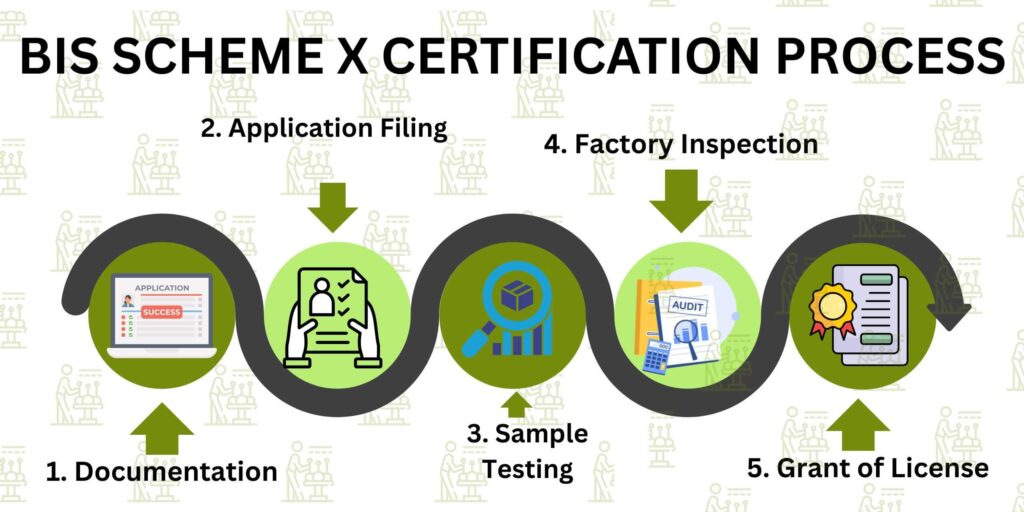
In order to ensure machinery and electrical safety and meet the Quality Control Orders (QCO,s), Indian domestic manufacturers will need to follow a prescribed method for BIS certification for import of machinery under the regulations established by the Bureau of Indian Standards (BIS). The following is a simplified process guide for domestic applicants:
Document Compilation:
Gather all necessary documentation as prescribed under the relevant Indian Standards and BIS requirements.
Application Filing:
Submit the filled BIS application form along with the prescribed application fee.
Application Scrutiny:
BIS reviews the application and may request clarifications or additional information from the applicant.
Auditor Nomination & Payment:
BIS appoints an auditor for inspection. The manufacturer pays the audit fees to BIS accordingly.
Factory Assessment & Sample Collection:
The (BIS) Bureau of Indian Standards auditor inspects the manufacturing facility and collects product samples for testing at a BIS-recognized lab.
Laboratory Testing & Fee Submission:
Samples are tested against the relevant Indian Standards, and the manufacturer pays testing fees directly to the lab.
Marking & Licensing Fee Payment:
Upon successful audit and sample clearance, the marking and license fees are submitted to BIS.
Grant of BIS License:
BIS issues a license permitting the manufacturer to use the ISI mark on certified products, ensuring compliance with national standards for machinery and electrical safety.
Estimated Timeframe:
As per current BIS practices, the process takes approximately 90 working days for domestic manufacturers.
Benefits of BIS on Machinery Import
- Faster Customs Clearance: Certified goods pass without detention
- Market Credibility: Buyers look for ISI mark and BIS compliance
- Lower Risk: Electrical/mechanical defects reduce liability
- Competitive Edge: Compliance speaks volumes to commercial clients
Key Machinery Categories Covered
| Product Category | HS Code Range | |
| Industrial pumps & compressors | 8413, 8414 | |
| Cranes & lifting machinery | 8426 | |
| Machine tools (e.g., CNC, metal‑cutting, stone‑working) | 8460-8462, 8464 | |
| Construction, earth‑moving & mining equipment | 8429-8433 | |
| Textile machinery (looms, dyeing, embroidery) | 8445-8448 | |
| Packing, filling & labelling machines | 8422, 8424 | |
| Electrical equipment (generators, switchgear, transformers) | 8501-8504, 8535-8538 |
Scheme-X Certificate: Validity Duration and Renewal Procedures
Licence Validity and Renewal: Continuous production licenses are granted for variable periods between 3 and 6 years, hence they can be renewed for similar periods.
Certificate of Conformity (CoC): Certificates for conformities are issued for single production runs, to both domestic and foreign manufacturers, and are not renewable.
Product Test Reports: If manufacturers provide their own test reports, the BIS officer shall conduct an observation test during the inspection of the factory to validate the same. Facilities subcontracted for in-house testing shall also be inspected.
Maintaining conformity: The manufacturers must ensure conformity and approval of their products as per the Scheme-X certification process. For processing the renewal application under these regulations, BIS will issue renewed licenses in Form-VIII as per Regulation 8.
Conclusion
In 2025, BIS on machinery import is mandatory. It is not simply a gateway and option; it is the gateway to compliance, safety, and uninterrupted business operations. With BIS Scheme X, updated Machinery and Electrical Safety standards, and tighter Quality Control Orders (QCO’s) on the horizon, you should be getting prepared for your certification process as soon as possible. Beginning the application, scheduling testing and audits, and verifying your documentation are all important to you to ensure you do not become delayed and do not delay those who you will rely on to complete the application process.
Are you wondering who can assist you with this? Diligence Certification can. Diligence Certification is a reputable compliance provider and their professional team has extensive experience in providing support for the complete BIS certification process, from application submission, working with labs, customs import and export, and all that is involved. Whether you are an importer or exporter and you want quality that is BIS certified, complete this as soon as possible. Visit www.diligencecertification.com and get started.
FAQ
What machinery requires BIS certification for import?
Most electrical/mechanical machinery-motors, pumps, compressors, conveyors-fall under the Quality Control Orders. Check the updated BIS list on BIS.gov.in.
Is BIS certification mandatory before or after shipping?
Under Scheme X (2025), pre‑shipment certification is mandatory; post‑shipment alone won’t clear customs.
How long does BIS certification take?
Typically 8-10 weeks: online form, 7-10 days lab tests, 4-6 weeks audit, 2-3 days licence. Accelerate pre‑planning to avoid delays.
What’s the cost for BIS application & audit?
Cost varies with machinery category and lab rates, generally ₹50,000-₹2 lakh, including audit and lab testing charges.
Do small importers need local Indian agents?
Not mandatory, but experienced agents streamline paperwork and follow-ups-especially useful for new importers.
Does BIS certification cover electrical safety?
Yes. The process enforces Machinery and Electrical Safety standards under the updated QC Orders.
Does BIS certification cover electrical safety?
Yes. The process enforces Machinery and Electrical Safety standards under the updated QC Orders.
What if I import a non‑certified machine?
Customs will detain the consignment. BIS Act penalties and batch recalls could follow.
Can I apply for BIS International-only?
Yes-there’s an “Import Scheme” on the portal. You’ll receive a license for imported products only.
What if the factory fails the audit?
Non‑conformities must be corrected, samples retested, and audit rescheduled unless appeal is made.