 BIS Certification
 CDSCO
CDSCO
 PESO
PESO
 CPCB
CPCB
 LMPC
LMPC
 WPC Approval
 Global Approvals
 TEC
TEC
 ARAI
ARAI
 BEE
BEE
 ISO Certification
 DGCA Certification
 NOC For Steel
 APEDA Registration














 Business Registration
 FSSAI Mark Certification










 (32).jpg)
 Legal Services
 Trademark Registration
 Copyright Registration
 Patent Registration
 By
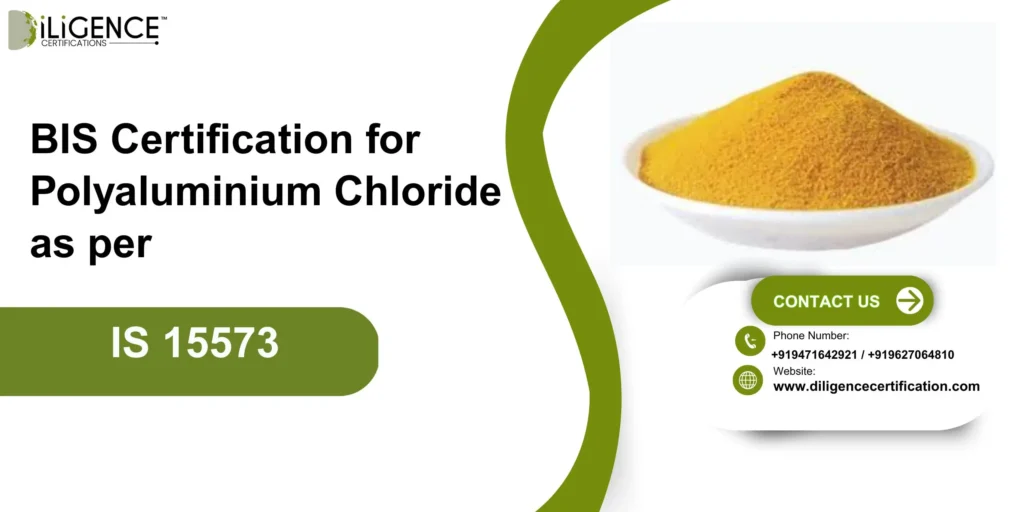
By - It ensures that polyaluminium chloride satisfies the IS 15573 standards in its chemical composition, purity, and performance.
- ISI mark certification is compulsory for both production and marketing of PAC in India.
- It assures safe and reliable results when dealing with water, with appropriate coagulation and purification.
- Helps in maintaining regulatory needs and thus helps avoid the possibility of being penalized and also market acceptability.
- Increases consumer confidence in brands and trust in them as “certified for quality and reliability.
Introduction
Polyaluminium chloride, commonly abbreviated as PAC, has found many applications in water treatment plants as a coagulant in removing impurities and turbidity from water. The effectiveness of this substance can largely depend on its level of purity and chemically consistent properties. The Bureau of Indian Standards has recommended IS 15573 to define safety for the usage of this substance.
What is Polyaluminium Chloride IS 15573?
IS 15573 describes the requirement for polyaluminium chloride, which has specific values:
- Chemical Composition - Ensures a proper concentration of the drug components for effective coagulation.
- Physical Properties - It checks the solubility, density, and pH values.*
- Purity and Quality Standards - This confirms the lack of harmful impurities and contaminants.
- Testing and Inspection Methods - Ensure that all production lots conform to BIS standards.
- Packaging and Marking - Assists in handling, storage, and identification.
Calibration to IS 15573 guarantees that the PAC remains functional and stable throughout the water-treatment procedures, resulting in a safe and reliable outcome.
ISI Mark Certification for Polyaluminium Chloride
Under the ISI Mark Certification Scheme, the ISI Mark on PAC is required by its manufacturers to comply with IS: 15573 in order to be marketed in India. The BIS certification ensures:
- Compliance with chemical and physical specifications.
- Stability and Performance Characteristics of Water Treatment.
- Consistent quality in every lot produced.
- Handling and Identifying it Safely through Proper Packaging.
The ISI mark can be affixed only after the manufacturing company has got the license from BIS.
Why is BIS Certification Mandatory for Polyaluminium Chloride?
- Consumption of non-certified PAC may result in:
- Inadequate water treatment and lesser removal of impurities.
- Chemical imbalances resulting in operational failures.
- Inconsistent performance resulted in increased operational costs.
- Safety related to risks in municipal and industrial applications.
BIS certification ensures:
- Compliancing with IS 15573 standards.
- Reliable and consistent in water treatment performance.
- Regulatory Compliance and Market Acceptance
- More confidence and trust in the customers.
Importance and Benefits of BIS Certification
| Importance | Benefits |
| Compliance with IS 15573 | Ensures effective coagulation and safe water treatment |
| Standardized production | Guarantees uniform quality in every batch |
| Operational reliability | Reduces failures in water treatment operations |
| Regulatory compliance | Prevents legal penalties and product rejection |
| Brand credibility | Builds customer trust and market reputation |
Step-by-Step BIS Certification Process
Step 1: Documentation
Prepare company details, manufacturing processes, and PAC specs as per IS 15573.
Step 2: Product Testing
PAC samples are then tested for their composition, purity, and performance in laboratories approved by BIS.
Step 3: Application Submission
Test reports as well as other necessary documentation need to be submitted via the BIS portal.
Step 4:Scrutiny & Factory Inspection
BIS officials inspect the manufacturing unit to check the quality control processes.
Step 5: Grant of Licence
After successful testing, BIS awards a license to apply the ISI mark on PAC products.
Documents Required for BIS Certification
- Company incorporation or Registration Certificate
- Manufacturing unit details
- Technical Specifications of PAC
- Reports of the test results from BIS-approved labs
- Brand authorization letter (if applicable)
Timeline, Validity & Renewal
- Certification Timeline: 20-30 working days
- Licence Validity: 1-2 years
- Renewal: Submission of updated documents and proof of continued compliance
Conclusion
The IS 15573 BIS Certification for Polyaluminum Chloride is the sign of quality, safety, and performance of the product. The certification of PAC ensures efficient water treatment, chemical stability, and working performance. The IS:15573 certification is not only mandatory but a move towards establishing faith, ensuring safety, and sustainable growth for the industry in India.
Frequently Asked for Questions
What is BIS Certification for Polyaluminium Chloride?
This verifies that the standards of quality and safety of IS 15573 are being complied with by PAC.
Is BIS certification compulsory for PAC in India?
Yes, BIS certification with ISI mark is compulsory.
What is IS 15573?
Which is the Indian Standard for Polyaluminium Chloride used in the treatment of water.
Who releases the BIS certification for PAC?
The Bureau of Indian Standards (BIS).
What is PAC certification?
It facilitates efficient coagulation and water purification.
What is the consequence of PAC being unaccredited as BIS?
This can result in penalties and may cause a difference in treatment from the market.
How long BIS Certification takes?
Typically 20-30 working days.
Validity of BIS license for PAC?
The license is valid for 1-2 years.
Is testing mandatory in BIS certification?
Testing, yes, has to be done in BIS-certified labs.
Can BIS-certified PACs improve brand trust?
Yes, it builds credibility and customer confidence.


