 BIS Certification
 CDSCO
CDSCO
 PESO
PESO
 CPCB
CPCB
 LMPC
LMPC
 WPC Approval
 Global Approvals
 TEC
TEC
 ARAI
ARAI
 BEE
BEE
 ISO Certification
 DGCA Certification
 NOC For Steel
 APEDA Registration











 Business Registration
 FSSAI Mark Certification



 (32).jpg)
 Legal Services
 Trademark Registration
 Copyright Registration
 Patent Registration
 By
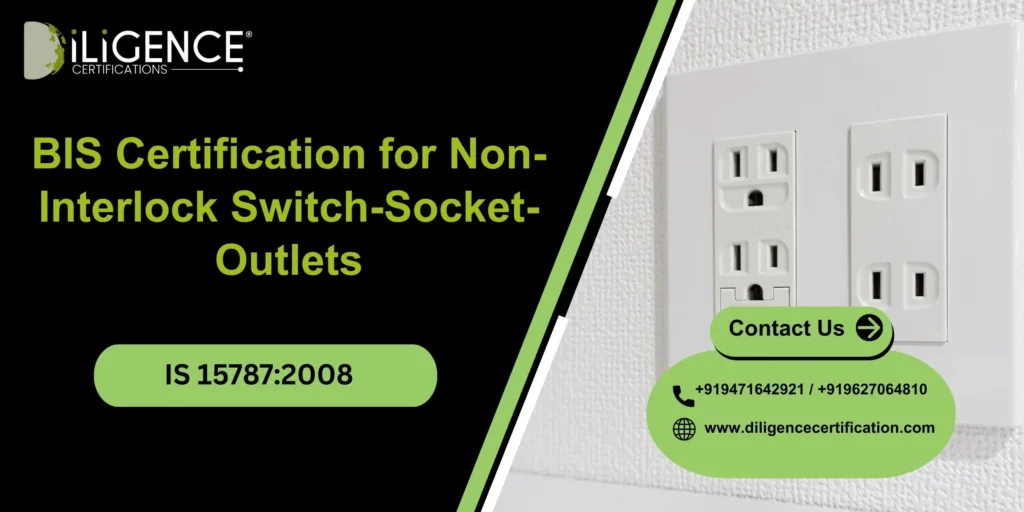
By - Mandatory quality issued by the Bureau of Indian standards for non-interlock type switch- socket- outlets vended in India
- IS 15787:2008 Non-Interlock Switch-Socket-Outlets specifies conditions for design, construction, accoutrements, and workmanship
- Ensures electrical safety, proper sequestration, and protection against electric shock
- Covers performance tests similar as temperature rise, dielectric strength, and mechanical abidance
- BIS mark assures product trustability, safety compliance, and request acceptance in India
Introduction
BIS certification for Non-Interlock Switch- Socket- Outlets as per IS 15787:2008 is an obligatory conformity assessment issued by the Bureau of Indian standards. It ensures that switch- socket- outlets meet prescribed safety, performance, and quality conditions, including electrical sequestration, mechanical strength, and protection against electric shock, before being vended in the Indian request.
What is IS 15787:2008?
IS 15787:2008 Non-Interlock Switch-Socket-Outlets is an Indian Standard issued by the Bureau of Indian standards that specifies safety and quality conditions for non-interlock type switch- socket- outlets used in electrical installations. It defines norms for design, construction, accoutrements, and performance to insure protection against electric shock, overheating, and mechanical failure. Compliance with IS 15787:2008 is obligatory for manufacturers to gain BIS instruments and fairly vend these products in India.
Key Points:
- Indian Standard issued by the Bureau of Indian standards for non-interlock switch- socket- outlets
- Specifies conditions for design, construction, and accoutrements
- Ensures electrical safety and protection against electric shock
- Covers performance tests like temperature rise and dielectric strength
- obligatory compliance for BIS instrument and trade in the Indian request
Why is BIS Certification Mandatory
BIS certification Non-Interlock Switch-Socket-Outlets is obligatory to ensure that electrical products misbehave with Indian safety and quality norms specified by the Bureau of Indian standards. It protects consumers from electrical hazards similar to shocks, overheating, and fire pitfalls by administering strict testing and quality control. The obligatory BIS certification also prevents the trade of unacceptable products, promotes fair trade, and ensures only safe, dependable, and biddable products are available in the Indian request.
Key Reasons:
- Ensures products misbehave with safety and quality norms set by the Bureau of Indian standards.
- Protects consumers from hazards similar as electric shock, fire, and overheating
- Prevents rotation of unacceptable, unsafe, and low- quality products in the request
- authorizations product testing and regular plant examinations for quality assurance
- Builds consumer trust and enhances brand credibility
Importance and Benefits of BIS Certification
| Importance | Benefits |
| Ensures compliance with Indian safety and quality norms set by the Bureau of Indian standards. | Enhances consumer trust and confidence in the product |
| Protects druggies from health, safety, and electrical hazards | Improves brand credibility and request character |
| Controls the quality of products manufactured or imported into India | Enables legal request access across India |
| Makes instrument fairly obligatory for notified products | Reduces product failure, complaints, and liability risks |
| Supports standardization and thickness across diligence | Provides a competitive advantage over non-certified products |
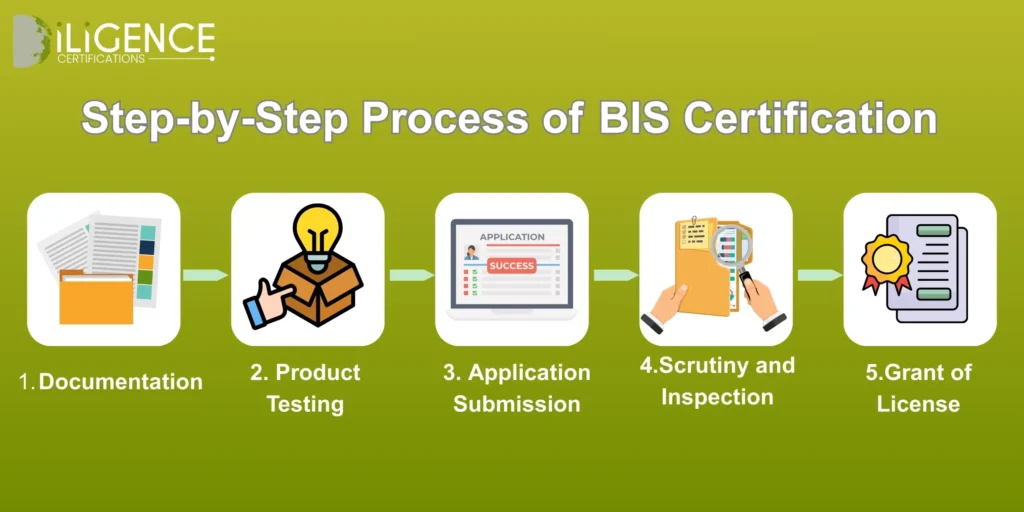
Step-by-Step Process of BIS Certification
Step1:Documentation
- Collect required technical documents
- Prepare product specifications
- Gather company registration details
- Ensure documents follow BIS format
Step2:Product Testing
- Send samples to a BIS-approved lab
- Conduct safety and quality tests
- Receive test reports
- Confirm compliance with BIS standards
Step3:Application Submission
- Fill out the BIS application form
- Upload all required documents
- Attach valid test reports
- Pay the necessary BIS fees
Step4:Scrutiny and Inspection
- BIS reviews submitted documents
- Authority verifies test results
- Factory/product inspection may occur
- Clarifications requested if needed
Step5:Grant of License
- BIS approves the application
- License number is issued
- Product can carry BIS mark
- Renewal required before expiry
Documents Required for BIS Certification
| Category | Documents Required |
| Business Documents | Business license/registration, ISO certificate, organizational details |
| Manufacturer Details | Factory layout, process flow chart, machinery list, production details |
| Product Documents | Product specifications, component list, user manual, model details |
| Testing Documents | Test report from BIS-recognized lab, sample details, test request form |
| Legal & Compliance | Authorization letter, brand ownership proof, trademark certificate (if any) |
| Import/Foreign Manufacturer (If applicable) | AIR (Authorized Indian Representative) details, contract agreement, overseas manufacturer documents |
Timelines, Costs, Validity & Renewal
- Timelines: Usually from 20 to 30 days, with only 7-15 days for the testing.
- Costs: The cost of the government and the test varies depending on the product. There can be some additional charges though.
- Validity: The validity period is 2 years in most situations.
- Renewal: The renewal is done before the expiration; there should be updated documents/tests; the renewal
Why Choose Diligence Certifications
Diligence Certifications is a trusted compliance mate immolation end- to- end support for BIS instrument and other nonsupervisory blessings. With expert guidance, transparent processes, and timely prosecution, Diligence Certifications helps businesses achieve instrumentation easily while icing full compliance with Indian norms, reducing detainments, and minimizing nonsupervisory pitfalls.
Conclusion
BIS Certification plays a pivotal part in icing product safety, quality, and compliance with Indian norms. It helps cover consumers, prevents the rotation of unacceptable goods, and supports fair trade practices. By clinging to BIS conditions, manufacturers and importers can achieve legal request access, make client trust, and insure long- term business sustainability in India.
Frequently Asked Questions (FAQs)
What's BIS Certification?
It's a obligatory conformity blessing issued by the Bureau of Indian standards to ensure product safety and quality.
Is BIS instrument obligatory for switch- socket- outlets?
Yes, it's obligatory for non-interlock type switch- socket- outlets vended in India.
What does IS 15787:2008 cover?
It specifies safety, design, construction, and performance conditions.
Who needs BIS Certification?
Manufacturers and importers of non-interlock switch- socket- outlets.
What tests are needed under IS 15787:2008?
Tests include temperature rise, dielectric strength, and mechanical abidance.
How long does BIS Certification take?
Generally, 20 - 30 days depending on testing and attestation.
What's the validity of BIS Certification?
generally valid for 2 times and renewable before expiry.
Can products be vended without BIS mark?
No, dealing without BIS instrument is illegal for notified products.
Is plant examination needed?
Yes, BIS may conduct plant or product examinations.
Why is BIS Certification important?
It ensures safety, legal compliance, and consumer trust in the product.