BIS Certification
 CDSCO
CDSCO
 PESO
PESO
 CPCB
CPCB
 LMPC
LMPC
 WPC Approval
 Global Approvals
 TEC
TEC
 ARAI
ARAI
 BEE
BEE
 ISO Certification
 DGCA Certification
 NOC For Steel
 APEDA Registration























 Business Registration
 FSSAI Mark Certification












 (32).jpg)
 Legal Services
 Trademark Registration
 Copyright Registration
 Patent Registration
 By
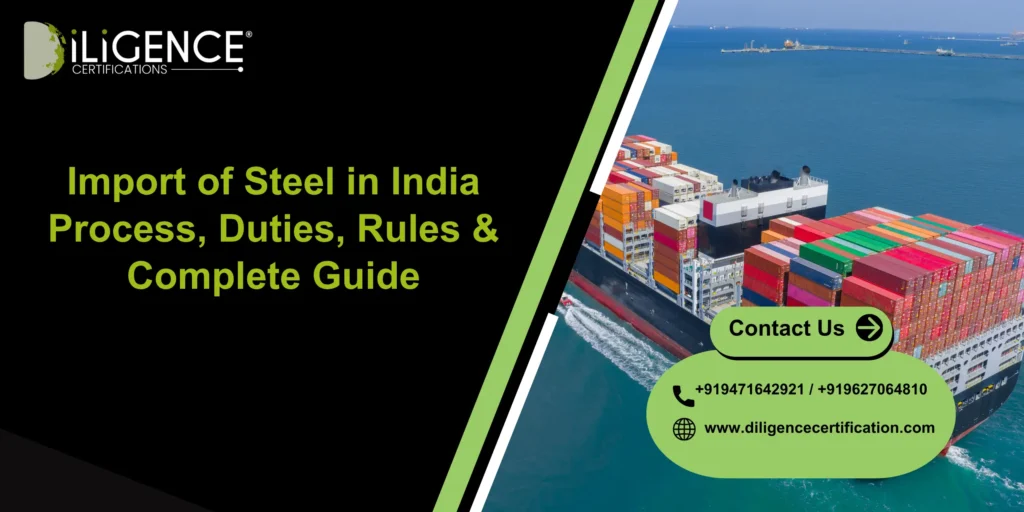
By - Import of Steel in India Process guarantees legal imports, quality control, and adherence to Indian laws.
- It assists in keeping high-quality standards of steel for various applications.
- Necessary documentation includes invoices, bills of entry, BIS certification, and other customs documents.
- The procedure entails filing an application, inspection, testing, and authorization by concerned officials.
- This process guarantees safe and certified sources of steel supply.
Introduction
Manufacturers who import steel without considering the Import of Steel in India Process face many challenges. Most of them suffer from the use of low-quality materials, legal problems, and delays when clearing the imported goods through the customs department. Sometimes, these imports may be rejected because they do not comply with the Indian regulations. This results in losses and disrupts production plans. This also lowers consumer confidence in their goods and business partners.
The best solution to this problem is to import steel through the Import of Steel in India Process. This process involves ensuring that all imported steel conforms to the requirements of Indian standards. This process involves documenting and inspecting the steel before importing into the country.
Following this process enables manufacturers to overcome legal problems and streamline the whole process. The other benefit of adopting this process is that consumers will develop confidence in your company because you will produce safe steel products.
What Is the Import of Steel in India Process
The Import of Steel in India Process is a regulated mechanism of importing steel products in India legally and in accordance with relevant regulations. The process aims at ensuring the quality and safety of all imported steel products by adhering to Indian guidelines. The import of steel in India process benefits various industries such as construction and manufacturing.
It enhances product reliability while preventing the entry of substandard goods in the market.
Import of Steel in India Process Key Points:
- Adherence to BIS (Bureau of Indian Standards) guidelines and government regulations
- Documentation and clearing of customs duties
- Inspection and testing of products prior to approval
- Observance of Indian safety and quality standards
Covered Products:
- Rebar or reinforcement rods and bars
- Sheet and plate steel
- Stainless steel products
- Structural building steel
- Alloy steel for industrial use
- Steel pipe and tube
Quality and Safety Compliance:
- The process entails testing steel products for compliance with Indian guidelines regarding strength, reliability, and chemical properties. Only high-quality and safe products are authorized for sale in the Indian market.
In summary, the Import of Steel in India Process ensures safe, high-quality steel for use in important industries.
Why is the Process of Import of Steel in India Important?
Import of Steel in India Process is very important because it guarantees that only high quality and safe steel comes into India and can be used there. Otherwise, industries, constructors, and consumers will receive poor products and experience losses.
Import of Steel in India Process Importance:
- Quality Assuring: Only high quality steel can satisfy Indian demands and be accepted on the market.
- Protection from Risks: There won’t be any risks in construction and the industrial sphere.
- Customer Trusting: Imported steel will become more popular because of high quality certification.
- Market Approval: The products will easily pass the approval of Indian companies.
- Avoiding Penalties: There will be no rejections or fines for foreign producers.
- Economic Growth: Better business conditions will help to establish cooperation in the long term.
In addition, it makes trade more transparent and efficient by means of testing and proving every batch of steel.
In conclusion, we can say that this process is not only a rule but an important system.
Key Features of Import of Steel in India Process
The Import of Steel in India Process involves the use of high-quality steel products by adhering to certain criteria to guarantee safety in usage. This process makes sure that all imported steel is safe to use.
Main Features:
- Regulations: Complies with all BIS regulations as well as other Indian government laws.
- Quality: Tests are done to check strength and durability of the steel.
- Safeguarding: Prevents importation of sub-standard steel and reduces any risks.
- Durability: Checks for reliability and longevity in imported steel.
- Legality: Proper documents are necessary.
- Reliability: Only verified steel can be accepted into the Indian markets.
The overall features of the Import of Steel in India Process make it a dependable process for steel importers.
Who Needs Import of Steel in the India Process?
All firms associated with the import, transportation, or usage of steel in India need the Import of Steel in India Process. The process guarantees that imported steel products will be compliant in terms of safety and quality before hitting the Indian market.
Who needs it?
- Manufacturing companies: The process is needed to ensure the safety and quality of the steel used for manufacturing purposes.
- Suppliers: The process is needed to be able to supply quality-approved steel products to customers.
- Exporters: The process is needed to establish and maintain credibility in the international trading process with regard to the Indian market.
- Importers: The process is mandatory for legal entry of steel goods into India.
Why certification is needed:
Quality assurance, legal compliance, and customer trust can only be ensured through proper certification.
Documents Required for Importing Steel in India Process
For an efficient and effective Import of Steel in India process, it is necessary to provide certain documents. It will not only ensure that all rules and regulations pertaining to such imports are complied with but also ensures that the imported product is genuine and safe.
Required Documents:
- Company Registration Certificate: For proving the identity of the organization.
- Import License / IEC Code: A must have document while importing in India.
- Details about Product: Grade and kind of steel being imported.
- Invoice and Packing List: Information regarding the amount and cost of the product.
- Quality Test Reports: Proving that the steel has the required strength.
- Quality Control Reports: Documenting manufacturing and quality testing process.
- BillofLading/Shipping Documents: Evidence regarding the shipment of the product.
Thus, these documents can help in safely and legally importing the steel in India.
Step-by-Step Process for Import of Steel in India Process
The Import of Steel in India Process consists of a series of well-coordinated stages aimed at making sure that only qualified and tested steel comes into the country.
Step 1: Preparation of Documentations
- Prepare all required documents such as company registration, IEC code, and others
- Preparation of invoices, packing list, and other relevant documents
Step 2: Submitting an Application
- Submission of an application form to the concerned authority
- Provision of documents for further checking and consideration
- Indication of steel type, grade, and amount needed
Step 3: Testing Products
- Testing of the quality of imported steel is mandatory
- It ensures compliance with BIS and Indian standards
Step 4: Process of Verification
- Verification of documentations and testing results
- Comparing all the details of the product and its application
Step 5: Process of Customs Clearance
- Customs officers check products
- Payment of duties and taxes for the imported goods
Step 6: Final Approval
- Steel products that pass verification get final approval
On the whole, this process guarantees that only good steel is imported into the country.
Timeline, Cost, and Renewal Process for Import of Steel in India Process
| Section | Details |
| Timeline | Processing time: 2-5 working days (if documents are correct). Product testing: 1-3 days depending on steel type. Customs clearance: 1-2 days after approval. |
| Cost | Government fees depend on shipment size and duties. Testing charges vary based on steel category and lab requirements. Professional/service fees may apply if consultancy is used. |
| Validity Period | Approval is valid for each shipment only. It must be repeated for every new import consignment. |
| Renewal Process | No long-term renewal system. A fresh application is required for each shipment. |
| Tips to Avoid Delays | Keep documents complete and updated. Ensure BIS compliance before shipment. Submit correct product specifications. Avoid errors in invoices and shipping papers. |
| Overall Summary | The Import of Steel in India Process is smooth and fast when proper documentation, compliance, and correct procedures are followed. |
Common Mistakes in Import of Steel in India Process
It is essential to take certain precautions and considerations while doing any process like import of steel in India. There are many mistakes made by companies that could easily have been avoided.
Common Mistakes:
- Incomplete documents: Failure to provide invoices, IEC code or product details results in delays.
- Testing report errors: The use of inaccurate or old lab reports results in rejection.
- Not adhering to BIS guidelines: Disregarding Indian safety standards results in non-compliance issues.
- Product details errors: Providing wrong steel specifications or grades results in verification errors.
- Improper filing of documentations: Misfiled documents delay import processing.
Tips for avoiding mistakes:
- Double check the accuracy of documents before submitting them
- Provide only updated test reports
- Adhere strictly to BIS safety guidelines
- Ensure all documents are organized
Avoiding these common mistakes results in a trouble free import of steel in India process.
Benefits of Import of Steel in India Process
The Import of Steel in India Process has numerous advantages for the manufacturers, importers, and industries in India. The process ensures that all imported steel is of good quality and safe to use.
Advantages:
- Quality Guarantee: Guarantees that the imported steel is of quality and adheres to the BIS and international standards.
- Consumer Confidence: Develops a high level of consumer confidence.
- Legality: Helps in complying with government laws and regulations in India.
- Strength and Durability: Assures that the steel used in construction and manufacture is durable and strong.
- Consumer Satisfaction: Ensures the provision of quality products to the consumers.
- Safety: Reduces the risk of using poor quality and unsafe steel materials.
- Business Efficiency: Streamlines the entire import, approval, and distribution process.
- Product Acceptance: The certification enables easier acceptance of the steel in the Indian markets.
In conclusion, the Import of Steel in India Process guarantees safety, quality, and durability of the steel industry. The process also enhances business operations and success by providing legal compliance and customer satisfaction.
Why Choose Diligence Certification for Import of Steel in India Process
The best choice will lead to an efficient and quick Import of Steel in India Process. Diligence Certification makes the process easy and hassle-free for companies to manage compliance and documentation issues.
Reasons to go for Diligence Certification:
- Professional Assistance: Provides assistance in every phase of the import process.
- Documentation Assistance: Assists in preparing and verifying all necessary documents.
- Rapid Approval: Shortens the approval process of customs and compliance.
- Clear Communication: Updates clients at every phase of the process.
- Comprehensive Assistance: Gives comprehensive assistance from submission to completion.
Diligence Certification will make the Import of Steel in India Process easy. Companies will be able to concentrate on their activities while we manage compliance, inspection, and approvals.
Conclusion
Import of Steel in India Process is an important procedure that guarantees the presence of quality and well-tested steel in the Indian market. It comprises the preparation of proper documentation, product testing, customs clearance, and adherence to rules and standards prescribed by BIS Certification. The process ensures durability and reliability of steel in various industries including construction and manufacturing.
Adherence to the correct procedures is not just necessary from the standpoint of law but is very important from the business angle as well. This would not only facilitate ease but also minimize risk and establish trust with clients and partners.
To avoid any problems related to approvals, it would be wise to seek professional help. Certified consultants would make your job simple and easy.
Frequently Asked for Questions
What is the Process for Import of Steel in India?
It is the legal procedure involved in importing steel with quality assurance and safety.
Who regulates the process of steel import in India?
The process of steel import is regulated by BIS and customs in India.
Is BIS compliance necessary for steel import?
Yes, steel products require BIS certification.
What are the documents required for steel import?
Invoice, IEC, shipping bill, and BIS certificates are required.
How much time does it take to approve the steel import process?
It takes 2-5 working days depending on documents.
Which products can be imported via the steel import process?
Steel rods, coils, sheets, pipes, and structural steels.
Why is steel testing necessary?
Testing is done to check the quality and safety of the product.
Can steel import be rejected?
Yes, rejection is possible due to poor quality.
Is renewal necessary for the steel import process?
A new approval is required each time.
Why should we follow compliance for steel import?
Import compliance is vital for safety and approvals.