BIS Certification
 CDSCO
CDSCO
 PESO
PESO
 CPCB
CPCB
 LMPC
LMPC
 WPC Approval
 Global Approvals
 TEC
TEC
 ARAI
ARAI
 BEE
BEE
 ISO Certification
 DGCA Certification
 NOC For Steel
 APEDA Registration























 Business Registration
 FSSAI Mark Certification












 (32).jpg)
 Legal Services
 Trademark Registration
 Copyright Registration
 Patent Registration
 By
By •BIS Certification in Maharashtra is compulsory for certain products which come under BIS quality control orders before manufacture, import, or sale in India.
• Compliance to BIS Certification is mandatory for the manufacturers in Maharashtra according to the rules of the Bureau of Indian Standards.
• BIS Certification will save firms from penalties, delays at custom authorities, product recalls, and market entry problems.
Introduction: BIS Certification in Maharashtra
An industry client from Pune recently contacted us with an emergency query from a reputed retail organization. The retail house was willing to purchase a large number of electrical goods from the client. All went well until a single doubt transformed the entire query
The client had already made huge investments in the production process, packing, and marketing of the product. However, lack of compliance certification almost became a cause of the loss of a lucrative business opportunity.
Such instances are happening frequently all over Maharashtra. Whatever be the location whether Mumbai, Pune, Nashik, Aurangabad, Nagpur, Kolhapur, or Thane, compliance certification has now become a commercial necessity and not just legal formality.
In Maharashtra, BIS Certification is the most essential among the other regulations which are applicable to all manufacturers and importers of products falling under the scope of the mandatory certification schemes. Without certification, there are chances of market restriction, customs clearance problem, and legal problems from regulatory agencies.
Since Maharashtra is the leading industrial and manufacturing state in India, all those companies working in sectors like electronics, steel, cement, chemicals, domestic appliances, automobile parts and consumer goods must know about BIS certification.
What is BIS Certification
BIS Certification means the scheme of certification implemented by the Bureau of Indian Standards (BIS), which is India’s national standards body.
It indicates the conformance of the product to Indian Standards pertaining to the quality, safety, reliability, and performance of the product.
Practically, BIS certification is the evidence that a product conforms to prescribed quality standards prior to reaching the end-users.
For industries, its significance is three-fold:
- Legality
- Marketability
- Trust of the consumer
Buyers nowadays tend to look for BIS marks on the product before buying them, especially electrical and electronics goods.
What is BIS Certification in Maharashtra
A BIS Certification in Maharashtra is a regulatory certification provided by the Bureau of Indian Standards to products that come under mandatory certification schemes. For manufacturers and importers operating in Maharashtra, it is essential to acquire relevant BIS licences prior to manufacturing/importing/distributing/selling such regulated products in India.
There are many manufacturing units in Maharashtra spread across industrial clusters like:
- Mumbai
- Pune
- Nashik
- Aurangabad
- Nagpur
- Thane
- Kolhapur
- Satara
- Ahmednagar
Many products manufactured in these regions require BIS approval before entering the Indian market.
Why is BIS Certification Important for Maharashtra Manufacturers
Manufacturing firms tend to pay close attention to their manufacturing capacity and sales growth. The issue of compliance comes much later in the process.
Regrettably, regulators operate from an opposing perspective.
There are things that need to be done before the product can be sold to consumers.
These include ensuring the safety and quality of the product, which is what BIS certification offers.
Key Benefits
- Access to the Market through Legality
- Products that are notified under Quality Control Orders must be legally cleared by the BIS.
- Increased Consumer Trust
- Certification ensures that the product meets the quality standards of India.
- Increased Opportunities for Business
Certified products tend to be favoured by distributors, government agencies, and organised retailers.
Types of BIS Certification Available
Many businesses mistakenly assume there is only one BIS approval.
In reality, BIS operates multiple certification schemes depending on product category.
ISI Mark Certification
The ISI scheme applies primarily to products covered under mandatory Indian Standards.
Examples include:
- Cement
- Steel products
- Household appliances
- Electrical equipment
- Industrial materials
Manufacturers obtain a BIS licence and use the ISI mark after approval.
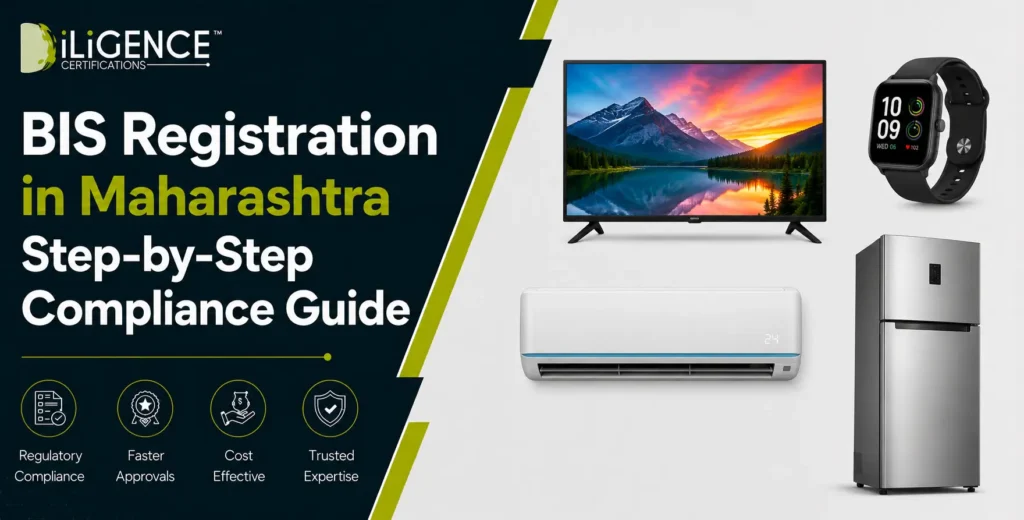
BIS CRS Registration
The Compulsory Registration Scheme (CRS) applies mainly to electronics and IT products.
Examples include:
- LED Lights
- Mobile Phones
- Power Banks
- Laptops
- Smart Watches
- Adapters
- Monitors
Testing must be conducted in BIS-recognised laboratories before registration.
Foreign Manufacturer Certification Scheme (FMCS)
Foreign manufacturers exporting regulated products into India may require certification under FMCS.
This allows overseas manufacturers to access the Indian market legally.
Which Products Require BIS Certification
The list of regulated products continues to expand as new Quality Control Orders are introduced.
Some major categories include:
Electrical Products
- Switches
- Cables
- LED Lamps
- Circuit Breakers
- Appliances
Electronics
- Mobile Phones
- Laptops
- Tablets
- Smart Speakers
- Power Adapters
Construction Materials
- Cement
- Steel Bars
- Structural Products
Consumer Goods
- Toys
- Pressure Cookers
- Helmets
- Household Products
Industrial Products
- Chemicals
- Machinery Components
- Industrial Equipment
Manufacturers should verify whether their products fall under applicable BIS regulations before commercial production begins.
Who Needs BIS Certification in Maharashtra
This does not apply only to large corporations.
There could be several business types requiring certification.
Manufacturers
Manufacturers that make regulated products in Maharashtra should get BIS certification for these products.
Importers
Importers that import regulated products into India should have BIS compliance to clear customs.
Brand owners
Privately labeled brands marketing products using their brand should also have compliance support.
E-commerce sellers
Increasingly, online marketplaces are also asking for compliance documents before listing regulated products.
BIS Certification Process in Maharashtra
One of the most frequent inquiries we get is “Exactly how does the BIS certification process work” It all depends on the certification program. But the process itself follows a systematic approach.
Step 1: Product Identification
The first stage involves determining:
- Applicable Indian Standard
- Certification scheme
- Testing requirements
- Regulatory obligations
This stage prevents costly mistakes later.
Step 2: Documentation Preparation
Applicants prepare supporting documents related to:
- Manufacturing facilities
- Product specifications
- Company registration
- Quality systems
- Authorisation records
Documentation quality often determines approval speed.
Step 3: Product Testing
Samples are tested at approved laboratories.
The objective is to verify compliance with applicable Indian Standards.
Testing failures generally require corrective actions before proceeding.
Step 4: Application Submission
The BIS application is submitted through the relevant certification scheme.
All supporting documents and test reports are included.
Step 5: Factory Inspection (Where Applicable)
For certain schemes, BIS officials conduct manufacturing facility inspections.
Inspectors assess:
- Production capability
- Quality controls
- Testing facilities
- Process consistency
Step 6: Review and Evaluation
BIS evaluates:
- Test reports
- Technical compliance
- Manufacturing arrangements
- Quality assurance systems
Step 7: Grant of Licence
Upon successful review, the BIS licence or registration is issued.
The manufacturer can then apply the relevant BIS marking to approved products.
Common Challenges Faced by Manufacturers
Many applications experience delays due to avoidable issues.
Some frequent problems include:
Incorrect Product Classification
Using the wrong Indian Standard can result in application rejection.
Incomplete Documentation
Missing records often trigger clarification requests from authorities.
Testing Failures
Products sometimes fail laboratory evaluation due to design or material issues.
Factory Readiness Issues
Inspection observations can delay licence issuance.
Regulatory Updates
Quality Control Orders frequently evolve, requiring businesses to stay updated.
This is one reason many manufacturers choose professional compliance assistance rather than handling the process entirely in-house.
Why Choose Diligence Certifications for BIS Certification in Maharashtra
BIS Certification is far more than just making an application. Testing of products, preparation of documentation, identification of standards and compliance with regulations needs expertise and knowledge of the law. We can make your journey through the whole process easy with Diligence Certifications.
Expertise Tailored to Industry Needs
Our specialists work with manufacturers, importers, start-ups and well-established companies from various fields.
Full-Scale Documentation Assistance
We will help you prepare all necessary documentation to avoid mistakes and possible delays in your application process.
Product Standard Identification
Selecting the correct Indian Standard is one of the most critical stages of certification. Our experts help identify the applicable standard and certification scheme for your product.
Testing Coordination Assistance
We guide clients through laboratory testing requirements and help ensure product samples meet applicable BIS standards.
Faster Compliance Management
The structured approach enables us to eliminate many of the common compliance roadblocks and help certification projects proceed smoothly.
Support to Manufacturers and Importers
No matter if you manufacture products in Maharashtra or import products to India, we have practical solutions for your type of business.
Process Clarity
Our clients receive clear information on how to proceed, along with checklists and compliance guidance.
Multi-Product Compliance Support
In addition to BIS certification, we assist with CDSCO, BEE, WPC, TEC, EPR, FSSAI, LMPC, and other regulatory approvals, creating a single compliance partner for your business.
Dedicated Expert Assistance
Our compliance specialists are always on hand throughout the certification process to sort out any issues that arise.
Compliance Regulatory Accuracy
We ensure that the process of compliance is done right from the start, avoiding costly errors, rejections, and delays.
Conclusion
Obtaining BIS certification in Maharashtra has now become a very important step that must be taken by manufacturers and importers in the present-day highly regulated business world. Be it an electrical product, consumer item, industrial item, electronic equipment, or construction product, it is extremely important to ensure that BIS certification is obtained by you.
An effective certification strategy will assist in avoiding any kind of issues regarding regulations, delays in obtaining approvals, and improving your standing in the competitive business market. Being one of the top manufacturing states of India, it has become very important for the manufacturers to ensure that their products adhere to the BIS standards.
If you want to obtain BIS certification in Maharashtra, then it would be wise for you to work with some expert compliance professionals.
Diligence Certifications can help you with BIS certifications in many ways.
Frequently Asked Questions
What is BIS Certification in Maharashtra?
BIS Certification in Maharashtra is a quality & safety compliance certification provided by Bureau of Indian Standards for products falling under respective Indian Standards & Quality Control Orders.
Is BIS Certification mandatory in Maharashtra?
Yes. It is mandatory to have BIS Certification for products covered under respective mandatory BIS regulations
Who can apply for BIS Certification in Maharashtra?
Manufacturers, Importers, Foreign Manufacturers, Brand Owners and Businesses involved with regulated products might require BIS Certification as per their product categories
How much time will it take to get BIS Certification?
It totally depends on product categories, testing process, document preparation and certification schemes
What are the documents required for BIS Certification?
Company Registration Documents, Manufacturing Documents, Product Specifications & other related documents are required for BIS Certification
What is the difference between ISI Certification and BIS CRS Registration?
SI certification is normally for products that have been notified as Indian Standards,BIS CRS registration is typically relevant for electronic and IT products that have been notified as Compulsory Registration
Can importers get BIS Certification?
Yes. Importers and foreign manufacturers can get BIS certification under relevant schemes before placing their products on the market in India
What are the consequences for a business selling non-conforming products?
Consequences include penalties, recalls, restrictions, customs clearance problems, and many others when the business does not meet certification requirements.
Is there any validity period for the BIS Certificates?
Yes. All licences and registrations are issued with a specific validity period and shall be renewed under BIS regulations
Why should businesses hire BIS consultants?
The consultancy service will help them with standards identification, documentation, testing, compliance management, and other tasks