BIS Certification
 CDSCO
 PESO
 CPCB
 LMPC
 WPC Approval
 Global Approvals
 TEC
 ARAI
 BEE
 ISO Certification
 DGCA Certification
 NOC For Steel
 APEDA Registration























 Business Registration
 FSSAI Mark Certification












 (32).jpg)
 Legal Services
 Trademark Registration
 Copyright Registration
 Patent Registration
 By
- A plastic EPR certificate online helps eligible businesses demonstrate registration under India’s applicable plastic packaging Extended Producer Responsibility framework.
- Producers, Importers and Brand Owners (PIBOs) should check their registration obligations based on their actual business activities.
- Applicants should prepare accurate company information, packaging details and relevant production, sales or import records before applying.
- Businesses should use the current CPCB Common EPR Portal and follow the latest instructions for their registration category.
Introduction
Imagine an Indian company that sells skincare products online. They have a website. Sell through online marketplaces. They buy bottles from a packaging supplier then get them filled by a contract manufacturer. After that they sell the finished products under their brand.
The business owner has a GST registration, a working website and regular customers.. When a marketplace or business partner asks for plastic EPR registration details the owner doesn’t know what to do. The packaging supplier says they handle the packaging. The contract manufacturer says the brand owner is responsible for the paperwork.
This kind of confusion can slow down business. Lead to unnecessary compliance issues.
A plastic EPR certificate online is important for businesses covered by India’s plastic packaging Extended Producer Responsibility rules. EPR stands for Extended Producer Responsibility. In words it means certain businesses must take responsibility for the plastic packaging waste that comes from the products or packaging they put into the market.
The rule is not just for manufacturing companies. Depending on the rules producers, importers and brand owners may all need to register and follow the rules. A business should not think that outsourcing manufacturing or selling through a store removes their responsibility.
There’s also a point for 2026. The plastic EPR portal has changed. Businesses must now follow the CPCB Common EPR Portal instructions. They should not rely on pictures or outdated guides.
This guide explains who might need to register, how to get ready, for the application what documents to collect, how plastic packaging types work what businesses should check for the 2026 rules and how to stay compliant after registration.
What Is a Plastic EPR Certificate Online?
In my experience a plastic EPR certificate online is a registration approval that is issued through the required process to a business that meets the eligibility criteria under India’s plastic packaging EPR framework.
The framework is built on the Plastic Waste Management Rules of 2016. Later changes and guidelines. The Central Pollution Control Board, the State Pollution Control Boards and the Pollution Control Committees all have duties under these rules. Which authority and which registration path you should follow depends on the type of business you’re and on the latest regulatory rules.
The main purpose of EPR is to make businesses take responsibility for their packaging waste duties rather than leaving packaging disposal as someone else’s problem.
Think about a company that sells packaged snacks under its brand. That company might buy packaging from a supplier and use a third‑party factory to make the snacks. The fact that another company made the packaging does not automatically clear the brand owner’s EPR responsibilities.
Likewise an importer who brings personal‑care products into India should examine the packaging and import activities that the rules cover.
A plastic EPR certificate is not the same, as GST registration, a pollution licence, a factory licence or a product‑quality certificate. Each of these documents has a purpose.
Who Needs a Plastic EPR Certificate in India?
The first step is to understand what the business actually does. Registration requirements are not identical for every company that handles a plastic product.
1. Producers of Plastic Packaging
Producers who make packaging or products that are wrapped in plastic should check what duties they have under the rules that apply to them.
Examples could be companies that make bottles, containers, films, pouches and other packaging materials. The right way to classify them depends on what they do and what the rules say.
A company that makes packaging for companies should not just use the same registration method as a company that sells finished items. It needs to find out which group of rules applies to its work.
2. Importers of Plastic-Packaged Products
Companies that bring products wrapped in plastic or plastic packaging into India should look at their Extended Producer Responsibility duties before they put those items on the market.
For instance an Indian company might bring personal-care items that’re in plastic bottles or home products that come in plastic containers. The importer needs to keep copies of invoices import details, product information and packaging details.
Paperwork from countries or environmental documents do not automatically take the place of Indian EPR registration if the rules in India ask for it.
3. Brand Owners
A brand owner sells items under its name. Making, filling or packing the items could be done by another company.
Imagine a company that sells cleaning liquids under its own label. A different company fills the bottles. The new company is the one that markets and sells the product under its brand. The new company should look at its position under the EPR rules instead of thinking the other company has done everything.
The same kind of problem can happen with makeup, food, personal-care items and home products that are sold under labels.
4. Plastic Waste Processors
Companies that can process waste like recyclers or companies that handle specific ways to get rid of plastic at the end of its life have their own registration and rules to follow.
Their job is different from that of a brand owner. A processor might need to share information about what it does with the waste and keep records, about it while a brand owner needs to check what duties come with its packaging.
Companies should not choose a registration group just because it seems easier. Wrong classification can cause problems later with getting permission and following the rules.
Do Small Businesses and Online Sellers Need Registration?
Small businesses should not assume that low turnover, a small team or online selling automatically removes their EPR obligations.
The correct answer depends on the applicable definitions, business activities and any relevant exemptions. An online seller that imports packaged goods may have a different compliance position from a retailer reselling products manufactured and branded by another business.
Before applying, write down the business’s role in the supply chain:
- Does the company manufacture plastic packaging?
- Does it import packaged products or packaging?
- Does it sell products under its own brand?
- Does it process plastic waste?
- Which plastic packaging types and quantities are involved?
These answers help establish the correct route before documents are uploaded.
How to Apply for a Plastic EPR Certificate Online
The application process starts with classification and preparation not with filling out the online form you see. Businesses that get their records ready of time are better able to answer questions when the review happens.
Step 1: Identify the Correct Registration Category
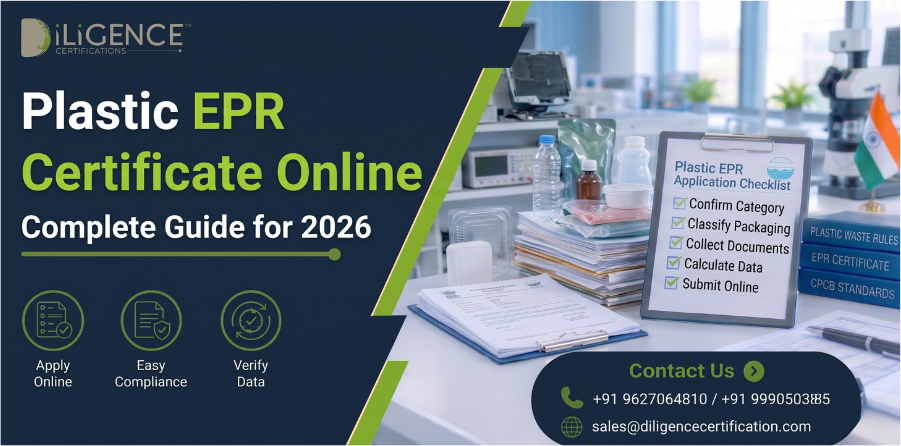
Figure out if your company is a producer, importer, brand owner or eligible plastic waste processor. Look at what your business does and check the latest official registration instructions.
If your company does than one of these activities you must check if you need extra registration or reporting for each. Don’t assume one registration covers everything.
Step 2: Classify the Plastic Packaging
Make a list of all plastic packaging used for each product. Note the type, material and category for each.
For example a skincare product might come in a plastic bottle a flexible wrapper and an outer shipping pack. These can’t just be grouped together. You must check the rules for how they should be classified.
If a pack has materials use reliable product specs and the official definitions to decide how it should be reported.
Step 3: Collect Company Documents
Get ready your company’s identity, registration info, details of the authorised person and other business records. Check the portal for the document list that matches your category.
Make sure the name, PAN, GST and other IDs match across all documents. If they don’t you might get asked to clarify
Step 4: Prepare Accurate Packaging Data
Gather the data needed to back up the quantities you report. This could be production, sales, import or packaging data depending on your category.
Your company should be able to explain how you calculated the packaging amount. Guessing without records can cause problems during reviews. When you file your annual reports.
Step 5: Access the Current CPCB Common EPR Portal
Go to the CPCB Common EPR Portal and follow the current registration steps.
If you’re already registered check how to log in and verify your migrated data. If you’re new follow the application steps for your category.
Don’t rely on guides. The portal’s screens, document needs and filing steps can change over time.
Step 6: Complete the Application and Upload Documents
Enter your business details carefully. Upload documents in the format and make sure the info in the files matches what you wrote in the form.
Before hitting submit double-check the company name, registration info, packaging details and other fields. Fixing a mistake before submission is easier than responding to a query
Step 7: Submit and Track the Application
Submit your application through the portal and save the acknowledgement or reference number.
Keep checking your account for updates or requests for info. If the authority asks for something reply clearly. Send the right records.
Submitting the form does not mean you’re approved. Wait for the approval and check the details before considering your registration done.
Step 8: Set Up a Compliance Calendar
Once approved write down your registration details. Make a schedule, for reporting and other duties.
Assign a team member or compliance person to keep track of packaging data monitor targets and prepare filings. This helps avoid missing deadlines because records are spread across departments.
Documents Required for a Plastic EPR Certificate Online
The exact document list depends on the applicant’s category, legal structure and current portal instructions. The following is a preparation checklist rather than a guarantee that every item will be required in every case.
| Document or information | Why it may be needed |
| PAN details | Helps establish the business identity |
| GST registration details, where applicable | Supports verification of business information |
| Certificate of incorporation or business registration | Establishes the legal identity of the applicant |
| Authorised person’s details | Identifies the person handling the application |
| Registered office and contact details | Supports official communication |
| Product and brand information | Helps establish the applicant’s role |
| Plastic packaging details | Supports packaging classification and quantity calculations |
| Sales, production or import records | Helps substantiate reported quantities |
| Previous EPR registration and returns, where applicable | Helps existing registrants review their compliance history |
| Other category-specific records | May be required under the current application process |
Before applying, compare the company’s legal name, PAN, GST information and other identifiers across the documents. Ensure that the business information is current and that the person handling the application has the necessary authority.
Businesses should also maintain copies of the information used to prepare the application. If the company reports a specific packaging quantity, it should retain the calculation and the records supporting that figure.
How to Prepare Plastic Packaging Data
Packaging data deserves particular attention because it can affect both registration and later compliance.
A practical spreadsheet may contain these columns:
- Product name and SKU
- Packaging material and type
- Packaging category
- Plastic packaging weight per unit
- Units manufactured, sold or imported, as applicable
- Total plastic packaging quantity
- Financial year
- Source of the information
For example, a company sells 10,000 units of a product. Instead of guessing the total plastic packaging weight, it should use reliable packaging specifications and reconcile the calculation with its business records.
If packaging changes during the year, the company should update the information. A lighter bottle, a new wrapper or a different supplier may change the quantity of plastic associated with the product.
The goal is not simply to complete a spreadsheet. It is to maintain data that the business can explain and support if questions arise.
What Are the Four Categories of Plastic Packaging?
The plastic packaging EPR framework separates things into four groups. The way something is grouped is important because the rules that apply can be different for each group.
Group One: Rigid Plastic Packaging
This includes packaging that keeps its shape like bottles, containers and other similar packages.
Examples could be bottles used for personal care products strong containers used for home items and other types of rigid packages.
The exact way something is grouped should follow the rules that’re in place.
Group Two: Flexible Plastic Packaging
This group includes types of packaging that can be bent or folded like plastic films, wraps, bags, pouches and similar materials.
For instance a company that sells products in plastic pouches should look at the material they are using and check the right group instead of thinking the packaging is the same, as a rigid bottle.
Category III: Multilayered Plastic Packaging
This category concerns covered multilayered packaging made from multiple layers, including at least one plastic layer and another material layer, as defined in the rules.
Some food packets and laminated pouches may require this type of assessment. Businesses should review the packaging specification rather than classify it based only on the product’s appearance.
Category IV: Specified Plastic Sheets and Compostable or Biodegradable Plastic Packaging
This category covers the materials and products specified under the EPR framework. Businesses should check the legal definitions before using this category for plastic sheets or compostable and biodegradable packaging.
A marketing claim such as “eco-friendly” or “biodegradable” is not, by itself, enough to establish the correct regulatory classification.
Practical advice: keep packaging specifications and supplier declarations where available. If a product contains several packaging materials, confirm the classification before reporting the quantities.
What Changed in Plastic EPR Rules in 2026?
Businesses applying for a plastic EPR certificate online should review both the portal transition and the Plastic Waste Management (Amendment) Rules, 2026.
1. Transition to the Common EPR Portal
The former dedicated Plastic EPR Portal was discontinued for new activities from 28 June 2026. Existing registered-user data was migrated to the Common EPR Portal, according to the transition information issued for the portal.
Existing registrants should:
- Access the current portal using the prescribed process.
- Verify their business and authorised-person details.
- Compare registration information with their internal records.
- Review historical registration and return information.
- Follow the applicable process if corrections are needed.
- Check the current instructions for future filings and compliance activities.
New applicants should follow the registration workflow currently displayed on the official portal. Older articles may still describe the former portal, so the publication date of a guide matters.
2. Plastic Waste Management (Amendment) Rules, 2026
The Ministry of Environment, Forest and Climate Change notified the Plastic Waste Management (Amendment) Rules, 2026, on 31 March 2026.
The amendment addresses matters including definitions relating to plastic waste processing and end-of-life disposal, labelling provisions and recycled-content requirements. Businesses should read the notified rules and any relevant official guidance before making operational changes.
For covered packaging, the notified recycled-plastic-content targets for 2026-27 include the following:
| Packaging category | 2026-27 target |
| Category I | 40% |
| Category II | 10% |
| Category III | 5% |
These figures must be read with the detailed provisions, applicable exceptions and the rules for calculating the relevant packaging weight. For Category III, the calculation is limited to the weight of the plastic layers.
Businesses should not apply a single percentage to every packaging type. The applicable category, compliance year and any relevant exception must be checked before calculating the obligation.
The amendment also addresses reuse obligations for specified rigid packaging, recycled-content labelling and verification. Businesses should review the full notification and current official instructions rather than relying only on a summary table.
3. Why These Changes Matter to Businesses
A company that registered in an earlier year may still need to update its working process. Registration data, packaging quantities and compliance calculations should reflect the applicable requirements for the relevant year.
For example, a brand owner that changes its bottle supplier should check whether the new packaging specifications affect its data. An importer should ensure that packaging information matches the products brought into India. A company using multilayered packaging should confirm the category and the relevant calculation method.
These checks are particularly important when a business prepares annual returns or reviews its EPR targets.
What Are the Fees for a Plastic EPR Certificate Online?
There is no single fee that can safely be quoted for every applicant without checking the applicable category and current official fee schedule.
The total cost may include prescribed regulatory charges and, if the business chooses to hire a consultant, separate professional service fees.
Before making a payment, confirm:
- Which registration category applies to the business.
- Which charges are prescribed by the relevant authority.
- Whether professional fees include document review and application preparation.
- Whether replies to regulatory queries are included.
- Whether post-registration support and compliance work are charged separately.
- Whether additional services are optional or necessary for the specific case.
A low quotation is not necessarily the best option if it excludes important work. At the same time, a business should not pay for services that are not required in its circumstances.
Ask for a written scope of work and a clear breakdown of costs. No consultant can guarantee regulatory approval simply because an application has been submitted.
How Long Does Plastic EPR Registration Take?
The processing time depends on the application category, the completeness of the supporting documents and the authority’s review.
An application with consistent company details and well-supported packaging quantities may be easier to assess than one with missing information or conflicting records. However, a properly prepared application can still be subject to the authority’s processing schedule or a request for clarification.
To avoid unnecessary delays:
- Confirm the registration route before starting.
- Check the current document list.
- Reconcile packaging quantities with reliable business records.
- Review all entries before submitting the application.
- Respond to official queries within the stated time.
- Monitor the portal and retain submission acknowledgements.
Do not base a product launch, import schedule or marketplace commitment on an assumed approval date. Check the current requirements and obtain the required approval before treating registration as complete.
Common Mistakes to Avoid During Plastic EPR Registration
Many avoidable problems occur because a business focuses on submitting the online form rather than checking the information behind it.
Choosing the Wrong Registration Category
A brand owner and a plastic waste processor have different roles. The company should establish the correct category based on its activities and the relevant definitions.
Reporting Incorrect Packaging Quantities
Guessing the weight of plastic packaging can create inconsistencies between the application, sales records, production data and later returns. Use reliable specifications and retain the calculations.
Relying on Outdated Portal Instructions
Older tutorials may show a process that no longer applies. Start with the current official portal and check the latest instructions for the applicant category.
Assuming Registration Completes Every Obligation
A certificate does not automatically mean that the company has met every EPR target or reporting requirement. Ongoing compliance should be planned separately.
Ignoring Recycled-Content Requirements
Applicable targets may differ by packaging category and compliance year. Do not copy a percentage from an old article without checking the relevant notification and any applicable exceptions.
Failing to Maintain Supporting Records
A business may struggle to explain its reported quantities if invoices, product specifications and sales records are stored in different places. Keep a central record of the data used for registration and returns.
Treating Consultant Promises as Guarantees
A consultant may assist with document preparation, classification and application follow-up, but approval remains with the competent authority. Be cautious about promises of guaranteed approval or a fixed processing time without official support.
What Should Businesses Do After Receiving the Certificate?
Receiving a plastic EPR certificate online is an important milestone, but it is not the end of the compliance process.
Maintain Packaging and Business Records
Keep product-wise information about packaging, production, sales or imports, as applicable. When a product or packaging design changes, update the records so that future reporting reflects the actual business activity.
Monitor Applicable EPR Targets
Determine the obligations that apply to each packaging category and compliance year. Where the rules require recycling, reuse, recycled content or other measures, maintain evidence supporting the reported compliance.
Keep EPR Certificate Records
Where EPR certificates are relevant to meeting an obligation, verify the issuing processor, certificate details, quantity and category. Maintain the supporting records and follow the portal’s prescribed process.
Submit Applicable Returns
Track annual returns and any other reporting requirements that apply to the business. Registration, target fulfilment and return filing are related tasks, but they are not interchangeable.
Review Packaging Labels
Check applicable registration-number, recycled-content and other marking requirements. Certain food-contact packaging may also be subject to relevant Food Safety and Standards Authority of India requirements.
Review Compliance Throughout the Year
Do not wait until a deadline to collect the entire year’s information. A monthly or quarterly review of packaging quantities can help identify missing data while invoices and product specifications are still easy to retrieve.
The best approach is to treat EPR as a continuing business responsibility, with clear ownership and reliable records.
Why Choose Diligence Certifications for Plastic EPR Certificate Online Certification?
Choosing a compliance consultant is a practical decision, particularly when the business is unfamiliar with the application process or manages several products and packaging types.
Diligence Certifications provides certification and regulatory compliance-related services. Businesses can review the company’s information on the Diligence Certifications homepage and discuss their requirements before proceeding.
A suitable service engagement should begin with understanding the business model, identifying the applicable registration category, organising the documents and preparing accurate packaging information.
Before selecting a service provider, ask clear questions:
- Which registration category applies to our activities?
- Which documents are required for our application?
- How should our packaging quantities be calculated?
- Which current portal process should we follow?
- What compliance duties may remain after approval?
- What is included in the professional service fee?
- Will we receive copies of the submitted application and supporting records?
Businesses seeking assistance can review the CPCB Plastic EPR Registration service and discuss the scope of support needed for their situation.
The aim should be to prepare an accurate application and establish a workable compliance process, rather than simply obtain a document. Businesses should remain involved in reviewing their own records because they are responsible for the accuracy of the information supplied.
Conclusion
Obtaining a plastic EPR certificate online begins with understanding your business activities, identifying the correct registration category and preparing reliable plastic packaging information. The application becomes easier to manage when company documents, packaging quantities and supporting records are organised before submission.
The 2026 changes make it particularly important to use the current Common EPR Portal and review the latest rules. Businesses should also remember that registration is not the end of their responsibilities. Applicable EPR targets, reporting, packaging labels and recordkeeping may require continued attention.
If your business manufactures plastic packaging, imports packaged products or sells products under its own brand, begin by checking the registration requirements and reviewing your records. If you are unsure which category applies, seek professional guidance before submitting the application.
Frequently Asked Questions
1. How can I apply for a plastic EPR certificate online?
Identify the business category and confirm whether registration is required. Prepare the necessary company documents and packaging information, then follow the current application process on the CPCB Common EPR Portal. Track the application and respond to regulatory queries. Registration is complete only when the required approval is issued.
2. Is a plastic EPR certificate mandatory for small businesses?
Small businesses should assess their activities under the applicable rules rather than assume that their size automatically exempts them. Producers, importers and brand owners dealing with covered plastic packaging should check the relevant registration requirements and any applicable exemptions.
3. What documents are required for plastic EPR registration?
Commonly relevant information includes PAN, business registration details, GST information where applicable, authorised-person details, product and brand information, packaging quantities and supporting production, sales or import records. The final checklist depends on the applicant's category and the current portal requirements.
4. What is the current CPCB plastic EPR portal in 2026?
The former dedicated Plastic EPR Portal was discontinued for new activities from 28 June 2026, and existing registered-user data was migrated to the Common EPR Portal. Existing users should verify their migrated information, while new applicants should follow the current registration instructions.
5. How much does a plastic EPR certificate cost?
The cost depends on the applicable regulatory charges and any professional assistance selected by the applicant. Check the current official fee schedule and request a written breakdown of consultant fees before proceeding.
6. How long does it take to receive a plastic EPR certificate?
The processing time varies with the application category, document completeness and regulatory review. Businesses should not rely on an unverified fixed timeline or treat an application acknowledgement as proof of approval.
7. Can an e-commerce seller apply for a plastic EPR certificate?
An eligible e-commerce seller may need registration if its activities fall under the applicable rules. A business selling products under its own brand should assess its brand-owner responsibilities, while importers and producers should review their own roles separately.
8. What are the four categories of plastic packaging under EPR?
The framework identifies Category I for rigid plastic packaging, Category II for flexible plastic packaging, Category III for multilayered plastic packaging and Category IV for specified plastic sheets and compostable or biodegradable plastic packaging. Classification must follow the applicable regulatory definitions.