BIS Certification
 CDSCO
 PESO
 CPCB
 LMPC
 WPC Approval
 Global Approvals
 TEC
 ARAI
 BEE
 ISO Certification
 DGCA Certification
 NOC For Steel
 APEDA Registration























 Business Registration
 FSSAI Mark Certification












 (32).jpg)
 Legal Services
 Trademark Registration
 Copyright Registration
 Patent Registration
 By
- Importers of battery-containing products should check whether their activities fall within the producer definition.
- Applications are submitted through the official CPCB battery EPR portal.
- Company details, GST information, PAN, authorised-person details and battery-related data may be required.
- Producers must fulfil applicable EPR obligations and submit required annual returns.
- The CPCB portal lists 30 November 2026 as the extended deadline for producer annual returns for FY 2025-26
Introduction
A business that imports rechargeable lamps, power banks or electric vehicle batteries might not realize that battery waste regulations can have an impact on its operations. Even if the company has GST registration and all the necessary import documents these things do not automatically mean the business is compliant with rules. That’s where a CPCB battery registration consultant can make a difference. Such a consultant can help the business understand the rules gather the information and plan the steps needed for proper registration.
India’s Battery Waste Management Rules, 2022 set up an Extended Producer Responsibility (EPR) system, for batteries. These rules apply to all kinds of batteries. No what type of chemistry they use, their shape, size, weight or the materials they’re made from. Whether a business is involved in producing, recycling or refurbishing batteries it must meet the registration requirements that match its activity.
For businesses the hardest part isn’t just filling out an online form. The real challenge lies in knowing which category their business falls into keeping records of sales and distribution and staying on top of responsibilities that continue even after registration is complete.
What Is a CPCB Battery Registration Consultant?
As a CPCB battery registration consultant I help businesses understand and manage registration requirements, under the Battery Waste Management Rules 2022.
My service may include reviewing business activities identifying the category preparing a document checklist helping with application information and explaining EPR responsibilities.
For example an importer who brings lithium ion batteries into India may need a compliance review than a company that runs a battery recycling facility.
I always make sure I understand the business activity before recommending a registration route.
I do not issue the CPCB registration certificate.
The application is assessed by the authority and approval depends on the rules and the information that is submitted.
Who Needs CPCB Battery Registration in India?
The requirement depends on the business’s role in the battery supply chain.
1. Battery Manufacturers
Businesses that make batteries need to check if they are registered as producers and what their Producer Responsibility (EPR) duties are. The kind of battery they make how they sell it and which rules apply will all affect what they must do to stay compliant.
2. Battery Importers
Companies bringing batteries into India might be considered producers, under the regulations. They should figure out which battery types they are handling and keep records of their imports and sales.
3. Importers of Battery-Powered Products
An importer may sell electronic products without manufacturing the batteries inside them. However, importing laptops, rechargeable lamps, power banks, toys or similar products does not automatically remove the need to assess battery EPR obligations.
The business should check its activities against the legal definition of a producer rather than assuming that only battery manufacturers need registration.
4. Private-Label Brand Owners
Private-Label Brand Owners who sell batteries or battery‑containing products under their brand should carefully review their supply arrangements and responsibilities. I think that buying a product from another manufacturer does not by itself settle every compliance question for the brand.
5. Battery Recyclers and Refurbishers
Battery Recyclers and Refurbishers have registration requirements. In addition to the CPCB requirements Battery Recyclers and Refurbishers must consider the State Pollution Control Board or Pollution Control Committee requirements.
Businesses should select the application category before preparing documents.
Which Batteries Are Covered Under the Rules?
The Battery Waste Management Rules cover several battery categories.
- Portable batteries: Used in many consumer electronics and rechargeable devices.
- Automotive batteries: Used in vehicles for starting, lighting, ignition and related purposes.
- Industrial batteries: Used in industrial equipment and applications.
- Electric vehicle batteries: Used to power electric vehicles.
Different types of batteries including lithium-ion batteries and lead-acid batteries might be covered by the rules. Companies should check the category and the rules that apply instead of thinking that small batteries or batteries that are part of another product are always allowed.
Documents Required for CPCB Battery Registration
The exact document list depends on the applicant category and current portal instructions. Businesses should prepare the relevant information before starting the application.
| Document or information | Purpose |
| GST details | Identifies the registered business |
| PAN details | Supports company identification |
| Company name and business details | Establishes the applicant’s identity |
| Registered address | Records the business location |
| Authorised-person details | Identifies the responsible contact |
| Battery category information | Describes the batteries involved |
| Sales or import data, where applicable | Supports EPR assessment |
| Supporting product information | Helps identify the relevant battery types |
| Facility and authorisation details, where applicable | Relevant to recyclers and refurbishers |
The official producer application asks for details such as GST number, company name, registered address, PAN and authorised-person information.
Check that the details match the company’s official records. Inconsistent names, incomplete product data or incorrect sales figures can lead to avoidable questions during the process.
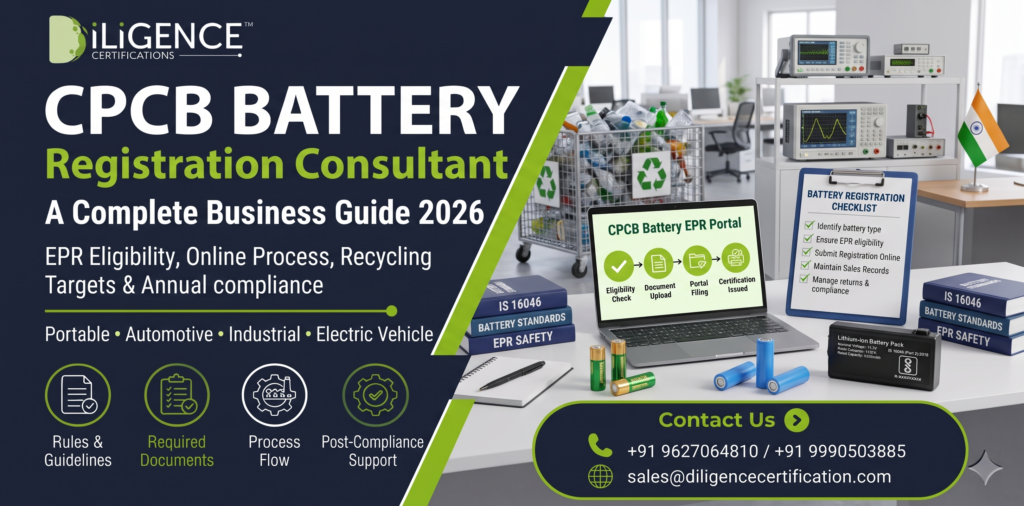
CPCB Battery Registration Process: Step by Step
Step 1: Check if the business is eligible
Find out if the business works as a producer, a recycler or a refurbisher. For those who’re producers look at the activities related to manufacturing, importing and branding products.
Step 2: Look at the existing rules
Read the Battery Waste Management Rules, 2022 and any changes that have been made to them. The Central Pollutants Control Board and the Ministry of Environment, Forest and Climate Change release documents and updates about the rules.
Step 3: Get company and battery information ready
Gather the details, about the company, the types of batteries involved and any supporting documents. Producers need to focus on sales data because that information can influence EPR calculations.
Step 4: Access the Official Portal
Visit the CPCB Battery EPR Registration Portal. Follow the current instructions for the relevant applicant category.
Step 5: Complete the Application
Enter the requested details, upload the applicable documents and review the information before submission. Follow the portal’s current fee and payment instructions, where applicable.
Step 6: Respond to Clarifications
If CPCB asks for information give a clear and correct answer along, with the right documents to back it up. A consultant can help you get everything ready. They can’t promise that your application will be approved.
Step 7: Maintain Records After Registration
Keep track of EPR targets, recycling certificates, sales data, annual returns and other obligations. Registration should be part of a compliance process.
What Is Battery EPR and Why Does It Matter?
Extended Producer Responsibility means that producers must meet end‑of‑life rules, for the batteries they sell.
Battery rules require producers to meet recycling or refurbishing duties through the set system. Registered recyclers create EPR certificates when they process battery waste and producers then use those certificates following the rules and portal steps.
Businesses should understand three areas:
Market data: What battery quantities and categories has the company placed on the market?
EPR targets: What obligations apply to the company for the relevant period, and how will they be fulfilled?
Records and reporting: Which certificates, supporting documents and annual-return details must be maintained?
For example, a business with incomplete sales data may struggle to calculate its obligations accurately. Maintaining records throughout the year is more practical than trying to reconstruct all information immediately before filing.
Latest CPCB Battery Registration and Compliance Updates
Battery compliance requires regular checks of official notices because requirements and deadlines may change.
Annual Returns for FY 2025-26
The CPCB battery EPR portal currently lists 30 November 2026 as the extended deadline for producer annual returns for FY 2025-26. Businesses should verify the latest portal notice and the requirements applicable to their category before filing.
An extended deadline does not mean that a business is exempt from filing.
Labelling Requirements
The Battery Waste Management Amendment Rules, 2025 deal with EPR registration-number display and certain labelling options, including barcode or QR-code requirements that depend on conditions.
Companies need to check the notification and make sure about the rules, for their products instead of thinking that the same labelling method works for all products.
Annual Reporting
Getting registered is not the step. Producers have to keep looking at their EPR responsibilities keep records and send the necessary reports.
Use the CPCB portal and the guidance manuals when making an application or an annual report.
Common Mistakes Businesses Should Avoid
Assuming only battery manufacturers need registration. Importers and certain businesses selling battery-containing products must also assess their status.
Choosing the category. Producer, recycler and refurbisher applications are not interchangeable.
Submitting details. Company names, PAN, GST information and addresses should be checked carefully.
Ignoring sales data. Incomplete records can make EPR planning. Reporting more difficult.
Treating registration as a one-time task. Applicable EPR targets and reporting responsibilities may continue after approval.
Using information. Check CPCB notices rather than relying solely on old articles or saved checklists.
Sharing account credentials carelessly: CPCB advises businesses to use the dedicated email address and mobile number of their authorised person. Consultant contact details should not be substituted for the authorised person’s details.
How to Choose the Right CPCB Battery Registration Consultant
Before appointing a consultant, consider whether the service provider can explain the applicable rules clearly and identify the work required for your business.
Check these points:
- Regulatory knowledge: The consultant should understand the battery rules and relevant amendments.
- Eligibility assessment: They should review manufacturing, importing and branding activities before advising you.
- Clear documentation: You should receive a practical list of the documents needed for your application.
- Ongoing compliance support: Ask whether the service includes EPR planning, annual-return assistance or only registration support.
- Transparent fees: Understand the scope of work and any additional charges.
- No false guarantees: CPCB makes the registration decision. Be cautious of guaranteed-approval claims.
- Account security: Your business should retain control of its authorised contact details and portal credentials.
A good consultant explains both the immediate application process and the responsibilities that follow registration.
Illustrative Example: An Electronics Importer
Consider an Indian company that imports rechargeable lamps and portable speakers to sell under its own brand. The company first pays attention to customs and GST paperwork. During a check on compliance it discovers that the products have batteries and that its import and branding activities need to be looked at according to the Battery Waste Management Rules. The company then finds out what types of batteries are used checks if it is a producer collects its sales records and gets ready with the information needed for the registration process. This example is a sample, not a statement, about a real customer. It shows how looking at the business model before applying can help spot compliance needs early.
Why Choose Diligence Certifications for CPCB Battery Registration Consultant Certification?
Battery EPR compliance is more than sending an application. Businesses must understand Battery EPR compliance responsibilities gather data and prepare for continuous reporting. I hope this helps clarify the process.
Diligence Certifications offers certification and regulatory compliance support for businesses. The relevant scope of Diligence Certifications should be discussed based on a businesss activity, battery category and its current registration status. I suggest chatting with a Diligence Certifications representative for tailored advice.
Learn more about Diligence Certifications by visiting the Diligence Certifications homepage. I found their site very useful for guidance.
Before hiring a service provider explain whether a business manufactures batteries imports batteries sells products that contain batteries or runs a recycling or refurbishing facility. This explanation helps establish the requirements and the needed support. I have seen many businesses miss this step.
A consultant can help organise the process. A business remains responsible for providing correct information and, for meeting all applicable legal obligations. I have worked with consultants who emphasize that the final responsibility lies with the business.
Conclusion
Battery waste compliance is a duty for companies that make bring in or sell batteries and products that have batteries in them. The first thing to do is find out if your company’s in the right group like a producer, recycler or someone who fixes batteries.
A trustworthy CPCB battery registration advisor can guide you through the registration steps help you put together details and get ready for ongoing EPR compliance. Companies also need to keep an eye on reports the rules for labels and any new information from CPCB.
If your company wants to bring in battery-operated items start a brand that you own or look at the rules check what is needed before you send in an application. A good plan, for compliance can help your company handle its duties better.
Frequently Asked Questions
1. What does a CPCB battery registration consultant do?
A CPCB battery registration consultant helps businesses assess eligibility, prepare documents, organise application information and understand ongoing battery EPR obligations. CPCB remains responsible for granting registration.
2. Who needs battery EPR registration in India?
Battery manufacturers, importers and certain brand owners may need registration as producers under the applicable rules. Importers of battery-containing products should also assess whether they fall within the producer definition.
3. What documents are required for battery registration?
Common information includes GST and PAN details, company information, registered address, authorised-person details and battery-related data. Additional records depend on the applicant category and portal requirements.
4. How can I apply for CPCB battery registration online?
Visit the official CPCB battery EPR portal, select the relevant applicant category, provide the requested information, upload the applicable documents and follow the current submission instructions.
5. Do importers of battery-powered products need registration?
They may need registration if their activities fall within the producer definition. The product, import arrangement, brand ownership and applicable rules should be reviewed before deciding.
6. What is the annual return deadline for FY 2025-26?
The CPCB battery EPR portal currently lists 30 November 2026 as the extended deadline for producer annual returns for FY 2025-26. Verify the latest official notice before filing.
7. Is registration enough to complete battery EPR compliance?
No. Businesses must also meet applicable EPR obligations, maintain required records and complete relevant annual reporting and other compliance activities.