 BIS Certification
 CDSCO
CDSCO
 PESO
PESO
 CPCB
CPCB
 LMPC
LMPC
 WPC Approval
 Global Approvals
 TEC
TEC
 ARAI
ARAI
 BEE
BEE
 ISO Certification
 DGCA Certification
 NOC For Steel
 APEDA Registration























 Business Registration
 FSSAI Mark Certification












 (32).jpg)
 Legal Services
 Trademark Registration
 Copyright Registration
 Patent Registration
 By
By - BIS on polyethylene ensures legal compliance and builds client trust in India.
- IS 7328:2020 covers LDPE, LLDPE, HDPE grades for moulding and extrusion.
- QCO 2025 will make BIS licensing mandatory with stricter audits and tests.
- Professional guidance can simplify lab testing, documentation, and approvals.
- Neglecting BIS on polyethylene can result in product rejections and loss of orders.
Introduction
I still remember a client from Ahmedabad who manufactured food-grade pouches. Their buyer, a reputed MNC, demanded BIS on polyethylene for a product shipment. The supplier assumed their LDPE granules were “standard” because they sourced them from a known trader. But a last-minute test showed the melt flow index was outside the acceptable range, violating the IS 7328:2020 requirements. The entire ₹1.2 crore order was put on hold - nearly lost because the supplier had no BIS licence to show.
That event rattled them. And it is not an isolated case. In 2025, with the new QCO making BIS certification for polyethylene compulsory, ignoring these standards can shut down your product lines overnight.
If you are in India’s polyethylene market - packaging, automotive, wires, cables, tanks - you must get ahead of these updates. BIS on polyethylene is not optional anymore, and it protects you from legal penalties, commercial rejections, and even criminal liabilities.
What is BIS Certification for Polyethylene and Why Does It Matter?
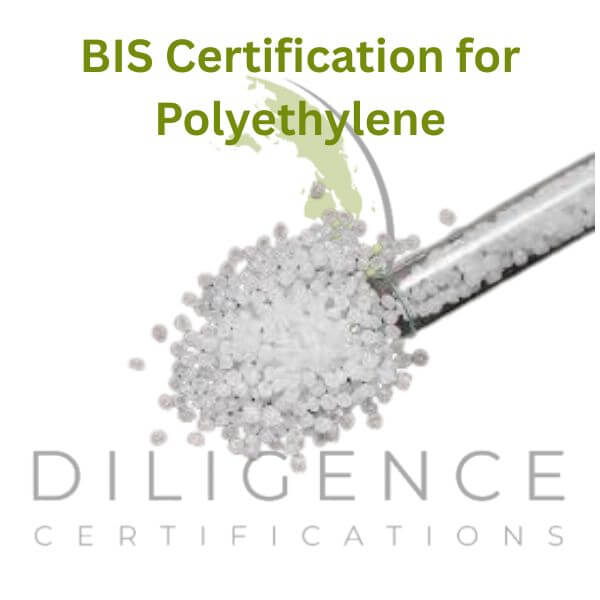
The Bureau of Indian Standards (BIS) certification essentially confirms that your polyethylene resin meets prescribed Indian Standards - IS 7328:2020 in this case. Polyethylene is everywhere in Indian industry, from irrigation pipes to tarpaulins to high-end blow-moulded tanks. If the grade you use fails quality controls, it can directly damage consumer safety, environmental safety, and your commercial credibility.
In India, BIS on polyethylene functions as a quality gatekeeper. It helps:
- protect the health and safety of end users
- ensure consistent resin performance across industries
- verify correct density, melt flow, and additives
- build confidence in your product in both domestic and international markets
Come 2025, the third amendment QCO will enforce mandatory licensing with stricter conditions. That means even a small trader or compounder cannot bypass BIS.
What is IS 7328:2020 - Specification for Polyethylene Material for Moulding and Extrusion
The specification for polyethylene material for moulding and extrusion is given in IS 7328:2020 which if the basis of BIS on polyethylene. This Indian Standard defines in a straightforward manner, the requirements, sampling methods, and testing methods for low-density polyethylene (LDPE), linear low-density polyethylene (LLDPE), and high-density polyethylene (HDPE). These grades or resins are generally available as granules, pellets, or powders for moulding or extrusion.

In my experience, manufacturer often overlook that IS 7328:2020 is intended to define and characterize these polyethylene materials based on base polymer criteria and generally accepted use applications, it does not mean they preclude the use of polyethylene nor do they allow performance under every conceivable end use or processing situation, it is essential to keep this in mind when specifying and determining the grade for your moulding function.
The standard applies to all homopolymer polyethylenes, ethylene copolymers containing other 1-olefinic monomers less than 50% by weight and non-olefinic monomers with functional groups up to a maximum of 3% mass fraction. Importantly, this standard does not apply to masterbatches nor highly ultra-high molecular weight polyethylene (PE-UHMW); I have worked with clients that mistakenly attempted to license masterbatches under IS 7328:2020 and had them refused, so be aware of that exclusion.
The designation system of LDPE, LLDPE, and HDPE compounds follows a block coding approach:
- Data Block 1: the Indian Standard
- Data Block 2: the material type
- Data Block 3: the intended application or processing method
- Data Block 4: designatory properties like melt flow index (MFI) and density
- Data Block 5 (if applicable): performance additives and supplementary details
Manufacturers must declare each designation code they wish to certify within their BIS licence application, even when requesting a scope change later. It is the only way the Bureau will verify whether your material meets the mandatory test protocols.
Above all, the standard mandates the material to be homogeneous and free from foreign matter. Density and melt flow rate (or melt flow index) are considered the minimum essential properties that must be tested across all grades - LDPE, LLDPE, HDPE, or their compounds. Testing labs will focus on these parameters at the very first stage of your BIS journey.
QCO 2025 Explained: New Rules, Deadlines, and Exemptions
The Ministry of Chemicals and Fertilizers is finalising the next Quality Control Order (QCO 2025), which will apply stricter oversight on polyethylene. From the published drafts, here are the critical highlights for you:
| Key Highlights of QCO 2025 for Polyethylene |
| Compulsory BIS licence for all resin producers and importers |
| Mandatory factory inspection every two years |
| Third-party lab validation for melt flow index, density, and tensile |
| Complete traceability of each resin batch with labelled code |
| Penal provisions under BIS Act for non-compliance |
Clients sometimes think “we’ll fix it later,” but under QCO 2025, even a small missing label can block an entire shipment.
BIS Certification Process for Polyethylene Under IS 7328:2020

If you are planning to start, here is a practical, field-tested approach:
- Identify product scope (LDPE/LLDPE/HDPE grades, additives, MFI ranges)
- Collect technical documentation (datasheets, test certificates, production flow charts)
- Apply on BIS portal with correct codes per IS 7328:2020
- Submit samples to BIS-approved lab for mandatory tests
- Undergo factory audit by BIS auditors
- Correct deficiencies noted by auditors if any
- Pay licence fees after approval
- Get your unique CM/L number for marking
- Ensure periodic renewal every two years
If you have multiple grades or additives, mention all of them clearly in the application to avoid a change-of-scope problem later.
Testing Requirements for BIS On Polyethylene
The IS 7328:2020 standard, coupled with QCO 2025, focuses on a few non-negotiable tests. These are the minimum:
- Density test
- Melt Flow Index (MFI)
- Tensile strength
- Ash content (for certain grades with fillers)
- Environmental stress crack resistance
If you skip even one of these, the Bureau may refuse your licence or block your CM/L. In my consulting practice, we have seen clients go back to testing repeatedly because they overlooked MFI consistency. Please do not treat these as “just lab formality” - they are legal requirements.
Costs Involved of BIS License for Polyethylene
Clients often think BIS on polyethylene is like routine paperwork, but a realistic plan is necessary. Here is a quick bullet snapshot of typical expenses (without fixed values, for illustration):
- Application processing fees (BIS fees plus documentation)
- Laboratory testing charges per resin grade
- Factory audit travel and accommodation for BIS team
- Renewal and periodic retesting costs
- Professional consultancy if you need help to coordinate
For exact estimates, you can contact Diligence Certifications or any other trusted compliance advisor.
Conclusion
BIS on polyethylene is not just a regulatory checkmark - it is a true enabler of trust, consistency, and quality in today’s competitive market. From the smallest packaging films to mission-critical automotive parts, polyethylene is everywhere, and any compromise in its standard can harm end users and your brand alike. I have seen firsthand how a factory lost crores in orders because a single BIS clause was missed, or a test failed at the final moment.
New QCO 2025 changes make compliance increasingly important. You’re going to be subjected to more rigorous lab tests, more frequent third-party verifications, and much tighter scrutiny on every shipment. Clients will not be willing to allow for excuses, and enforcement agencies will not give you any breaks. At the same time, attaining that BIS certification for polyethylene builds your own credibility, separating you from the non-compliant competitors in your space. Buyers, from domestic to export markets, are increasingly looking for licensed and correctly marked materials, and they are asking more questions.
To reiterate: a BIS certificate will always be cheaper than a cancelled order or warehouse full of non-compliant stock. The peace of mind you hold knowing your polyethylene is compliant is worth every penny.
At Diligence Certifications, we have helped hundreds of clients successfully pass their BIS audits, first time. Nothing is going to save you more time, money, and anguish.
Don’t wait for a non-compliance notice. Reach out now to secure your BIS licence for polyethylene and stay ahead of the QCO 2025 curve - because a compliant business is a successful business.
Frequently Asked Questions
What does BIS certification for polyethylene mean ?
BIS certification means your LDPE, LLDPE or HDPE resins meet the requirements of Indian Standard IS 7328:2020. It ensures that the essential properties of the material such as melt flow index, density, tensile strength etc. meet minimum safety and quality norms. BIS helps to ensure user safety and quality assurance. It also helps to foster market confidence in the polymer.
Is a BIS certification for polyethylene Mandatory ?
Yes it is mandatory by the provisions of QCO 2025. BIS certification is mandatory to manufacture, sell and import polyethylene used in molding or extrusion. If you don't have a BIS, it's illegal to market these materials.
Which grades are covered under IS 7328:2020 ?
IS 7328:2020 covers LDPE, LLDPE, and HDPE resins used for moulding or extrusion, except PE-UHMW and masterbatches. You must check your polymer type and additives before applying.
How often must BIS licences be renewed?
BIS licences typically require renewal every two years. A factory inspection is also repeated periodically, so keep your records up to date.
What happens if I use non-BIS polyethylene?
Non-BIS polyethylene can be seized or rejected at customs or by clients. You may also face penalties under the BIS Act. It is too risky to operate without valid certification.
What is the role of QCO 2025?
QCO 2025 will strictly enforce BIS licensing with more tests, third-party audits, and tracking of resin batches. This means every grade must be certified and marked to avoid legal action
How long does BIS approval take?
If you prepare documents properly and coordinate your audits, approval may take around 60-90 days. Missing test reports or improper paperwork can delay it further.
What documents are needed for BIS on polyethylene?
You will generally need the product datasheet, production flow chart, safety test results, quality plan, and previous testing records if available.
Can traders also get BIS certification?
Yes, if you import or stock polyethylene, you still need BIS licensing. QCO 2025 makes no distinction between manufacturers and traders.
How can I get help with BIS on polyethylene?
You can consult compliance experts like Diligence Certifications, who manage document submissions, testing coordination, and audits, reducing your workl


