BIS Certification
 CDSCO
CDSCO
 PESO
PESO
 CPCB
CPCB
 LMPC
LMPC
 WPC Approval
 Global Approvals
 TEC
TEC
 ARAI
ARAI
 BEE
BEE
 ISO Certification
 DGCA Certification
 NOC For Steel
 APEDA Registration























 Business Registration
 FSSAI Mark Certification












 (32).jpg)
 Legal Services
 Trademark Registration
 Copyright Registration
 Patent Registration
 By
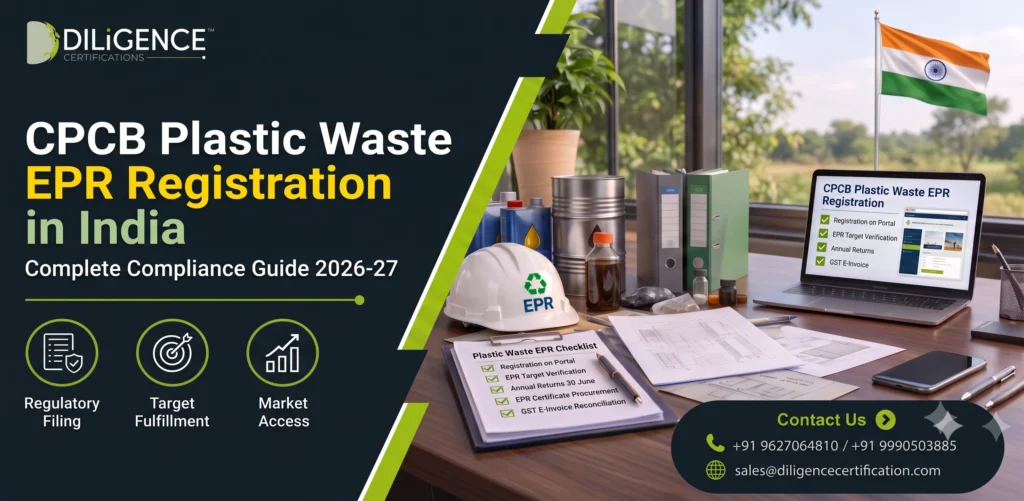
By - The CPCB EPR portal registration helps eligible businesses meet their Extended Producer Responsibility obligations, for packaging.
- I note that producers, importers and brand owners are commonly referred to as PIBOs.
- Plastic waste processors have registration and reporting requirements.
- Businesses should use the current Common EPR Portal and follow its latest instructions.
- PAN, GST, business registration and packaging information should be checked before applying.
Introduction
If your business sells products in plastic packaging, you may have questions about CPCB EPR portal registration. Do you need to register? Which documents should you prepare? What happens after submitting the application? These are common questions for businesses that are trying to understand their environmental compliance responsibilities.
For example, imagine you sell packaged food under your own brand. Your products are manufactured by another company and packed in plastic pouches. You may think that the manufacturer is responsible for everything related to plastic waste. However, your role as a Brand Owner also needs to be checked under the applicable rules.
The same issue can arise for importers bringing packaged goods into India and businesses manufacturing plastic packaging. The requirements depend on your business activity and the category under which you fall.
There is also an update, for 2026. The old plastic EPR portal stopped working on 28 June 2026. All user data was moved to the Common EPR Portal. Businesses need to review the portal instructions before starting a new application or linking an existing account.
In this guide we explain how to register on the CPCB EPR portal. We cover who can register what documents are needed, how to complete the steps common mistakes to avoid and what you must do after you register. I hope this guide helps you.
What Is CPCB EPR Portal Registration?
The CPCB EPR portal registration is the process for companies that have to follow the Extended Producer Responsibility rules. Extended Producer Responsibility, often called EPR means that companies have some duties to handle the waste from the products or packaging they put into the market. For packaging the rules may ask some companies to sign up and meet certain waste management tasks. These duties vary based on the type of business the kind of packaging and the rules that apply.
Think of a company that sells shampoo in bottles. This company needs to find out if its activities are covered by the EPR rules. If registration is needed the company must go through the steps and keep the information that is required for following the rules. The Central Pollution Control Board, known as CPCB gives portal details and rules. Depending on the rules and the kind of business the right registration group could be CPCB or a State Pollution Control Board or a Pollution Control Committee.
It is important to know that EPR registration is more, than filling out a form online. Companies should first figure out their type get the right information ready and know the duties that will come after registration.
What Is the Common EPR Portal?
The Common EPR Portal is the online platform for EPR services. Businesses that use packaging should look at the latest instructions on the official system.
The old plastic EPR portal was shut down on 28 June 2026. All user data was moved to the Common EPR Portal. Existing users must check their account information. Follow the required linking steps.
If a business had an account, on the portal it should not assume that the migration automatically made all details correct. The business should review company information. Follow the official steps if a mismatch appears.
The official transition notice tells existing users to use the company PAN and the same authorised‑person PAN when linking their old account. New applicants should follow the registration steps shown on the Common EPR Portal.
Portal procedures can change. It is safer to read the official notices instead of relying only on older articles or screenshots.
Who Needs CPCB EPR Portal Registration?
The first step is to find out which category fits your business. This is important because the registration process and the compliance duties can be different. The registration process and the compliance duties may vary depending on the category you choose.
1. Producers
Producers can be businesses that are making packaging or other items that are covered by the rules. This is based on the definitions that’re, in place.
For example a company that makes containers, bottles or materials used for packaging needs to make sure if what they do fits into the Producer group.
A business should not decide which category it belongs to by looking at the product name. It should look at the definition and the current rules before making a choice.
2. Importers
Importers should assess their responsibilities when bringing covered plastic packaging or packaged goods into India.
Imagine a company importing personal-care products packed in plastic bottles. The company should check whether its importing activities bring it within the applicable EPR requirements.
It should not automatically assume that the overseas manufacturer will take care of every Indian compliance obligation. The importer’s own role must be assessed under the relevant rules.
3. Brand Owners
I think a Brand Owner may have EPR responsibilities when products are sold under the Brand Owners brand and the packaging falls within the applicable framework. For example a Brand Owner may hire another company to manufacture and pack the Brand Owners products. The finished goods are then sold under the Brand Owners brand name. In this situation outsourcing manufacturing does not automatically remove the need to check the Brand Owners responsibilities. The Brand Owner should assess the Brand Owners role under the definition and registration requirements.
4. Plastic Waste Processors
Plastic Waste Processors, including eligible recyclers and other covered processing facilities, have their own registration and reporting requirements.
Their role is different from that of PIBOs. A recycling business should check the requirements for its processing activity rather than follow the PIBO application process without verification.
Documents Required for CPCB EPR Portal Registration
One common problem is beginning an application without gathering the papers. This can cause details, wrong data and preventable holdups.
A better way is to get your company files ready first. The specific papers needed vary based on the type of person applying how the business is set up and what the website says to do.
Important things to have might be:
- Company PAN details.
- GST registration details.
- Certificate of incorporation or other business registration proof.
- Registered office address and contact information.
- Details of the authorised person.
- CIN details, where applicable.
- Import Export Code (IEC), where relevant.
- Information about the products and plastic packaging handled by the business.
- Relevant production, import, sales or packaging quantity records.
- Declarations and supporting documents required by the portal.
This is a general preparation checklist, not a fixed list for every applicant. Always check the current document requirements for your category.
CPCB EPR Portal Registration Process: Step by Step
The exact screens and fields could be different when the portal gets updated. The following steps explain how to get prepared for the application and what to look for at each part.
Step 1: Find your business category
Begin by deciding if your business belongs to the Producer, Importer, Brand Owner or Plastic Waste Processor category.
If your company does than one thing check if additional registration rules are, in place. Do not choose a category just because it seems like your business.
Knowing this early can help you avoid getting the wrong documents ready or putting the information in the place.
Step 2: Visit the official portal
If you already have an account from the plastic EPR portal follow the current account linking process. Current users must pay attention to the PAN-matching rules.
New people should use the registration method that fits their business category.
Step 3: Prepare your business information
Have your company details ready, including the name, PAN, GST details, registered address and the contact details of the person who is allowed to act for the company.
Check each part before moving. It is much easier to fix a mistake before you send it than to explain it after a question comes up.
Use up to date information that matches your company records.
Step 4: Enter packaging and business details
Fill in the fields that match your category. Depending on the application these may include details about products, packaging materials, making, imports or the right amounts.This step needs care. The total value of products sold is not the same as the amount of packaging used.
For example a company might sell thousands of packaged items. The packaging data must be calculated using the right info asked by the portal. Do not make up numbers. Take figures from other reports.
Keep the supporting records ready so you can explain the numbers if needed.
Step 5: Upload the required documents
Upload the documents that the current portal instructions ask for. Make sure the files are clear and have the company details.
If a declaration or supporting document needs a signature follow the rules. Avoid uploading documents that do not match your companys current info.
Before moving check that every needed field and file is filled in.
Step 6: Review the application
Take a few minutes to look at the application before sending the application.
Check the business category, company details, packaging info and uploaded files. Make sure the details match across the application and the supporting records.
Follow the instructions, for any payment, declarations or other steps needed.
Do not use a payment amount or an outdated way to pay.
Step 7: Submit the application. Check its status
After you send it keep an eye on the application through the official portal.
The authority might ask for info or an explanation depending on the application. If that happens read the question carefully. Send the right details and the right documents.
Keep the application number and important messages in a place. These might help when you check on the application later.
Step 8: Check the registration result
If the application is accepted check the registration details and the certificate that is given through the way.
Check the company name and other important info, for errors. If you see a mistake follow the way to fix it.
Remember that approval is not the end of the work. Your business might still need to reach the EPR targets keep records and send reports.
What Should You Do After Registration?
Some businesses focus on getting the registration certificate and pay less attention to what happens after. This can lead to problems down the line.
Once a business is registered it should know what ongoing requirements apply based on its category and packaging activities.
Keep your packaging records up to date.
Maintain records of all packaging your business puts into the market along with any details required by the rules.
If your business sells products that use types of plastic packaging create a clear and consistent way to collect and check the needed information.
Good records make it easier to prepare returns and respond to questions about the numbers you report.
Understand the EPR targets that apply to your business.
EPR targets can vary by business category packaging type, the schedule, in effect and the financial year.
Don’t rely on a recycling percentage you found in an article. Always check the rules and any recent updates that affect your business.
If your company manages than one type of packaging review each requirement separately.
Check recycling and processing records.
Where the rules require recycling or other approved waste management activities keep the supporting documents.
If you work with a Plastic Waste Processor make sure they are registered and keep all required transaction and certificate records.
Don’t assume that any recycling invoice alone proves you’ve met your EPR obligations.
Track reporting deadlines.
Some businesses are required to submit returns and other information according to the rules. It is important to stay aware of the deadlines that apply to your business category. Make sure to assign a person or team member to manage these tasks.
A simple compliance calendar can be very helpful especially when, than one person is involved in running the business. This way you can avoid missing any submissions.
Common CPCB EPR Portal Registration Mistakes
A few little errors can make things more difficult than they should be. Being aware of what to look out for in advance can help you get your application ready correctly.
Choosing the category
A manufacturer, an importer, a brand owner and a waste processor might all have duties. Look at the definitions before picking a category.
Entering business details
Check company names, PAN information and other records carefully. Existing users should also follow the account‑linking instructions.
Using packaging figures
- Use records and a consistent method, for calculating the requested information. Do not estimate quantities just because the form requires an answer.
Uploading documents
- Check that every required document is readable and properly completed. Make sure that the information matches the business details.
Following instructions
- The portal and its procedures can change. Always look at notices of relying only on old articles saved screenshots or advice written for an earlier system.
Ignoring responsibilities after registration
- Registration does not automatically finish recycling targets reporting duties or other applicable obligations. Businesses should prepare for compliance from the start.
Assuming every EPR category follows the rules
Plastic packaging, e-waste batteries used oil and tyres are covered by different rules. Make sure to follow the process, for the business activity.
Is CPCB EPR Portal Registration Mandatory?
Registration is required for businesses that meet the registration conditions. Whether a specific business needs to register depends on what the business does and the laws that’re in place.
For example a company that brings goods into the country using packaging must pay attention to its role as an importer. A business that sells products under its name should check if it meets the definition of a Brand Owner.
Not every business can assume the rules are the same, for them. The correct approach is to determine the business category review the rules that apply and make sure the right registration path is followed before starting the process.
If the situation is not clear it is better to seek guidance of trying to guess.
What Is the Difference Between CPCB and SPCB Registration?
CPCB stands for the Central Pollution Control Board, while SPCB means State Pollution Control Board. PCC stands for Pollution Control Committee.
The applicable plastic packaging EPR guidance distinguishes PIBOs operating across more than two States from those operating in one or two States or Union Territories. The relevant authority and registration route should be confirmed against the current official instructions.
Do not assume that the location of your registered office alone decides the correct registration route. Your business activities and the applicable rules also matter.
Why Choose Diligence Certifications for CPCB EPR Portal Registration Certification?
For many businesses, the difficult part is not opening the portal. It is understanding the correct category, collecting the right documents and making sure the information is consistent.
Diligence Certifications can help businesses understand the registration process and prepare the information needed for an application. Depending on the agreed scope of service, assistance may include reviewing business activities, checking documents and organising application details.
Before starting, ask which services are included and what information your company needs to provide. Your business should keep its official records and make sure every detail submitted is accurate.
You can learn more about the company through the Diligence Certifications or review the CPCB Plastic Waste EPR Registration service page for service-specific information.
No consultant can guarantee approval or remove the applicant’s legal responsibilities. The outcome depends on the applicable requirements and the relevant authority’s review.
Conclusion
CPCB EPR portal registration is an important compliance step for businesses covered by India’s plastic packaging EPR framework. The process becomes easier when you first identify the correct category, collect the necessary documents and follow the current portal instructions.
Businesses should also remember that registration is not the final step. Applicable targets, packaging records and reporting responsibilities need continued attention.
If you are unsure which category applies to your business or what documents you should prepare, seek professional guidance before submitting the application. A little preparation at the beginning can help you avoid common errors and manage your compliance responsibilities more confidently.
Frequently Asked Questions.
1. What is CPCB EPR portal registration?
CPCB EPR portal registration is the online process through which eligible businesses register to meet their Extended Producer Responsibility obligations under the applicable waste management rules. For plastic packaging, this may apply to Producers, Importers and Brand Owners.
2. Who needs CPCB EPR portal registration?
Businesses classified as Producers, Importers and Brand Owners under the applicable plastic packaging rules may need registration. Eligible Plastic Waste Processors have separate registration requirements.
3. What documents are required for CPCB EPR registration?
Commonly required information includes company PAN, GST details, business registration proof, authorised-person details and relevant packaging or business activity records. The exact document list depends on the applicant category and current portal instructions
4. How can I apply for CPCB EPR portal registration online?
Visit the official Common EPR Portal, check the latest instructions, select the appropriate registration category, enter the required business information, upload the specified documents and submit the application according to the portal's process.
5. Is CPCB EPR registration mandatory for Brand Owners?
Brand Owners dealing with covered plastic packaging may need registration under the applicable rules. Outsourcing manufacturing or packaging does not automatically remove a Brand Owner's responsibilities. The business should check the relevant definitions and requirements
6. How long does CPCB EPR portal registration take?
The processing time can vary depending on the applicant category, document completeness, regulatory review and any clarification requests. Applicants should check the current official instructions rather than rely on an unverified fixed timeline.
7. What is the difference between CPCB and SPCB registration?
CPCB stands for Central Pollution Control Board, while SPCB stands for State Pollution Control Board. The applicable plastic packaging EPR framework distinguishes registration routes according to the business category and operational coverage. Check the latest official instructions to identify the correct authority.
8. What is the Common EPR Portal?
The Common EPR Portal is the online platform used for relevant EPR services. Businesses should use the current official portal and follow its latest instructions for registration and account linking.
9. What happens after CPCB EPR portal registration?
After registration, businesses should review their applicable EPR obligations. These may include meeting prescribed waste management targets, maintaining packaging records, working with eligible processors where required and submitting relevant returns.
10. Can a consultant help with CPCB EPR portal registration?
A compliance consultant can help businesses understand the applicable category, organise documents and prepare their applications. The business remains responsible for providing accurate information, and registration approval depends on the relevant authority's review.