BIS Certification
 CDSCO
CDSCO
 PESO
PESO
 CPCB
CPCB
 LMPC
LMPC
 WPC Approval
 Global Approvals
 TEC
TEC
 ARAI
ARAI
 BEE
BEE
 ISO Certification
 DGCA Certification
 NOC For Steel
 APEDA Registration























 Business Registration
 FSSAI Mark Certification












 (32).jpg)
 Legal Services
 Trademark Registration
 Copyright Registration
 Patent Registration
 By
By - You might notice that EPR requirements might affect Producers, Importers and Brand Owners (PIBOs) who deal with packaging.
- Before applying I suggest businesses first identify their packaging category and determine how plastic they use.
- Common information that EPR requirements need includes PAN, GST incorporation details, IEC, product details and packaging data for importers.
- Registration is the step; EPR requirements also demand managing recycling, reuse, recycled content, certificates and reporting.
- The 2026 amendments bring changes to recycled plastic content and, to packaging compliance.
Introduction
Businesses that bring in or sell products with packaging may need to get CPCB plastic EPR registration under India’s plastic waste management rules.
Extended Producer Responsibility, also known as EPR means that companies have to take care of the packaging they put into the market even if those companies did not make that packaging, on their own.
The process involves checking if the company needs to sign up finding out which kinds of packaging are included calculating how much plastic is used, gathering the papers and finishing the CPCB registration process. Once registered companies have to carry out EPR responsibilities.
This guide explains CPCB plastic EPR registration the documents needed the application steps, the 2026 rules, the recycling goals and the compliance requirements-all, in language.
What Is CPCB Plastic EPR Registration?
CPCB plastic EPR registration forms part of India’s Extended Producer Responsibility system for plastic packaging.
EPR places responsibility on businesses that introduce applicable plastic packaging into the market to support its proper management at the end of its useful life.
In simple terms, a business should know:
- How much applicable plastic packaging it introduces into the market.
- What category the packaging belongs to.
- What EPR obligations apply to that packaging.
- How those obligations will be fulfilled and reported.
The framework covers Producers, Importers and Brand Owners. Plastic Waste Processors have separate registration and compliance responsibilities.
EPR should not be viewed simply as an online registration. The information submitted should be supported by business records such as production, purchase, import, sales and packaging data.
Who Needs CPCB Plastic EPR Registration?
The first step is to find out if your business falls under the rules that apply.
1. Producers
If businesses manufacture packaging or fall within the Producer definition businesses must check the EPR obligation.
Examples of businesses that produce bottles, containers and other packaging products illustrate this requirement.
Businesses should always read the definition before deciding whether registration is required.
2. Importers
Importers should carefully examine plastic packaging associated with imported products.
A company may not manufacture the packaging itself, but if it imports packaged products into India, it may have applicable EPR responsibilities.
This can affect businesses importing food products, cosmetics, household products, electronic products and other packaged goods.
3. Brand Owners
Brand owners may also be part of the EPR framework.
For instance a company might sell a product using its brand but get the packaging from a different manufacturer. Just because another company made the packaging doesn’t mean the brand owner is, off the hook.
The business needs to look at how the deal actually works and what the rules say.
4. Plastic Waste Processors
Plastic Waste Processors, including eligible recycling and processing facilities, have separate responsibilities.
Their requirements are different from those applicable to PIBOs. Other environmental permissions and consents may also apply depending on the facility.
What Plastic Packaging Comes Under EPR?
Correct packaging classification is important because obligations can vary by category.
Category I: Rigid Plastic Packaging
This generally includes rigid plastic packaging such as:
- Plastic bottles
- Rigid containers
- Plastic jars
- Similar rigid packaging
Category II: Flexible Plastic Packaging
This can include:
- Plastic pouches
- Flexible wrappers
- Plastic films
- Certain plastic sheets
- Other flexible packaging formats
Category III: Multilayered Plastic Packaging
Multilayer packaging is made of plastic with one or more additional layers and I find that this mixed construction is common in many products.
If a business uses packaging the business should examine multilayer packaging carefully to know which category applies because the rules can differ.
Category IV
Category IV is, for sheet-like plastic packaging and carry bags that are made from compostable plastics and that follow the applicable framework and I think this helps reduce waste.
Why Classification Matters
Businesses should avoid putting every type of plastic packaging into one combined figure.
For example, a company using rigid bottles and flexible pouches should maintain category-wise records.
The business should be able to explain:
- What the packaging is
- What material it contains
- Which category applies
- How much was introduced into the market
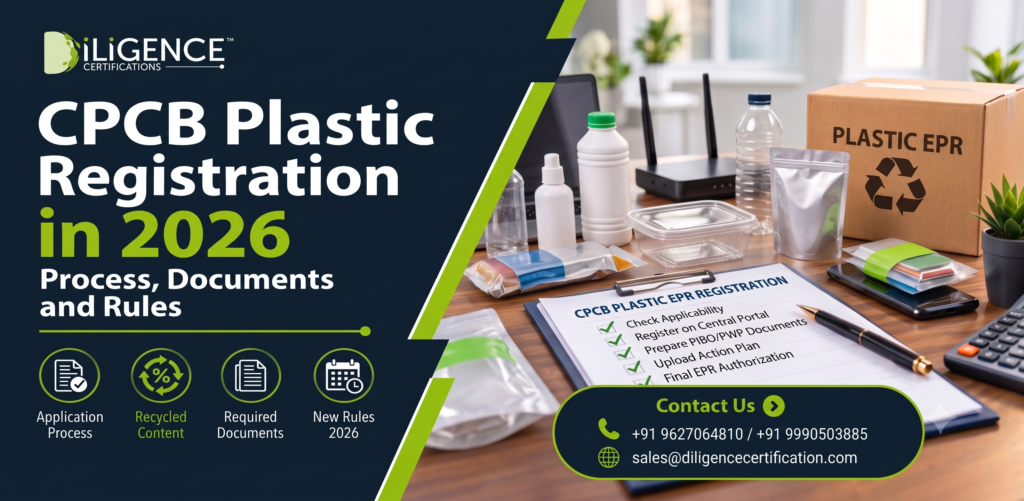
CPCB Plastic EPR Registration Step by Step Process
The online process can change as CPCB updates its portal system. However, businesses can follow a practical preparation process.
Step 1: Check Applicability
Determine whether the business is a Producer, Importer, Brand Owner or another applicable category.
Step 2: Prepare a Product List
List the products connected with plastic packaging and record:
- Product name
- Packaging type
- Packaging material
- Packaging category
- Quantity
- Domestic or imported source
Step 3: Calculate Plastic Packaging Quantity
I will calculate the Plastic Packaging that has been introduced into the Indian market.
I prefer using business records instead of unsupported estimates.
Relevant records may include production data, purchase invoices, import records, sales data and Plastic Packaging specifications.
Step 4: Prepare Documents
Common information may include:
- PAN
- GST certificate
- Incorporation or registration documents
- Authorised person’s details
- IEC for applicable importers
- Product information
- Packaging details
- Production data
- Import data
- Sales information
- Relevant consent documents
- Previous EPR registration details
Step 5: Check the Current CPCB Portal
Businesses should verify the latest CPCB instructions before applying.
This is particularly important in 2026 because EPR administration has been moving towards the Common EPR Portal. Older articles may contain outdated portal instructions
Step 6: Enter Business Details
Check the company name, the PAN, the GST registered address the contact details and the authorized persons information.
All documents must match the business details exactly.
Step 7: Enter Packaging Information
Enter the product and packaging details that apply.
A rule: every quantity you report in the EPR application should be explainable, from your company records.
Step 8:. Respond to Queries
After you review the application submit it via the appropriate CPCB system.
If the authorities ask for clarification or more information respond through the required process.
Step 9: Maintain Compliance After Registration
Getting the registration does not end the EPR obligations.
Your business may still need to manage targets, certificates, records and annual reporting.
Documents Required for CPCB Plastic EPR Registration
The exact requirements depend on the applicant category. Businesses should generally keep the following information ready:
| Document / Information | Purpose |
| PAN | Business identification |
| GST Certificate | Business and tax details |
| Incorporation Certificate | Legal identity |
| IEC | Relevant for importers |
| Authorised Person Details | Application communication |
| Product Details | Product identification |
| Packaging Details | EPR classification |
| Production Data | Quantity calculation |
| Import Data | Importer compliance |
| Sales Data | Market quantity support |
| Purchase Records | Packaging calculation |
| Consent Documents | Where applicable |
| Previous EPR Details | Existing applicants |
Documents should be checked against each other before submission.
For example the legal name on PAN, GST and IEC must match the business details provided in the EPR application.
Similarly the packaging quantities should have an logical link, to production records, purchase records, import records or sales records.
What Changed in Plastic EPR Rules in 2026?
The Plastic Waste Management (Amendment) Rules, 2026 brought changes about recycled plastic content and packaging.
For Producers, Importers and Brand Owners who are affected recycled plastic content targets, for Categories I, II and III are listed as follows:
| Packaging Category | 2025-26 | 2026-27 | 2027-28 | 2028-29 onwards |
| Category I | 30% | 40% | 50% | 60% |
| Category II | 10% | 10% | 20% | 20% |
| Category III | 5% | 5% | 10% | 10% |
These requirements show that EPR compliance goes beyond recycling.
Businesses that use packaging should also think about recycled‑content rules when buying packaging and planning products.
The rules, for 2026 give a way to handle cases when recycled plastic cannot be used legally because of another law, regulation, required Indian Standard or legal rule.
For Category III packaging the recycled‑content goal is limited to the weight of the layers.
Businesses must therefore know what their packaging is made of before they calculate their compliance duties.
What Are Plastic EPR Recycling Targets?
EPR targets depend on the applicable packaging category and compliance year.
A company should not automatically apply one percentage to every type of plastic packaging.
For example, a business using:
- Rigid bottles
- Flexible pouches
- Multilayer packaging
should maintain separate category-wise records.
An internal EPR sheet can include:
| Product | Packaging | Category | Quantity | Compliance Year |
| Product A | Bottle | Category I | Actual data | 2026-27 |
| Product B | Pouch | Category II | Actual data | 2026-27 |
| Product C | Multilayer Pack | Category III | Actual data | 2026-27 |
Actual figures should always be taken from the company’s records.
Common EPR Portal Changes
Businesses that obtained registration under an earlier system should not assume that their compliance work ends with the old registration.
Companies should check:
- Whether existing registration information has migrated correctly.
- Whether business details are accurate.
- Whether authorised-person information is correct.
- Whether previous returns are available.
- Whether certificate information is reflected correctly.
- Whether historical data matches internal records.
- Whether discrepancies require correction.
Older portal guides should therefore be used carefully. Businesses should follow the latest CPCB instructions applicable to their registration.
Records a Business Should Maintain
Strong EPR compliance depends on proper record keeping.
Businesses should maintain records of:
- Plastic packaging introduced into the market
- Packaging categories
- Packaging quantities
- Production records
- Import records
- Sales data
- Purchase invoices
- Packaging specifications
- EPR certificates
- Recycler or Plastic Waste Processor information
- Recycled-content information
- Annual returns
- Registration amendments
- Portal acknowledgements
- Authority communications
The objective is to create a clear audit trail.
If a business is asked how a reported plastic quantity was calculated, it should be able to support the number through its records.
Common CPCB Plastic EPR Registration Mistakes
1. Using an Old Portal Guide
EPR processes can change. An older article may not reflect the current CPCB portal process.
2. Choosing the Wrong Applicant Category
Producer, Importer, Brand Owner and Plastic Waste Processor are different categories. The correct category should be identified first.
3. Mixing Packaging Categories
Rigid, flexible and multilayer packaging should not automatically be combined into one figure.
4. Using Unsupported Estimates
Where actual production, purchase or import data is available, it should be used instead of unsupported estimates.
5. Ignoring Recycled Content
The 2026 changes make recycled-content requirements an important part of plastic packaging compliance.
6. Treating Registration as the End
Registration does not automatically complete ongoing EPR responsibilities.
7. Ignoring Existing Registration Data
Existing businesses must check their information carefully and make sure it matches their internal records.
How EPR Affects Importers
Importers should focus closely on packaging.
For example, a company importing packaged cosmetics may not manufacture the bottle, cap or outer packaging. However, the packaged product is being introduced into the Indian market by the importer.
The importer should therefore examine its position under the applicable EPR rules.
Relevant information may include:
- IEC
- Imported product details
- Packaging material
- Packaging quantity
- Import invoices
- Import records
- EPR registration
- Annual reporting information
EPR compliance should ideally be reviewed before large amounts of historical data accumulate.
CPCB Plastic EPR Registration for Growing Businesses
EPR should not be considered relevant only to large companies.
A growing business may begin with one product and later add different packaging formats or imported products. This can change its EPR position.
Before launching a new product, businesses should ask:
- Does the product use applicable plastic packaging?
- Which category does the packaging belong to?
- Who is introducing the packaging into the Indian market?
- What quantity is expected?
- Does the product change the company’s EPR obligations?
Including these questions in the product-launch process can reduce future compliance problems.
CPCB Plastic EPR Compliance Checklist
Before submitting an application, check:
- Correct applicant category identified
- Plastic packaging identified
- Packaging categories mapped
- Product list prepared
- Plastic quantities calculated
- PAN verified
- GST details verified
- IEC checked, where applicable
- Authorised person’s details verified
- Production records reviewed
- Import records reviewed
- Sales data checked
- Previous EPR records reviewed
- Current CPCB instructions checked
- Recycled-content requirements reviewed
- Annual compliance plan prepared
Why Choose Diligence Certifications for CPCB Plastic EPR Registration?
Many businesses understand the idea of EPR but struggle to connect the rules with their real work.
A company might know it uses packaging but still find it hard to figure out:
- Which category applies
- Whether it is a Producer, Importer or Brand Owner
- How much plastic should be reported
- Which documents are required
- How the registration process works
- What continuing compliance is required
Diligence Certifications can assist with:
- EPR applicability assessment
- Document preparation
- Plastic packaging classification
- CPCB application assistance
- EPR compliance planning
- Portal-related guidance
- Recycler coordination
- Compliance reporting
- Query support
- Ongoing compliance assistance
The important objective is to make the EPR application reflect the actual business model and supporting records
Conclusion
CPCB plastic EPR registration should not be treated as just another online certificate.
The process starts with determining whether the business is covered, identifying the correct plastic packaging categories, calculating reliable quantities and maintaining records that support the reported information.
The 2026 changes make this even more important because businesses must pay attention to recycled-content requirements, packaging categories, compliance records and changes in the CPCB online system.
If your business manufactures, imports or sells products using applicable plastic packaging, reviewing your EPR position early can help prevent avoidable compliance problems.
A strong EPR system should connect registration, packaging data, certificates and annual returns.
When these records are accurate and consistent, ongoing plastic EPR compliance becomes much easier to manage.
Frequently Asked Questions.
1. What is CPCB plastic EPR registration?
CPCB plastic EPR registration is part of India’s Extended Producer Responsibility framework for applicable plastic packaging. It requires eligible businesses to register and fulfil their plastic waste management obligations.
2. Who needs CPCB plastic EPR registration?
Producers, Importers and Brand Owners (PIBOs) dealing with applicable plastic packaging may need CPCB plastic EPR registration. Plastic Waste Processors have separate registration requirements.
3. What documents are required for CPCB plastic EPR registration?
Common documents include PAN, GST certificate, incorporation details, IEC where applicable, authorised person details, product information, packaging details, production or import data and relevant compliance records.
4. How to apply for plastic EPR registration online?
Businesses generally need to check applicability, identify packaging categories, calculate plastic quantities, prepare documents, enter business and packaging details on the applicable CPCB system, submit the application and respond to queries.
5. What are the categories of plastic packaging under EPR?
Plastic packaging is generally classified into Category I for rigid packaging, Category II for flexible packaging, Category III for multilayered plastic packaging and Category IV for specified compostable plastic packaging.
6. Is CPCB plastic EPR registration enough for EPR compliance?
No. Registration is only one part of plastic EPR compliance. Businesses may also need to meet applicable recycling, recycled-content and other EPR obligations, maintain records, obtain relevant certificates and complete required reporting
7. What are the 2026 recycled-content targets for plastic packaging?
For 2026-27, the applicable targets in the blog are 40% for Category I, 10% for Category II and 5% for Category III, subject to the applicable rules and conditions.
8. Do importers need plastic EPR registration?
Importers may need CPCB plastic EPR registration when they introduce applicable plastic packaging into the Indian market. They should review their imported products, packaging quantities and specific EPR obligations.
9. What records should businesses maintain after CPCB EPR registration?
Businesses should maintain packaging quantities, product information, production and import records, sales data, purchase records, EPR certificates, recycled-content information, annual returns and relevant CPCB communications.
10. Can a business update its CPCB plastic EPR registration details?
Businesses should check the applicable CPCB portal procedure for amendments or corrections. Registration details and historical data should remain consistent with the company's current legal, product and packaging records.