BIS Certification
 CDSCO
 PESO
 CPCB
 LMPC
 WPC Approval
 Global Approvals
 TEC
 ARAI
 BEE
 ISO Certification
 DGCA Certification
 NOC For Steel
 APEDA Registration























 Business Registration
 FSSAI Mark Certification












 (32).jpg)
 Legal Services
 Trademark Registration
 Copyright Registration
 Patent Registration
 By
- The rules for registering a recycler with the CPCB depend on the type of waste being handled and the activities done at the recycling site.
- Recyclers who work with e-waste that is controlled, batteries, plastic packaging or old tires need to look at the registration process that fits their business.
- Some places might need permission to operate, permission to control pollution, technical details and company papers based on the waste type.
- People who want to register should use the official website and follow the most up-, to-date standard operating procedure.
- Registration is the first step. They also have to handle reports keep records of what they process follow rules and get an EPR certificate.
Introduction
A recycling business might have the machines, trained workers and a good industrial place but still have a big problem if its environmental papers and approvals are not complete. This is one reason businesses should know about CPCB recycler registration before spending a lot on a recycling place or signing deals with companies.
Think of a business owner starting a waste recycling unit. The machines are set up suppliers are ready to give electronics and customers want to see that the unit can handle the material properly. The owner now has to find out which papers are needed if the place has the approvals and how to fill out the form correctly.
This problem is not for electronic waste. India has rules for plastic waste, waste batteries, waste tyres and many other materials. The group that handles the papers the forms needed and the reporting rules can be different, for each type.
CPCB recycler registration is the way to get the paper for a recycling business that fits the rules and the environmental laws. The exact steps depend on the kind of waste being handled what the place does. What approvals are needed under the rules.
A good application helps a business show its work clearly avoid paper mistakes and know what it must do after the registration is done.
What Is CPCB Recycler Registration?
CPCB recycler registration means registering under the waste management system that is run by the Central Pollution Control Board. The Central Pollution Control Board is an environmental group in India. It can also be done through the state-level group if the rules allow that.
The goal is to make sure that recycling work follows the rules. The groups can check the details the papers and the reports to see how much recycling is happening. They can also check how materials are being handled and if the rules are being followed.
The word does not mean one paper that covers all kinds of waste. For example a company that recycles phones and a company that recycles old tires might need different registration steps and meet different rules.
According to the E-Waste (Management) Rules, 2022 the right companies like manufacturers, makers, people who fix products and those who recycle must sign up through the right system. The rules for battery waste and tire waste are different.
For packaging the right people who process plastic waste must follow the rules, from the Plastic Waste Management Rules and the EPR steps that apply.
So the first step is to figure out the type of waste. Applying for the type can cause delays, more questions or an application that does not match the real work being done.
Which Businesses Need CPCB Recycler Registration?
The requirement depends on the material handled and the activity performed by the business.
1. E-Waste Recycling Businesses
E-waste recyclers take electrical and electronic devices, parts and materials and turn them into useful resources again. E-waste recyclers may also recover material from waste that is eligible.
Under the E-Waste (Management) Rules, 2022 all applicable recyclers must register on the required CPCB portal. Businesses must also look at their facility requirements, technical capacity, records and reporting duties.
2. Battery Waste Recyclers
Battery recycling units deal with used batteries. Try to get useful materials back from them using the right methods. The processes can include things like lead, lithium and other materials. These materials need to be handled and with proper environmental protection.
People who want to recycle batteries must look at the Battery Waste Management Rules, 2022. They also need to check any changes that happen after that. They have to follow the steps to register. The registration and regular reports must be done according to the rules, for battery waste.
3. Plastic Waste Processors
Plastic waste processing businesses may recycle plastic packaging or undertake other processing activities recognised under the applicable rules. A business must identify whether its activity qualifies as recycling or another recognised processing category.
Plastic Waste Processors must check the applicable registration requirements, including the relevant CPCB EPR system and any state-level permissions that apply to their facility.
4. Waste Tyre Recyclers
Waste tyre recyclers take discarded tyres. Turn them into useful materials or other products using approved methods.
The rules, for registering waste tyre recyclers come from the waste tyre laws and any new changes. Before a waste tyre recycler starts work the applicant must check the registration rules get the pollution‑control permission and make sure all reporting duties are understood.
5. Other Recycling and Waste-Processing Facilities
Businesses that handle used oil, construction and demolition waste, hazardous waste or other types of waste need to look at the legal rules that apply to each type separately.
Not all recycling activities go through the process for CPCB registration. Some activities might need permission or approval, from the State Pollution Control Board or the Pollution Control Committee while others use an online system run by the central government.
The business needs to check what it has to do before choosing the type of registration.
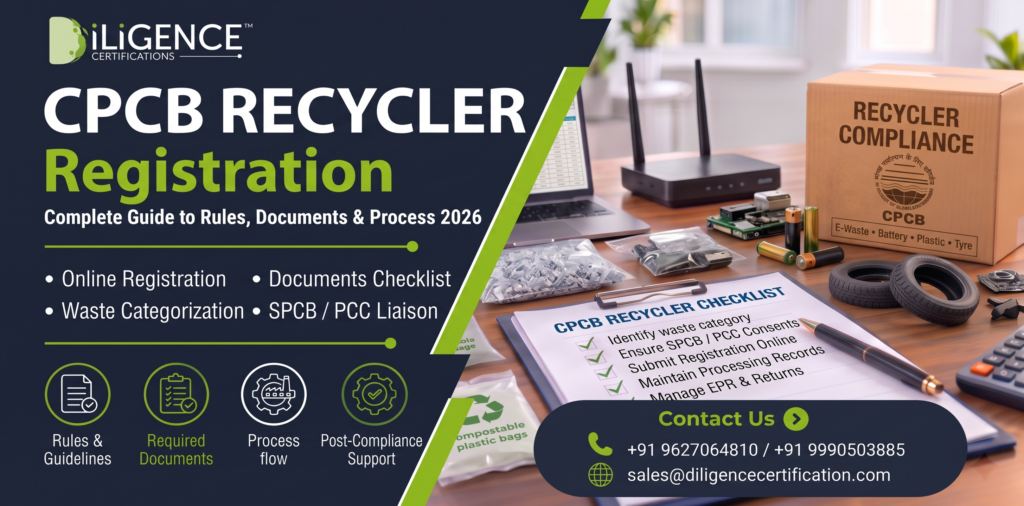
Documents Required for CPCB Recycler Registration
The document list depends on the waste category, facility and application procedure. Preparing the relevant records before applying makes it easier to enter accurate information and respond to questions from the authority.
Commonly requested information may include the following, where applicable:
- Business registration documents: Certificate of incorporation, partnership deed, proprietorship details or other proof of the legal entity.
- PAN and GST details: Business identification and tax records, as required by the selected portal.
- Authorised person’s details: Name, designation, contact information and supporting identification where requested.
- Facility address: Complete recycling unit address, ownership documents or lease agreement, where required.
- Pollution-control permissions: Consent to Establish (CTE), Consent to Operate (CTO), authorisation or other approvals applicable to the facility.
- Plant and machinery details: Equipment list, process description and installed or proposed processing capacity.
- Site layout and photographs: Layout plans, facility photographs or other evidence specified in the relevant SOP.
- Technical information: Details of the waste handled, processing method, storage arrangements and material recovery process.
- Environmental safeguards: Information about pollution-control systems, waste storage, residue handling and worker safety, as applicable.
- Operational records: Production, procurement, sales, recycling or material recovery data when required by the registration framework.
This is a general preparation list, not a universal mandatory checklist. A battery recycler, for instance, may need documents that differ from those required for a plastic waste processor.
Applicants should obtain the current checklist from the relevant official portal and verify each requirement before uploading documents.
Why Document Accuracy Is Important
If the company name on the GST record is different from the name written in the application. If the facility address doesn’t match the pollution-control consent it can cause problems. These small mismatches often lead to questions from officials and extra work, for everyone involved.
The same thing goes for processing capacity. If the application says a plant can handle an amount of waste then the machinery details and technical records must back that up. Without matching records the claim looks weak. May be questioned.
Check the following before submission:
- Company and facility details are consistent across the documents.
- The waste category matches the actual processing activity.
- Technical capacity is supported by the relevant records.
- All required permissions are valid and applicable to the facility.
- Uploaded files are readable and follow the portal’s instructions.
CPCB Recycler Registration Process: 7 Essential Steps
The process below explains the general approach. The exact steps and document requirements must be confirmed through the official portal for the selected waste category.
Step 1: Identify the Correct Waste Category
Begin by choosing which material the business will process. Is it e‑waste, battery waste, plastic packaging, waste tyres or another regulated waste stream?
Next examine the definition of a recycler or processor according to the relevant rules. Collection, dismantling, refurbishment and recycling are not always treated as the activity.
A business should not choose a category simply because it seems similar, to its work. The selected category must match the activity that the facility actually carries out.
Step 2: Check the Facility’s Approval Requirements
Before you finish the application check the environmental permissions that are needed for the site.
Depending on what you plan to do you might need CTE, CTO authorisation, from the SPCB or PCC and other permissions that apply. Some requirements can change based on the waste type the process, the facility and the exemptions that apply.
Do not think that CPCB registration will automatically replace every consent or authorisation. Every approval has its specific regulatory role.
Step 3: Prepare the Technical and Business Documents
Collect the companys records, legal records of the company details of the people who are allowed to act on behalf of the company information about the site details, about the machines and the permissions that support the operations.
Write an explanation of the recycling process. Describe what materials come into the plant how those materials are handled what useful things are taken out from the process. How the leftovers are taken care of.
Make sure to have all the supporting documents ready of using guesses or estimates. Having information makes the application easier to check and helps the business keep good compliance records in the future.
Step 4: Access the Correct Official Portal
Use the registration portal that is specifically meant for the type of waste.
For e-waste the official CPCB E-Waste Management System offers steps for recycler registration and related help. Battery waste and waste tyres have their special systems while other types of waste might have different procedures.
Applicants should not use bookmarks, unofficial application links or instructions that were taken from another waste category.
If the portal has been updated, then follow the login and application instructions. Make sure to read any notices about problems or changes, in the registration process before you submit your application.
Step 5: Complete and Submit the Application
Enter the information that is asked for carefully and upload the documents that support your application in the format that is needed.
Check the name of the business the address of the place where the business operates the type of waste the technical ability and the permission details before you finish submitting your request. If the website asks for statements or other records ensure that they are fully filled out and match the documents that you have uploaded.
Keep the confirmation that you get for the application and any number that the system gives you. These pieces of information will be useful when you want to see how your application is going or when you have to answer a question, about it..
Step 6: Respond to Clarifications
The authority may look at your application. Ask for more details, fixes or extra papers depending on the rules for your case.
Read each message from them carefully. If they need info, about the machinery, production capacity or pollution-control permission send the exact documents that show what they’re asking for. Don’t just give an answer.
Save copies of everything you send and upload. If you have to fix something that changes info you already gave check if other parts of your application or records also need to be updated.
How long the application takes can change. It depends on what kind of registration you’re doing, how complete your papersre what checks are needed and how the authority works. Don’t assume it will be approved by a date. Wait for notice.
Step 7: Review the Registration Certificate and Conditions
After getting approval download the certificate. Look at the information, on it. Make sure to check the company name, location, type of registration when it is valid and any rules listed on the certificate. Save the certificate and all the papers from the application in a place where compliance records can be found easily. The company also needs to find out what must be reported, when to renew, when to change anything and how to keep records after registration. Doing this check early makes sure the certificate is not seen as the thing to do for compliance.
What Happens After Registration?
A common mistake is to complete CPCB recycler registration and then pay little attention to ongoing compliance.
The responsibilities after registration depend on the applicable rules, but may include the following.
Maintain Accurate Recycling Records
Keep records of incoming waste, quantities processed, material recovered, residues generated and the movement of relevant materials, where required.
The figures reported to the authority should be supported by business records. Proper records also help the business explain differences between material received, processed and recovered.
Submit Required Returns
Some registration frameworks require quarterly returns, annual returns or other periodic submissions. The reporting frequency and information depend on the relevant rules and portal instructions.
Create a compliance calendar and assign responsibility to a staff member. Do not wait until the deadline to collect production data, invoices and supporting documents.
Understand EPR Certificates
In applicable EPR frameworks, registered recyclers may be able to generate certificates based on eligible recycling activity and prescribed procedures.
These certificates are not automatically available for every material processed. Their generation depends on the relevant rules, verified information and portal requirements.
Businesses should confirm the applicable process for recording eligible recycling quantities and generating or transferring certificates, where permitted. They should never treat informal receipts as a substitute for certificates required by the regulatory system.
Monitor Changes in Rules and Portal Instructions
Environmental regulations and online systems can change. Amendments may affect reporting, registration procedures, technical conditions or the documents required from a business.
Check the relevant authority’s notifications and current portal instructions periodically. Where an amendment affects the facility, update the compliance process instead of continuing to rely on an older checklist.
Keep Facility Permissions Current
CPCB registration and other environmental permissions may have separate validity periods and conditions. Track the status of each applicable approval.
If the facility changes its address, capacity, machinery or processing method, check whether an amendment, revised consent or fresh approval is required before making the change.
Common Mistakes to Avoid During CPCB Recycler Registration
Small mistakes can create unnecessary delays or compliance risks. These are the issues a business should check before and after applying.
Choosing the wrong registration category: A company handling electronic waste should not automatically use a battery or plastic waste registration route. Identify the applicable rules first.
Ignoring state-level permissions: Central registration does not necessarily replace CTE, CTO or other permissions required for the recycling facility.
Providing unsupported processing capacity: Technical claims should match the plant, machinery and relevant supporting documents.
Uploading inconsistent documents: Differences in company names, addresses or authorisation details should be checked before submission.
Using an outdated application guide: Old portal instructions may not reflect current requirements. Confirm the applicable SOP and notices.
Ignoring post-registration returns: Missing required reports can create compliance problems even after a certificate has been granted.
Assuming one certificate covers every activity: If a business operates in more than one regulated category, it must check whether separate registrations or permissions are required.
Relying on guaranteed approval claims: A consultant can assist with preparation and submission, but cannot guarantee the decision of the competent authority.
How CPCB Recycler Registration Supports Business Growth
Registration is not a paper that a company keeps in its files. When a business works under the registration and environmental permissions it shows that it has taken care of important rules for its recycling work.
This can be important when dealing with manufacturers, producers, suppliers, corporate buyers and other companies that want to check if their recycling partners are following the rules.
For example a producer that is part of an EPR system may have to work with recyclers that are registered in the system to meet its own responsibilities. A recyclers registration status and records can therefore be important when creating business relationships.
Registration, by itself does not mean contracts will come or that there will be money or better environmental results. The facility must keep following the rules keep records and do the approved work in a proper way.
A smart business way is to see compliance as part of work. Give someone the job of keeping records check when permissions are about to end and look at rules as part of the normal way the business is run.
Why Choose Diligence Certifications for CPCB Recycler Registration Certification?
Choosing the correct registration route can be difficult when a business is unfamiliar with the applicable waste-management rules, portal requirements and facility permissions.
Diligence Certifications helps businesses understand the compliance steps relevant to their requirements and organise the information needed for the applicable registration process.
Support may include:
- Reviewing the business activity and identifying the registration category that needs to be assessed.
- Preparing a document checklist based on the relevant registration procedure.
- Helping organise company, facility and technical information.
- Reviewing application details for inconsistencies before submission.
- Assisting with application preparation and responses to regulatory queries, as agreed.
- Explaining applicable post-registration reporting and record-keeping responsibilities.
The exact scope of assistance depends on the waste category the applicants existing permissions and the requirements set by the authority. Registration decisions are made by the regulatory authority.
Businesses can learn more about the companys compliance support by visiting the Diligence Certifications homepage. For e‑waste recycling requirements review the CPCB E‑Waste Recycling Registration guide. Confirm it matches the facilitys waste category.
Before starting an application gather all business documents. Identify the facilitys activities. Clarify which permissions are already, in place. This registration process gains a starting point.
Conclusion
CPCB recycler registration is an important compliance step for businesses handling waste covered by India’s environmental regulations. However, the correct route depends on the material being processed, the facility’s actual operations and the rules applicable to that category.
Before applying, identify the right registration system, review the current document checklist, verify facility permissions and prepare accurate technical records. After approval, continue managing applicable returns, certificate requirements, renewal dates and environmental conditions.
A properly planned application can reduce avoidable errors and help a business approach its regulatory responsibilities with greater clarity. If your company is setting up a recycling unit or reviewing its existing compliance, start by identifying the waste category and the approvals relevant to your facility.
Frequently Asked Questions
1. What is CPCB recycler registration?
CPCB recycler registration is the applicable registration process for eligible recycling businesses under the relevant environmental rules. The process depends on the type of waste, the activity performed and the prescribed registration system.
2. Who needs CPCB recycler registration in India?
Businesses recycling regulated waste streams, including eligible e-waste, battery waste, plastic packaging and waste tyres, may need registration under their respective frameworks. Other recycling activities may require different permissions. Applicants should check the rules that apply to their operations.
3. What documents are required for CPCB recycler registration?
Depending on the waste category, applicants may need business registration records, PAN and GST details, authorised-person information, facility documents, pollution-control permissions, machinery details and technical information about the recycling process. The current category-specific checklist determines the actual requirements.
4. Can I apply for CPCB recycler registration online?
Many regulated recycling categories use dedicated online registration systems. Applicants should access the official portal prescribed for their waste category and follow its current instructions. Not every type of recycling activity follows the same online process.
5. Is SPCB consent required for recycler registration?
Consent to Establish, Consent to Operate or other state-level permissions may be required, depending on the facility, waste category and applicable regulations. Businesses should verify the conditions relevant to their site rather than assuming that one registration replaces all other approvals.
6. How long does CPCB recycler registration take?
There is no single processing time that applies to every waste category. The timeline depends on the applicable procedure, completeness of the application, verification requirements and any clarifications requested by the authority. Check the current SOP for the relevant registration system.
7. Can a recycling business operate without registration?
Where the applicable rules require registration before carrying out the regulated activity, the business must meet that requirement. Operating without a required registration or authorisation can lead to regulatory action. The exact legal position depends on the activity and governing framework.