 BIS Certification
 CDSCO
CDSCO
 PESO
PESO
 CPCB
CPCB
 LMPC
LMPC
 WPC Approval
 Global Approvals
 TEC
TEC
 ARAI
ARAI
 BEE
BEE
 ISO Certification
 DGCA Certification
 NOC For Steel
 APEDA Registration























 Business Registration
 FSSAI Mark Certification












 (32).jpg)
 Legal Services
 Trademark Registration
 Copyright Registration
 Patent Registration
 By
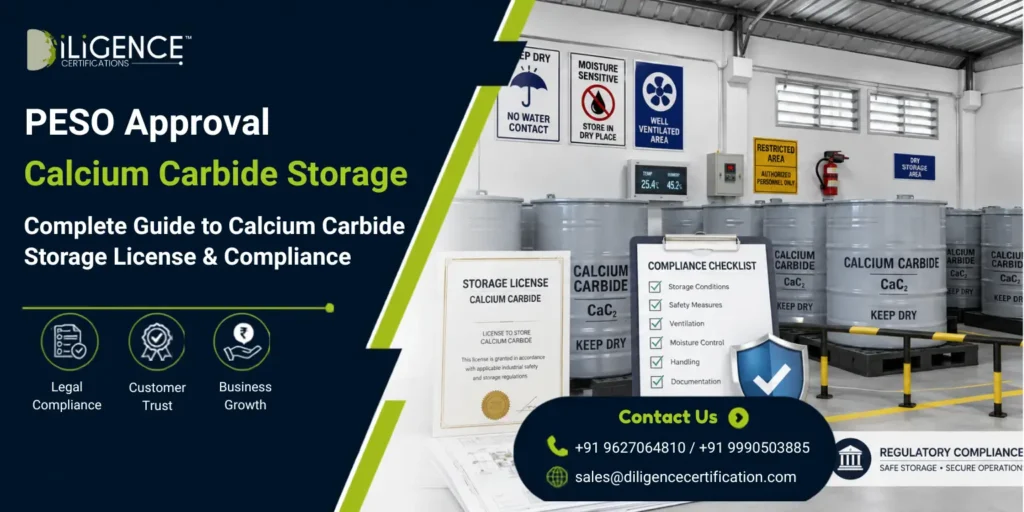
By - Provides detailed information about the Calcium Carbide Storage License that should be adhered to by businesses, industrial units, chemical storage facilities, manufacturers, suppliers, distributors, laboratories, and any other organization involved in handling calcium carbide or hazardous chemicals.
- All information about qualification, procedure for application, documents required, safety standards, storage premises, inspection, licensing, and handling procedures for calcium carbide storage are included here.
- This booklet provides detailed information about the procedures related to Calcium Carbide Storage License.
Introduction
Calcium carbide is an industrial chemical that finds extensive usage in several authorized purposes like chemical processing, metal-related activities, production of acetylene, and other industrial operations. Although there are several legal commercial uses of calcium carbide, this chemical needs safe storage as it reacts dangerously with moisture or water and may produce acetylene gas.
Given the above characteristics, calcium carbide cannot be kept casually in a regular warehouse, outdoor place, damp room, or unsuitable industrial premises. Arrangements for safe storage location, construction, ventilation, moisture proofing, access control, fire safety arrangements, handling process, documentation, and operation need to be made as per the appropriate safety regulations.
The organizations that handle calcium carbide need to know about the relevant Calcium Carbide Storage License requirements before setting up or running a calcium carbide storage facility. Safe handling and storage help in minimizing risks such as dangerous reactions, fire hazards, unauthorized access, mishandling, contamination, and others.
Safety requirements for various petroleum products, explosives, compressed gases, and other dangerous substances in India are administered by the Petroleum and Explosives Safety Organisation, popularly called as PESO. Approval or license may be required from the concerned authority depending on several factors.
What is Calcium Carbide Storage License?
Calcium Carbide Storage License means the regulatory license, authorization, or permit necessary for the storage of calcium carbide at a specified storage premises where such licensing is provided for under the applicable regulatory regime.
The intent of the applicable requirements is to ensure that the calcium carbide is stored under conditions whereby there is minimal likelihood of exposure to moisture, handling, fire, unauthorized access, contamination, and other risks.
The applicable requirements may include the suitability and location of the premises, construction, storage arrangements, protection from moisture, ventilation, fire precautions, access controls, safety measures, emergency planning, documentation, inspection, and recordkeeping.
The regulatory body, Petroleum and Explosives Safety Organization (PESO), will examine whether the proposed storage premises, storage arrangements, safety measures, security measures, documentation, and procedures are fit for the intended activity.
Calcium carbide in particular is especially significant in terms of storage as contact with water or moisture can lead to the formation of acetylene gas, which is extremely flammable. Thus, ensuring the dryness of the storage premises is an important aspect of calcium carbide management.
The services included in Calcium Carbide Storage License compliance are:
- PESO Registration
- Calcium Carbide Storage License Assistance
- Hazardous Chemical Safety Compliance
- Licensing Assistance
- Documentation Support
- Technical Compliance
- Regulatory Advisory
- Application Filing
Following the appropriate Calcium Carbide Storage License requirements helps eligible businesses maintain a safer and more controlled chemical storage environment while complying with applicable regulatory requirements.
Applications of Calcium Carbide Storage License
Calcium Carbide Storage License The storage license may be applicable for different entities who are engaged in the storage, handling, supply, distribution, or legitimate industrial usage of calcium carbide.
This will depend upon the type of activity, quantity of calcium carbide being stored, storage premises, method of storage, site, and safety laws.
Some of these entities may need prior approval or authorization as follows:
- Chemical Manufacturing Companies
- Industrial Manufacturing Units
- Acetylene Generation Facilities
- Metal Processing Companies
- Welding and Fabrication Businesses
- Chemical Suppliers
- Calcium Carbide Suppliers
- Industrial Chemical Distributors
- Chemical Storage Facilities
- Manufacturing Plants
- Industrial Gas Businesses
- Laboratories
- Authorized Chemical Dealers
- Businesses Handling Hazardous Chemicals
Following applicable Calcium Carbide Storage License requirements allows businesses to establish a safer and more organized system for storing calcium carbide while maintaining the necessary regulatory discipline.
Who Needs Calcium Carbide Storage License?
Organizations that store or handle calcium carbide as part of an authorized business or industrial activity may need to comply with the applicable Calcium Carbide Storage License and chemical safety requirements.
The businesses that may need applicable approval or authorization include:
- Chemical Manufacturing Companies
- Industrial Units
- Acetylene Generation Units
- Metal Processing Companies
- Welding and Fabrication Units
- Chemical Suppliers
- Calcium Carbide Dealers
- Chemical Distributors
- Industrial Chemical Storage Facilities
- Manufacturing Companies
- Industrial Gas Companies
- Laboratories
- Authorized Chemical Dealers
- Businesses Handling Regulated Chemicals
- Other Organizations Engaged in Authorized Chemical Activities
And Other Businesses eligible for applicable Calcium Carbide Storage License compliance
Proper compliance enables eligible organizations to maintain calcium carbide storage facilities in accordance with applicable safety, technical, environmental, and regulatory requirements.
Types of Compliance Under Calcium Carbide Storage License
The compliance regulations regarding the storage of calcium carbide will be dependent upon several variables, such as amount to be stored, premises of storage, location, construction of the store room, moisture resistance, ventilation, fire safety regulations, security, and procedures, among others.
Compliance is very important since calcium carbide reacts with moisture and produces flammable acetylene gas.
Storage Premises & Infrastructure Compliance
These storage facilities should be appropriate for the safe storage of calcium carbide and meet the technical and safety requirements as well.
Calcium carbide storage facilities should be appropriately planned and maintained to ensure that calcium carbide is protected against water, rain, humidity, moisture, fire hazards, physical damage, and other possible risks.
Some of the issues that fall under storage premises and infrastructure compliance include:
- Approved Storage Premises
- Suitable Storage Structure
- Safe Location
- Dry Storage Area
- Moisture Protection
- Appropriate Access Control
- Fire Prevention Measures
- Electrical Safety Measures
- Proper Ventilation
- Proper Maintenance
- Restricted Entry
Useful for:
- Chemical Manufacturing Companies
- Industrial Units
- Acetylene Generation Facilities
- Chemical Storage Facilities
- Industrial Gas Businesses
- Chemical Suppliers
Proper storage premises and infrastructure compliance helps create a safer environment for calcium carbide storage and reduces the possibility of moisture-related reactions and other hazards.
Storage & Handling Compliance
Care needs to be taken while handling calcium carbide since it is dangerous for storage according to the safety requirement. It will produce acetylene when it comes into contact with water, hence causing a potential fire hazard.
Storage and handling procedures should emphasize prevention of contact with moisture/water, safe handling, ignition control, restricted access, and proper storage conditions.
Compliance with safe storage and handling includes:
- Secure Storage Arrangements
- Moisture Protection
- Restricted Access
- Safe Handling Practices
- Water Contact Prevention
- Ignition Source Control
- Fire Safety Precautions
- Safe Internal Movement
- Emergency Safety Arrangements
- Regular Safety Monitoring
Useful for:
- Chemical Manufacturers
- Industrial Units
- Acetylene Generation Businesses
- Chemical Storage Facilities
- Calcium Carbide Suppliers
- Authorized Chemical Users
Following appropriate storage and handling practices helps businesses maintain safer working conditions and minimizes the risks associated with calcium carbide storage and handling.
Documentation & Inspection Compliance
Documentation and inspections form an integral part of Calcium Carbide Storage License.
An organization is expected to keep accurate records in respect of its storage facilities, calcium carbide stored, authorized individuals, inspections, safety provisions, procurement, transport, etc.
Documentation generally includes:
- Storage Records
- Inspection Records
- Safety Records
- Chemical Details
- Technical Documents
- Premises Documents
- License Documents
- Security Records
- Regulatory Documents
Maintaining complete and updated records helps businesses demonstrate compliance during inspections, assessments, audits, regulatory reviews, and other verification procedures.
Documents Required for Calcium Carbide Storage License
The documents required for a Calcium Carbide Storage License depend on the nature of the activity, quantity of calcium carbide proposed to be stored, storage premises, business structure, storage arrangement, and applicable regulatory requirements.
Generally, the required documents may include:
- PAN Card
- GST Registration Certificate
- Business Registration Certificate
- Identity Proof of Authorized Signatory
- Address Proof
- Site Plan
- Storage Layout Plan
- Organization Details
- Technical Specifications
- Storage Details
- Safety Arrangement Details
- Fire Safety Details
- Security Arrangement Details
- Inspection and Testing Documents
- Authorization Letter, if applicable
- Digital Signature Certificate, if applicable
- Other documents required under applicable regulations
The exact documentation requirements may vary according to the nature of the calcium carbide storage activity and the approval or license being sought.
Preparing accurate and complete documents helps make the Calcium Carbide Storage License compliance process more organized and reduces the possibility of avoidable queries or delays.
Step-by-Step Process for Calcium Carbide Storage License
It is much simpler to obtain or comply with the license of Calcium Carbide Storage if the organization filing for such license is familiar with the regulatory requirement involved.
This process may include qualification, documentation, application, validation, inspection, licensing, approval, and compliance among other things.
Systematic approach can help organizations remain in compliance with the regulations.
Step 1: Eligibility Assessment
The first stage in the Calcium Carbide Storage License process is determining the regulatory requirements applicable to the proposed storage activity.
Eligibility is determined by:
- Nature of Business Activity
- Quantity of Calcium Carbide
- Storage Activity
- Storage Premises
- Storage Arrangement
- Handling Procedures
- Moisture Protection
- Fire Safety Infrastructure
- Technical Infrastructure
- Applicable Regulations
Proper eligibility assessment helps businesses understand whether they require a license, approval, authorization, or other regulatory permission for their proposed calcium carbide storage activity.
Step 2: Gathering All Required Documents
After identifying the necessary requirements, the next step will be to compile all the required documents for the calcium carbide storage approval or licensing.
It is vital to do this because the documents that will be submitted to the regulatory body will help to understand the intended operations of the proposed facility.
The common documents may include:
- Business Registration Certificate
- PAN Card
- GST Registration Certificate
- Identity and Address Proof
- Site and Layout Plans
- Storage Details
- Technical Documents
- Safety Arrangement Details
- Security Arrangement Details
- Inspection and Testing Documents
Proper documentation provides the authority with a clear understanding of the proposed storage facility and supports a smoother application review.
Step 3: Filling Out the Application
Once all the necessary paperwork has been completed, the application for the appropriate calcium carbide storage approval or license must be filed, ensuring that all pertinent information relating to the business, location, volume, storage system, safety equipment, security arrangements, and other relevant information is included.
All the information in the application must coincide with the paperwork.
The application generally covers:
- Business Information
- Applicant Information
- Premises Information
- Storage Activity Details
- Technical Information
- Safety Information
- Security Information
- Contact Information
- Compliance Information
Careful preparation of the application helps ensure consistency and clarity throughout the regulatory process.
Step 4: Verification of the Application
After submission of the application, the relevant details and documents may be evaluated to determine whether the proposed calcium carbide storage facility satisfies the applicable safety, technical, security, and regulatory requirements.
The verification procedures may include:
- Business Verification
- Documentation Verification
- Technical Documentation Verification
- Property Verification
- Storage Premises Verification
- Safety Arrangement Verification
- Security Arrangement Verification
- Compliance Verification
In some cases, an inspection or technical review may be required.
If the authority requests additional information, clarification, modification, or supporting documents, the applicant should provide the required response within the applicable requirements.
Step 5: Grant of Calcium Carbide Storage Approval
Once the applicable requirements have been successfully fulfilled, the concerned calcium carbide storage license, approval, authorization, certification, or other applicable permission may be issued by the competent authority.
The benefits of obtaining applicable approval under Calcium Carbide Storage License include the following:
- Safety Standards Compliance
- Secure Calcium Carbide Storage
- Regulatory Recognition
- Efficient Operation
- Credibility in Business
The grant of the applicable approval indicates that the proposed storage activity has been considered in accordance with the requirements applicable to the particular facility and operation.
Step 6: Ongoing Compliance
Obtaining approval for calcium carbide storage is not the end of the compliance responsibilities.
Businesses must continue to follow the applicable safety, storage, security, operational, inspection, and regulatory requirements throughout their storage activities.
These obligations may consist of:
- Inspection
- Safety Monitoring
- Maintenance of Records
- Regulatory Reporting
- Maintenance of Storage Premises
- Security Monitoring
- Moisture Protection Monitoring
- Updating of Business Information
- Storage Facility Monitoring
- Compliance Monitoring
Regular monitoring helps businesses identify potential compliance gaps and maintain a safer storage environment.
Timeline, Cost & Validity of Calcium Carbide Storage License
The timeline, cost, and validity of compliance or applicable approval under Calcium Carbide Storage License depend on several factors, including the nature of the storage activity, document preparation, technical requirements, inspection, application review, premises verification, quantity proposed to be stored, and applicable regulatory requirements.
| Timeline | Cost | Validity |
| The approval timeline depends on document verification, technical assessment, inspection, and application processing. | The cost depends on the applicable government fee and professional service charges, if any. | Calcium carbide storage approval or license remains valid as per the applicable regulations, license conditions, and approval requirements. |
| Proper documentation helps reduce processing delays. | Additional charges may vary depending on the nature of calcium carbide storage activities and compliance requirements. | Businesses should comply with applicable renewal, inspection, or update requirements whenever necessary. |
| Processing time may vary based on the completeness of the application and regulatory verification. | Proper planning helps manage the licensing cost efficiently. | Maintaining updated business, storage, safety, and security information helps support continued regulatory compliance. |
Importance & Benefits of Calcium Carbide Storage License
| Importance | Benefits |
| Helps organizations comply with applicable chemical safety regulations and calcium carbide storage requirements. | Enhances business credibility and demonstrates commitment to chemical storage safety. |
| Supports safe storage, handling, security, and management of calcium carbide and related hazardous materials. | Improves confidence among customers, business partners, workers, and regulatory authorities. |
| Encourages responsible storage and safety practices. | Enables smoother compliance with applicable chemical and fire safety requirements. |
| Promotes long-term operational safety and regulatory discipline. | Reduces compliance risks and improves operational efficiency. |
| Helps businesses fulfill their legal and regulatory responsibilities. | Strengthens long-term business growth and industry reputation. |
Why is Calcium Carbide Storage License Important?
The importance of having a Calcium Carbide Storage License is because of the reactive property of the substance and the dangers which may be posed by wrong storage practices.
Calcium carbide reacts with water or moisture to form acetylene gas which is highly inflammable. In this regard, wrong storage can pose safety and fire threats.
Chemical manufacturing organizations, industrial companies, acetylene production firms, metal-related organizations, chemical distribution firms, and others who undertake other authorized storage activities should know the regulatory requirements for the activity.
In order to meet the regulatory requirements of their storage activities, the concerned calcium carbide storage license, approval, authorization, and certification can help eligible organizations.
Right compliance ensures that business entities have the right storage facilities, dry storage environment, access control, technical arrangement, fire safety mechanisms, security measures, documentation, and emergency response plan among others.
For those organizations carrying out calcium carbide storage as an authorized activity, they should realize that compliance is not only about getting approval but about proper storage throughout the process.
Appropriate compliance with the regulatory requirements can improve the professional image of the business before customers, suppliers, employees, business partners, and others.
The importance of Calcium Carbide Storage License includes:
- Regulatory Compliance
- Industrial Safety
- Secure Chemical Storage
- Operational Reliability
- Industry Recognition
- Risk Reduction
- Responsible Chemical Management
Calcium Carbide Storage License requirements help businesses establish safer storage practices while supporting regulatory compliance and responsible management of calcium carbide.
Consequences of Non-Compliance with Calcium Carbide Storage License
Lack of adherence to the necessary requirements for chemical safety and storage may present significant problems for companies engaged in calcium carbide storage.
Calcium carbide needs to be stored in controlled conditions since interaction with moisture or water leads to the production of acetylene.
Some of the consequences include:
Failure to Comply with Regulations
Failure to adhere to regulations may occur where an organization stores, handles, and manages calcium carbide without adhering to licensing, safety, security, and operational regulations.
Action of the Competent Authority
The competent authority can take action where there is failure to adhere to the applicable safety regulations for chemicals.
Operational Constraints
An organization may be restricted from carrying out specific operations until the compliance regulations are fulfilled.
Lag Time of Business Operations
In case of non-compliance, there can be delays in getting necessary approvals, building storage facilities, making changes to the premises, engaging in regulated business operations, or engaging in any other business operations.
Suspension or Revocation of Approvals
Severe or repeated non-compliance could lead to suspension, revocation, or withdrawal of an approval or authorization, subject to the relevant regulations.
Risk of Hazards
The risk of hazards can be increased if there is inadequate storage and safekeeping arrangements.Business Reputation
Lack of compliance to relevant standards may have an impact on the reputation of businesses among clients, suppliers, employees, business partners, and the regulatory authorities.
Bad Reputation Risk
Failure to comply with relevant standards over a long period of time may raise questions regarding the safety and responsible conduct of the business.
Development of the Business
Non-compliance to standards may result in businesses having problems growing and expanding their business activities.
Compliance to relevant Calcium Carbide Storage License standards makes businesses able to operate in a more organized and compliant manner.
Business Reputation
Lack of compliance to relevant standards may have an impact on the reputation of businesses among clients, suppliers, employees, business partners, and the regulatory authorities.
Bad Reputation Risk
Failure to comply with relevant standards over a long period of time may raise questions regarding the safety and responsible conduct of the business.
Development of the Business
Non-compliance to standards may result in businesses having problems growing and expanding their business activities.
Compliance to relevant Calcium Carbide Storage License standards makes businesses able to operate in a more organized and compliant manner.
Renewal of Calcium Carbide Storage License
The renewal or updating of the pertinent calcium carbide storage license or approval may be essential for organizations engaged in operations that fall under the scope of chemical and safety regulations.
The organization needs to periodically check its license or approval to determine if any change has occurred regarding its business operation, storage facility, storage quantity, security measures, storage conditions, management, technical staff, operational procedures, or other pertinent information.
By conducting the evaluation of the license, businesses will be able to find out their regulatory duties ahead of time and thereby prevent disruption of their operations.
The typical process of updating or renewing a calcium carbide storage license is as follows:
- Updating Business Information
- Reviewing License Details
- Updating Premises Information
- Updating Storage Information
- Updating Operational Information
- Submitting Required Documents
- Maintaining Safety Compliance
- Checking Regulatory Requirements
Keeping the Calcium Carbide Storage License information updated helps businesses continue their regulated activities efficiently while maintaining applicable safety, security, and regulatory compliance.
How Professional Assistance Helps in Calcium Carbide Storage License?
The rules that govern chemicals, storage, technical guidelines, documentation processes, safety measures, application process, inspection processes, and compliance are not easy to comprehend by the business community.
In case of calcium carbide storage, there is use of reactive industrial chemicals that even slightest problems with storage or compliance will bring about queries and other troubles.
Professional help will ensure that businesses become aware of the legal requirement and also organize the documentation and application processes.
Professional assistance generally includes:
- Understanding Calcium Carbide Storage License Requirements
- Eligibility Assessment
- Documentation Preparation
- Application Filing Assistance
- Technical Compliance Guidance
- Safety Compliance Guidance
- Security Compliance Guidance
- Regulatory Advisory
- Application Status Tracking
- Query Resolution
- Post-Approval Compliance Support
The professional services generally cover:
- Eligibility Verification
- Documentation Assistance
- Online Application Support
- Regulatory Compliance Guidance
- Technical Documentation Support
- Inspection Preparation Assistance
- End-to-End License Assistance
- Ongoing Compliance Advisory
With suitable professional guidance, businesses dealing with calcium carbide can organize their licensing and compliance requirements more efficiently while focusing on their core industrial operations.
Why Choose Diligence Certifications for Calcium Carbide Storage License?
The license requirements for storing calcium carbide include an understanding of chemical regulations, documentation requirements, storage requirements, water resistance, technical requirements, safety precautions, inspections, and regulation requirements.
Professional guidance can add structure to the entire process and make it easier to deal with documentation, licensing, technical requirements, storage needs, safety precautions, and regulation requirements.
The Diligence Certifications can be used by companies when dealing with certification and compliance issues in regard to hazardous chemicals, industrial safety, chemical storage plants, and other licensed businesses.
The advantages of choosing Diligence Certifications include:
- Documentation Assistance
- Application Filing Support
- Regulatory Compliance Guidance
- Approval Query Resolution
- Technical Documentation Assistance
- End-to-End License Assistance
- Continuous Compliance Support
- Regulatory Guidance
- Process Management
With professional support from Diligence Certifications, managing Calcium Carbide Storage License requirements becomes a more structured process, helping businesses handle applicable documentation, application, technical, safety, security, and compliance requirements efficiently.
Conclusion
Calcium Carbide Storage License Requirements apply to any entity that engages in a permitted activity involving storage of calcium carbide.
Considering the fact that calcium carbide reacts with water or moisture to produce flammable acetylene gas, appropriate storage, dry premises, access control, appropriate facilities, safety arrangements, fire prevention, documentation, inspection, and regulation are necessary.
The particular calcium carbide storage license, approval, permission, or certification that will be needed will be determined by the storage activity being carried out, quantities, intended premises, storage arrangements, and other regulatory requirements.
Appropriate compliance does not simply imply compliance with regulatory requirements. In respect to calcium carbide handling, appropriate compliance assists in the creation of safe storage, reduced risks, increased reliability, personnel and property protection, and responsible business practice.
Dry storage, appropriate premises, appropriate handling, restricted access, technical documentation, safety management, record keeping, inspection, and regulation are among the key elements of safe and appropriate calcium carbide storage.
In case your company is storing calcium carbide at the moment, or planning to store calcium carbide in future, it is important that you know the Calcium Carbide Storage License requirements and regulatory requirements.
Frequently Asked Questions
Calcium Carbide Storage License Definition
Calcium Carbide Storage License means the necessary safety license, permit, authorization or approval that is needed for calcium carbide storage at particular premises where such licenses are applicable under the pertinent law.
Who Needs to Fulfill Calcium Carbide Storage License Requirements?
Calcium carbide storage license requirements can be required from chemical manufacturers, industries, acetylene production plants, chemical distributors, storage facilities, metal industries and other qualified companies dealing with calcium carbide.
Is Calcium Carbide Storage License Necessary?
It is necessary in case calcium carbide storage is subjected to applicable licensing rules. This depends on the type of activity, quantity, storage arrangements, premises and licensing requirements..
What Documentation Is Required for Calcium Carbide Storage?
The documentation could consist of business information, identity and address documents, premises information, storage layout, technical data, safety arrangements, security information, inspection reports, and other documentation depending on the specific regulations that apply.
What is the Time Frame for Calcium Carbide Storage License Application Process?
It will depend on a variety of factors such as documentation process, licensing procedures, technical evaluation, premises inspection, and more according to the regulations that apply.
What is the Validity of Calcium Carbide Storage License?
Validity will be dependent on the type of license or approval issued and the terms and conditions of the applicable regulations.
Does the Use of Calcium Carbide Storage have Applications in Industrial Processes?
Yes, calcium carbide is used for several approved industrial uses, which include the production of acetylene, chemical processing, metal-related processes, and industrial processes in general.
Why is Calcium Carbide Storage License Compliance Important to your Business?
Compliance will enable businesses that qualify to store their calcium carbide in a safe, secure, regulated, and controlled manner.
Can Calcium Carbide Storage License Enhance the Level of Safety?
Yes, complying with the proper storage requirements, moisture protection requirements, security requirements, handling requirements, inspection requirements, and safety requirements will help businesses minimize the associated risk.
How Can Businesses Get Calcium Carbide Storage Licenses Using Consultants?
Professional consultants can help businesses in getting their calcium carbide licenses through various ways.