BIS Certification
 CDSCO
CDSCO
 PESO
PESO
 CPCB
CPCB
 LMPC
LMPC
 WPC Approval
 Global Approvals
 TEC
TEC
 ARAI
ARAI
 BEE
BEE
 ISO Certification
 DGCA Certification
 NOC For Steel
 APEDA Registration























 Business Registration
 FSSAI Mark Certification












 (32).jpg)
 Legal Services
 Trademark Registration
 Copyright Registration
 Patent Registration
 By
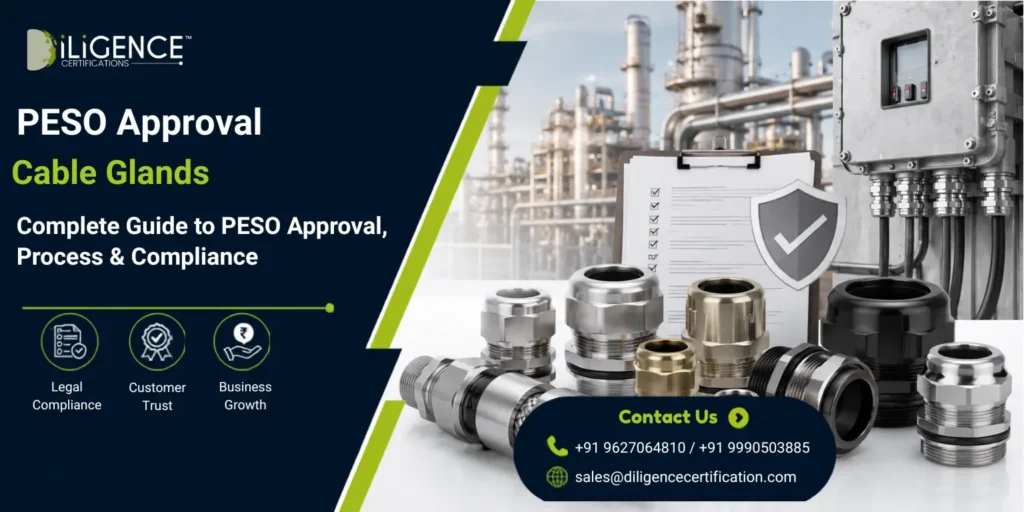
By - It provides comprehensive information regarding PESO Approval for Cable Glands that must be considered by manufacturers, importers, suppliers, distributors, industrial units, electrical equipment firms, hazardous-area equipment firms, and other establishments that manufacture or supply cable glands to be used in controlled/hazardous areas.
- It gives detailed information concerning the application process, eligibility criteria, documentation process, technical considerations, product specifications, testing, inspection, and other regulatory considerations that apply to cable glands.
- This document is a comprehensive guide regarding the process and compliance requirements for PESO Approval for Cable Glands.
Introduction
Cable glands are vital components that are applied in electrical and instrumentation systems in securing cables that go through electrical enclosures, junction boxes, control panels, machines, and others. In industries, cable glands assist in ensuring that there is adequate protection of the equipment from various elements like weather, dust, moisture, and other elements.
The need for cable glands is even more in hazardous and potential explosive environments. There are many industries that make use of electrical equipment in the environment that includes flammable vapors, gases, and other combustible substances. These industries include the oil and gas industry, the chemical processing industry, pharmaceuticals, refineries, petrochemical industry, among others.
In such an environment, the selection of the right cable glands cannot be considered as a normal procurement process for electrical components. The cable glands must suit the application, equipment, cables, enclosure, protection, environmental elements, and any safety requirements that apply.
If your business is into manufacturing, importing, supplying, installing, or use of cable glands in a regulated hazardous area, then you need to know about PESO Approval for Cable Glands requirements.
What is PESO Approval for Cable Glands?
Approval of Cable Glands by PESO is the regulatory approval, certification, authorization, or compliance recognition that is relevant to the cable glands in case these fall under the category of equipment or installations covered by the relevant hazardous-area and safety regulations.
In case of cable glands used in hazardous areas, it is expected of the cable glands to offer sufficient mechanical protection along with ensuring the necessary integrity of the electrical installation. The suitability of the cable glands will be influenced by the aspects like construction, material, suitability of the cable glands, enclosures, protection concept, environment, and area of application.
Depending upon the type of cable gland and its application, it may be necessary to have certain documents like product specifications, technical documents, testing reports, product drawings, material data, manufacturing details, inspection details, quality control, etc., in order to meet the relevant Petroleum and Explosives Safety Organization (PESO) requirements.
It is especially important to use the correct cable glands in case of hazardous areas as it will ensure the integrity of the electrical installation.
Applications of PESO Approval for Cable Glands
PESO Cable Glands Approval might have implications for various firms engaged in the production, importation, supply, distribution, installation, and utilization of cable glands that are intended for use in explosive areas or any other controlled environments.
This is based on the kind of cable gland, its use, the installation environment, the equipment that it is supposed to be used with, the level of protection needed, and other considerations.
Some of the entities that may require applicable approval or compliance support include:
- Cable Gland Manufacturers
- Electrical Equipment Manufacturers
- Industrial Electrical Equipment Companies
- Hazardous Area Equipment Manufacturers
- Oil and Gas Equipment Suppliers
- Petroleum Industry Suppliers
- Chemical Industry Equipment Suppliers
- Electrical Component Importers
- Cable Gland Importers
- Industrial Electrical Distributors
- Electrical Equipment Dealers
- Control Panel Manufacturers
- Junction Box Manufacturers
- Instrumentation Equipment Suppliers
- Industrial Automation Companies
- Engineering Procurement Companies
- Hazardous-Area Equipment Suppliers
- Electrical Installation Contractors
- Industrial Equipment Manufacturers
- Businesses Supplying Regulated Electrical Equipment
Following the applicable PESO Approval for Cable Glands requirements helps businesses maintain a more organized product-compliance system and supports the responsible supply and use of cable glands in industrial environments.
Who Needs PESO Approval for Cable Glands?
Those organizations involved in manufacturing, importing, supplying, distribution, or handling of cable glands that are to be used in hazardous areas according to the regulations of PESO Approval for Cable Glands will require compliance with such regulations.
The businesses that may require applicable approval or authorization include:
- Cable Gland Manufacturers
- Electrical Component Manufacturers
- Industrial Equipment Manufacturers
- Hazardous Area Equipment Manufacturers
- Cable Gland Importers
- Electrical Equipment Importers
- Industrial Electrical Suppliers
- Electrical Component Distributors
- Oil and Gas Equipment Suppliers
- Petroleum Equipment Suppliers
- Chemical Industry Equipment Suppliers
- Control Panel Manufacturers
- Junction Box Manufacturers
- Instrumentation Companies
- Industrial Automation Companies
- Engineering Companies
- Electrical Contractors
- Hazardous-Area Equipment Suppliers
- Industrial Equipment Dealers
- Other Organizations Dealing with Regulated Electrical Equipment
And other businesses eligible for applicable PESO Approval for Cable Glands compliance.
Proper compliance enables eligible organizations to demonstrate that their cable gland products and related documentation have been managed according to the applicable technical, safety, and regulatory requirements.
Types of Compliance Under PESO Approval for Cable Glands
The compliance considerations concerning the cable glands might vary depending on such aspects as the product design, intended use, hazardous-area compliance, construction, material, cables compatibility, enclosures, testing, technical documentation, manufacturing considerations, and regulations.
Compliance is essential since cable glands are elements of the electrical protection system that might be employed in environments where electrical safety is especially important.
Product Design & Construction Compliance
The cable glands must be manufactured and designed based on the standards that are related to the use of the cable gland.
The construction of the cable gland must suit the particular cable, enclosure, environment, and installation for which it is meant.
Some of the issues that fall under product design and construction compliance include:
- Suitable Product Construction
- Appropriate Material Selection
- Cable Compatibility
- Mechanical Strength
- Environmental Suitability
- Sealing Arrangement
- Enclosure Compatibility
- Protection Requirements
- Corrosion Resistance
- Manufacturing Consistency
- Product Identification
- Proper Marking
Useful for:
- Cable Gland Manufacturers
- Electrical Equipment Manufacturers
- Industrial Equipment Companies
- Hazardous-Area Equipment Suppliers
- Control Panel Manufacturers
- Junction Box Manufacturers
Proper product design and construction compliance helps ensure that cable glands remain suitable for their intended industrial application and support the overall integrity of electrical installations.
Hazardous Area & Protection Compliance
It is essential that cable glands installed in hazardous areas receive special consideration since they could represent an essential component of the protection scheme of the electrical equipment.
The choice of the cable gland needs to be adequate to the nature of the equipment, installation conditions, cable layout, and protection scheme.
Compliance may involve:
- Hazardous Area Suitability
- Appropriate Protection Concept
- Cable Entry Protection
- Sealing Requirements
- Equipment Compatibility
- Environmental Protection
- Installation Suitability
- Mechanical Protection
- Proper Product Selection
- Applicable Technical Requirements
Useful for:
- Oil and Gas Companies
- Petroleum Equipment Suppliers
- Chemical Industry Businesses
- Hazardous-Area Equipment Manufacturers
- Electrical Equipment Suppliers
- Industrial Installation Companies
Following the appropriate hazardous-area and protection requirements helps reduce the possibility of unsuitable product selection and supports safer electrical installations.
Testing & Technical Compliance
Testing and technical evaluation can form an important part of product approval and regulatory compliance.
Depending on the applicable requirements, technical information may need to demonstrate the suitability and performance of the cable gland for its intended application.
Technical compliance may include:
- Product Test Reports
- Technical Specifications
- Product Drawings
- Material Details
- Construction Details
- Performance Information
- Product Identification
- Quality-Control Information
- Manufacturing Details
- Inspection Documents
- Supporting Technical Records
Maintaining complete technical documentation helps the concerned authority, assessor, customer, or project stakeholder understand the characteristics and intended application of the cable gland.
Documentation & Inspection Compliance
Documentation and inspection are important parts of PESO Approval for Cable Glands.
A manufacturer or applicant may need to maintain accurate records relating to the product, manufacturing facility, technical specifications, testing, quality control, application, and approval.
Documentation generally includes:
- Product Documents
- Technical Specifications
- Product Drawings
- Test Reports
- Material Details
- Manufacturing Details
- Quality-Control Documents
- Inspection Records
- Application Documents
- Business Documents
- Authorization Documents
- Regulatory Documents
Maintaining complete and updated records helps businesses demonstrate compliance during inspections, assessments, audits, regulatory reviews, customer evaluations, and other verification procedures.
Documents Required for PESO Approval for Cable Glands
The documents required for PESO Approval for Cable Glands may depend on the nature of the product, manufacturing arrangement, intended application, regulatory classification, testing requirements, applicant structure, and applicable regulatory provisions.
Generally, the required documents may include:
- PAN Card
- GST Registration Certificate
- Business Registration Certificate
- Identity Proof of Authorized Signatory
- Address Proof
- Company Details
- Product Technical Specifications
- Product Drawings
- Product Catalogue
- Material Specifications
- Manufacturing Details
- Quality-Control Details
- Test Reports
- Inspection Documents
- Product Photographs
- Marking Details
- Manufacturing Facility Details
- Authorization Letter, if applicable
- Digital Signature Certificate, if applicable
- Other documents required under applicable regulations
The exact documentation requirements may vary according to the nature of the cable gland, intended use, applicable approval process, and regulatory requirements.
Preparing accurate and complete documentation helps make the PESO Approval for Cable Glands process more organized and can reduce avoidable queries caused by inconsistent or incomplete information.
Step-by-Step Process for PESO Approval for Cable Glands
The process of managing the PESO Approval for Cable Glands becomes much easier if the party concerned understands what is expected in terms of regulatory requirements and makes preparations accordingly.
This process may consist of eligibility checking, technical documentation, preparation of the application, testing, verification, inspection, approval, certification, and compliance.
A systematic approach can prove useful in this respect.
Step 1: Eligibility Assessment
The first stage in the PESO Approval for Cable Glands process is determining the regulatory requirements applicable to the proposed product and its intended use.
Eligibility may depend on:
- Nature of Product
- Intended Application
- Hazardous-Area Use
- Cable Gland Construction
- Protection Requirements
- Installation Environment
- Equipment Compatibility
- Manufacturing Arrangement
- Import or Supply Activity
- Applicable Regulations
Proper eligibility assessment helps businesses understand whether their cable gland requires a specific approval, certification, authorization, or other regulatory compliance under the applicable framework.
Step 2: Gathering All Required Documents
After the identification of requirements, the following step is preparation of the technical, business, manufacturing and product documentation required for cable gland certification.
It is necessary because the documentation submitted to the concerned authority helps in the establishment of the product’s identity, its construction, characteristics and intended use.
The common documents may include:
- Business Registration Certificate
- PAN Card
- GST Registration Certificate
- Identity and Address Proof
- Product Drawings
- Technical Specifications
- Material Details
- Manufacturing Details
- Test Reports
- Quality-Control Documents
- Inspection Documents
- Product Identification Details
Proper documentation provides a clear picture of the proposed product and supports a smoother regulatory review.
Step 3: Filling Out the Application
Once the documents have been produced, the application for the relevant PESO Approval for Cable Glands can then be lodged with all relevant information about the applicant, product, manufacturing plant, specifications, application, testings, etc.
All information in the application must match those in the relevant documents.
The application generally covers:
- Business Information
- Applicant Information
- Product Information
- Manufacturing Information
- Technical Information
- Testing Information
- Safety Information
- Intended Application
- Contact Information
- Compliance Information
Careful preparation of the application helps maintain consistency between the product documents and the information submitted to the authority.
Step 4: Verification of the Application
After submission, the relevant details and supporting documents may be reviewed to determine whether the cable gland and its documentation satisfy the applicable technical, safety, and regulatory requirements.
The verification procedures may include:
- Business Verification
- Documentation Verification
- Product Information Verification
- Technical Documentation Verification
- Manufacturing Information Verification
- Test Report Verification
- Product Specification Verification
- Compliance Verification
In some cases, inspection, technical evaluation, testing, or additional clarification may be required.
If the authority requests additional information, clarification, modification, or supporting documents, the applicant should provide the required response in accordance with the applicable process.
Step 5: Grant of PESO Approval for Cable Glands
Once the applicable requirements have been successfully fulfilled, the relevant PESO Approval for Cable Glands, certification, authorization, or other applicable regulatory permission may be granted by the competent authority.
The benefits of obtaining applicable approval under PESO Approval for Cable Glands include the following:
- Safety Standards Compliance
- Product Recognition
- Regulatory Compliance
- Improved Market Acceptance
- Business Credibility
The grant of applicable approval indicates that the product and submitted information have been assessed in accordance with the requirements applicable to the particular product and intended application.
Step 6: Ongoing Compliance
Obtaining approval for a cable gland is not the end of the compliance responsibility.
Businesses should continue to maintain the product, manufacturing, quality-control, documentation, marking, testing, and regulatory requirements applicable to the approval.
These obligations may consist of:
- Product Monitoring
- Quality Monitoring
- Maintenance of Records
- Regulatory Reporting
- Manufacturing Compliance
- Technical Documentation Updates
- Product Specification Monitoring
- Approval Condition Monitoring
- Inspection Compliance
- Regulatory Compliance Monitoring
Regular monitoring helps businesses identify possible compliance gaps and maintain consistency between the approved product and the product being manufactured, imported, supplied, or marketed.
Timeline, Cost & Validity of PESO Approval for Cable Glands
The timeline, cost, and validity of PESO Approval for Cable Glands depend on several factors, including the nature of the product, documentation preparation, technical evaluation, testing, inspection, application review, manufacturing arrangements, product specifications, and applicable regulatory requirements.
| Timeline | Cost | Validity |
| The approval timeline depends on document verification, technical assessment, inspection, and application processing. | The cost depends on the applicable government fee and professional service charges, if any. | PESO approval or applicable certification remains valid as per the applicable regulations, approval conditions, and regulatory requirements. |
| Proper documentation helps reduce processing delays. | Additional charges may vary depending on the nature of cable gland approval activities and compliance requirements. | Businesses should comply with applicable renewal, inspection, modification, or update requirements whenever necessary. |
| Processing time may vary based on the completeness of the application and regulatory verification. | Proper planning helps manage the approval cost efficiently. | Maintaining updated product, manufacturing, technical, safety, and regulatory information helps support continued compliance. |
Importance & Benefits of PESO Approval for Cable Glands
| Importance | Benefits |
| Helps organizations comply with applicable safety regulations and cable gland approval requirements. | Enhances business credibility and demonstrates commitment to electrical and industrial safety. |
| Supports safe use, selection, installation, and management of cable glands in regulated industrial environments. | Improves confidence among customers, business partners, workers, project owners, and regulatory authorities. |
| Encourages responsible product manufacturing and compliance practices. | Enables smoother compliance with applicable electrical and hazardous-area safety requirements. |
| Promotes long-term product reliability and regulatory discipline. | Reduces compliance risks and improves operational efficiency. |
| Helps businesses fulfill their legal and regulatory responsibilities. | Strengthens long-term business growth and industry reputation. |
Why is PESO Approval for Cable Glands Important?
PESO approval for Cable Glands is significant due to the crucial importance of cable glands in electrical installations, especially when electrical equipment is installed in hazardous or industrial environments.
Cable glands do not only serve the purpose of holding cables in place. Based on application, they could be utilized for sealing, mechanical protection, environmental protection, and cable entry in electrical equipment.
In hazardous locations, an inappropriate or incorrectly chosen cable gland might influence the expected protection of electrical equipment. Hence, it is important for companies to assess their technical fitness and compliance requirements before manufacturing, importing, supplying, and installing such items.
Proper PESO Approval for Cable Glands will assist suitable firms prove their compliance and management of such products.
The importance of PESO Approval for Cable Glands includes:
- Regulatory Compliance
- Industrial Safety
- Product Reliability
- Hazardous-Area Suitability
- Business Credibility
- Risk Reduction
- Responsible Product Management
PESO Approval for Cable Glands requirements help businesses establish a structured product-compliance system while supporting safer and more reliable use of cable glands in regulated industrial applications.
Consequences of Non-Compliance with PESO Approval for Cable Glands
Failure to comply with applicable product approval, technical, safety, and regulatory requirements may create significant problems for organizations involved in cable gland manufacturing, import, supply, distribution, or use.
Cable glands may be used as part of electrical installations in industrial and hazardous environments, making product suitability and compliance particularly important.
Some of the consequences include:
Failure to Comply with Regulations
Failure to follow applicable requirements may occur where an organization manufactures, imports, supplies, or uses cable glands without meeting the required approval, technical, testing, documentation, and safety requirements.
Action of the Competent Authority
The competent authority may take appropriate action where an organization fails to comply with applicable regulatory requirements.
Operational Constraints
An organization may face restrictions on specific activities until the applicable compliance requirements are fulfilled.
Delay in Business Operations
Non-compliance can result in delays associated with approvals, product launches, imports, project participation, customer acceptance, technical evaluation, or regulated business activities.
Suspension or Revocation of Approvals
Serious or repeated non-compliance may result in suspension, modification, withdrawal, or revocation of an approval or authorization, subject to the applicable regulatory provisions.
Risk of Hazards
Using unsuitable cable glands in sensitive industrial applications may increase the possibility of electrical, mechanical, environmental, or installation-related risks.
Business Reputation
Failure to comply with applicable standards may negatively affect the reputation of businesses among customers, suppliers, project owners, contractors, business partners, and regulatory authorities.
Bad Reputation Risk
Long-term failure to follow product and safety requirements may raise concerns regarding the quality, reliability, and responsible conduct of the business.
Development of the Business
Non-compliance may create difficulties when businesses attempt to enter regulated industrial projects, supply to large customers, participate in tenders, expand product lines, or develop new business opportunities.
Compliance with relevant PESO Approval for Cable Glands requirements helps businesses operate in a more organized, reliable, and compliant manner.
Renewal of PESO Approval for Cable Glands
It is possible that renewal, modification, continuation, or revision of the PESO Approval for Cable Glands will be essential for companies participating in the manufacture, import, supply or other activities related to cable glands.
The company needs to check the status of its approval, as well as all other documents related to compliance, to see if there were any changes in the design of the product, the product specification, the manufacturing facility, materials used, testing, labeling, corporate structure, applicant information or any other information.
Reviewing the approval requirements beforehand helps the companies to understand their continuing responsibilities.
The typical process of updating or renewing a cable gland approval may include:
- Updating Business Information
- Reviewing Approval Details
- Reviewing Product Specifications
- Updating Manufacturing Information
- Updating Technical Documents
- Reviewing Test Reports
- Submitting Required Documents
- Maintaining Product Compliance
- Checking Regulatory Requirements
Keeping the PESO Approval for Cable Glands information updated helps businesses continue their regulated activities efficiently while maintaining applicable technical, safety, and regulatory compliance.
How Professional Assistance Helps in PESO Approval for Cable Glands?
The standards regarding the equipment used in hazardous areas, technical data, product information, testing, safety measures, application processes, inspection processes, and regulations could prove hard for companies to keep track of without the right help.
In the case of cable glands, companies could have to match up product specifications, technical information, testing reports, manufacturing information, application data, and regulation. Even a minor discrepancy between the data on paper and the product could create more questions and scrutiny.
A professional could assist companies in determining what the requirements are and arrange the necessary documentation and applications.
Professional assistance generally includes:
- Understanding PESO Approval for Cable Glands Requirements
- Eligibility Assessment
- Product Compliance Assessment
- Documentation Preparation
- Application Filing Assistance
- Technical Documentation Guidance
- Testing Guidance
- Regulatory Compliance Guidance
- Application Status Tracking
- Query Resolution
- Post-Approval Compliance Support
The professional services generally cover:
- Eligibility Verification
- Documentation Assistance
- Online Application Support
- Regulatory Compliance Guidance
- Technical Documentation Support
- Inspection Preparation Assistance
- End-to-End Approval Assistance
- Ongoing Compliance Advisory
With suitable professional guidance, businesses dealing with cable glands can organize their approval and compliance requirements more efficiently while focusing on their manufacturing, supply, and industrial operations.
Why Choose Diligence Certifications for PESO Approval for Cable Glands?
The criteria that come with the PESO Approval for Cable Glands may include knowledge about the product specifications, technical specifications, testing requirements, manufacturing criteria, application procedure, inspection process, safety requirements, and regulations.
Professional assistance would help bring discipline to the whole process and make things easier when it comes to handling documentation, application process, technical specifications, product information, testing, regulatory questions, and compliance after approval.
Diligence Certifications can help companies cope with the certification and compliance issues related to hazardous area equipment, industrial electric products, regulated equipment, and other safety products.
The advantages of choosing Diligence Certifications include:
- Documentation Assistance
- Application Filing Support
- Regulatory Compliance Guidance
- Approval Query Resolution
- Technical Documentation Assistance
- End-to-End Approval Assistance
- Continuous Compliance Support
- Regulatory Guidance
- Process Management
With professional support from Diligence Certifications, managing PESO Approval for Cable Glands requirements becomes a more structured process, helping businesses handle applicable documentation, technical, testing, application, inspection, and regulatory requirements efficiently.
Conclusion
PESO Approval for Cable Glands is one of the compliance factors that are necessary for companies handling cable glands that are meant for applications under the relevant hazardous-area, electrical safety, or regulatory standards.
The importance of cable glands in electrical installations cannot be overstated because it offers entry points for cables and can help protect the electrical equipment. In the industrial environment where there is a need to adhere to relevant regulations, selecting the right cable glands is critical.
Some of the things you may need to manage include product specifications, technical drawings, material data, testing documentation, manufacturing information, inspection documents, application information, and regulatory information among others.
For your company to manufacture, import, supply, distribute or handle cable glands for applications in the regulated industrial environment, it is important to know the requirements of the PESO Approval for Cable Glands first.
Frequently Asked Questions
What is PESO Approval for Cable Glands?
PESO Approval is the applicable regulatory approval for cable glands used in regulated or hazardous-area applications
Who needs PESO Approval for Cable Glands?
Manufacturers, importers, suppliers, and businesses dealing with applicable cable glands may need approval.
Is PESO Approval mandatory for cable glands?
It depends on the product, intended application, and applicable regulatory requirements.
What documents are required for PESO Approval?
Product specifications, drawings, test reports, business documents, and other applicable technical documents may be required.
How is PESO Approval for Cable Glands obtained?
The process generally involves eligibility assessment, documentation, application, verification, and approval
Are cable glands used in hazardous areas?
Yes, suitable cable glands are commonly used in hazardous-area electrical installations.
How long does PESO Approval take?
The processing time depends on documentation, technical review, inspection, and regulatory verification.
What is the validity of PESO Approval?
Validity depends on the type of approval and applicable regulatory conditions.
Why is PESO Approval important?
It supports regulatory compliance, product credibility, and safer use of cable glands in applicable industrial environments.
Can consultants help with PESO Approval?
Yes, consultants can assist with documentation, application filing, technical compliance, and query resolution.