BIS Certification
 CDSCO
CDSCO
 PESO
PESO
 CPCB
CPCB
 LMPC
LMPC
 WPC Approval
 Global Approvals
 TEC
TEC
 ARAI
ARAI
 BEE
BEE
 ISO Certification
 DGCA Certification
 NOC For Steel
 APEDA Registration























 Business Registration
 FSSAI Mark Certification












 (32).jpg)
 Legal Services
 Trademark Registration
 Copyright Registration
 Patent Registration
 By
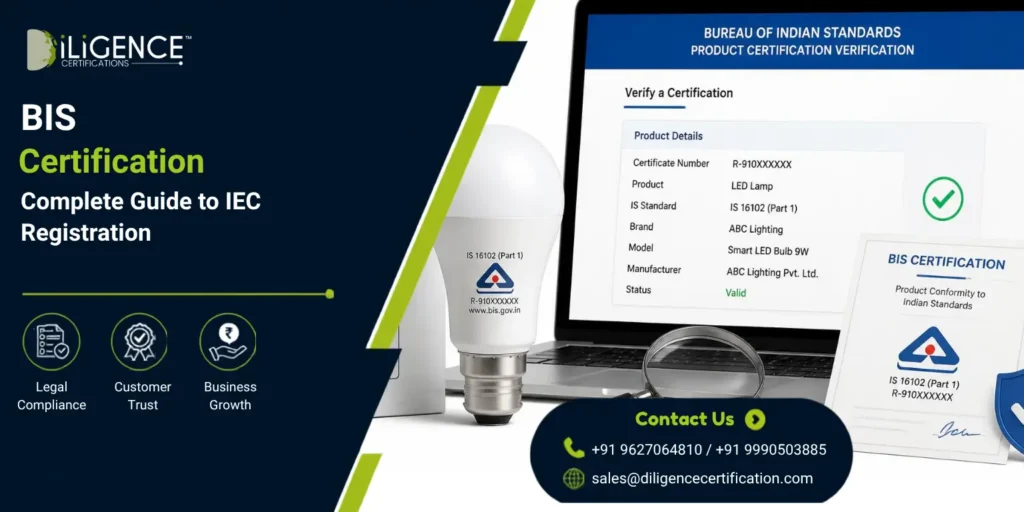
By - How Long Does BIS Certification Take timeline depends on the product, applicable Indian Standard, testing, and assessment requirements.
- The process generally includes application, product testing, factory inspection, and BIS evaluation.
- Proper documentation and timely compliance can help reduce delays and speed up certification.
Introduction
In case you are looking to manufacture, import or distribute your products in India, chances are high that you will hear about the need for BIS Certification. One of the most frequent questions that the organizations have is how long does it take to get BIS certification.
It all depends on various factors like the type of product category, Indian standard applicable to that particular product, testings needed, documentation, factory inspection and type of BIS certification.
BIS stands for Bureau of Indian Standards - the standards body in India.
From the business point of view, having an idea about the BIS certification time is important since it may include product testing, document verification, factory inspection, etc. Any document missing, testing problems, queries, etc. might prolong the whole procedure.
A professional BIS Certification Consultant will help to organize all documents, arrange for testing and application in order to make the whole procedure more manageable.
What is BIS Certification?
BIS Certification is a conformity assessment mechanism that helps demonstrate that a product meets the applicable Indian Standard and relevant quality and safety requirements.
Depending on the product and applicable scheme, BIS certification may involve:
- Product Testing
- Documentation
- Application Filing
- Factory Inspection
- Sample Verification
- Technical Evaluation
- Compliance Assessment
- Certification Approval
The actual process can vary according to the product category and certification scheme.
Businesses often ask how long does BIS certification take because certification timelines can directly affect product launches, manufacturing plans, imports, and market entry.
A Bureau of Indian Standards consultant can assist with:
- BIS Certification
- Product Standard Identification
- Documentation Assistance
- Application Preparation
- Laboratory Coordination
- Factory Inspection Support
- Query Resolution
- Compliance Guidance
- Certification Updates
Applications of BIS Certification in India
BIS certification is applicable to various products where certification or compliance with a relevant Indian Standard is required.
It may be relevant to:
- Electronic Products
- Electrical Products
- Household Appliances
- Construction Materials
- Industrial Products
- Automotive Components
- Machinery
- Steel Products
- Cement Products
- Chemicals
- Consumer Products
- Other Regulated Products
For automotive-related products, businesses may also come across ARAI, which stands for Automotive Research Association of India. Depending on the product and regulatory requirement, automotive products may require testing, approval, or compliance through the relevant authorities or technical agencies.
The exact certification requirement depends on the product, applicable standard, and regulatory framework.
Who Needs BIS Certification in India?
Manufacturers, importers, and businesses dealing with regulated products may need BIS certification or other applicable conformity requirements.
These may include:
- Manufacturers
- Importers
- Product Brands
- Traders
- Electronic Product Companies
- Electrical Product Manufacturers
- Consumer Product Businesses
- Industrial Manufacturers
- Automotive Product Businesses
- Startups
- Small Businesses
- Large Companies
- Foreign Manufacturers
Whether BIS certification is mandatory depends on the product and the applicable government notification or certification scheme.
Businesses launching a new product should check the applicable requirements before starting commercial operations.
Types of Compliance Supported by BIS Certification Consultant
Product Compliance
Product compliance is an important part of the BIS certification process. The product needs to meet the requirements of the applicable Indian Standard.
A BIS consultant can help businesses understand:
- Applicable Indian Standard
- Product Requirements
- Testing Requirements
- Technical Specifications
- Applicable Certification Scheme
- Product Documentation
- Compliance Requirements
Useful for:
- Manufacturers
- Importers
- Product Brands
- Startups
- Industrial Businesses
- Consumer Product Companies
Understanding product requirements at the beginning can help avoid unnecessary delays later.
Testing & Laboratory Compliance
Testing is often an important part of BIS certification. Depending on the product, samples may need to be tested through a BIS-recognized or otherwise applicable laboratory.
The testing process may involve:
- Sample Preparation
- Laboratory Selection
- Product Testing
- Test Report
- Technical Evaluation
- Sample Compliance
- Clarification of Testing Issues
The time required for testing can vary depending on the product, laboratory workload, test requirements, and whether the product successfully meets the applicable standard.
A complete and satisfactory test report can help the certification process move forward smoothly.
Documentation & Application Compliance
Proper documentation plays an important role in determining how smoothly a BIS application progresses.
Documentation may include:
- Business Registration Documents
- Product Details
- Manufacturing Information
- Technical Documents
- Test Reports
- Factory Details
- Machinery Details
- Quality Control Information
- Authorized Person Details
- Supporting Documents
A consultant can review the documentation before submission and help identify inconsistencies or missing information.
This can be particularly helpful because incomplete documentation may result in queries and additional processing time.
Documents Required for BIS Certification
The documents required for BIS certification depend on the product and applicable certification scheme.
Generally, businesses may need:
- Business Registration Documents
- PAN Details
- Address Proof
- Product Information
- Technical Specifications
- Manufacturing Details
- Factory Layout
- Machinery Details
- Raw Material Details
- Quality Control Information
- Test Reports
- Calibration Documents
- Authorized Person Details
- Supporting Documents
Foreign manufacturers may also need additional information depending on the applicable BIS requirements and certification scheme.
The submitted information should be accurate and consistent across the application, technical documents, and supporting records.
Step-by-Step Process for BIS Certification in India
Eligibility Assessment
The first step is to determine whether the product falls under a mandatory BIS certification requirement or another applicable conformity assessment requirement.
This assessment generally considers:
- Product Category
- Applicable Indian Standard
- Manufacturing Process
- Product Specifications
- Certification Scheme
- Applicable Government Notifications
This step is important because applying under the wrong standard or scheme can create unnecessary delays.
Identification of Applicable Standard
Once the product category is identified, the relevant Indian Standard is determined.
The applicable standard may specify requirements relating to:
- Product Performance
- Safety
- Quality
- Testing
- Materials
- Manufacturing
- Marking
- Packaging
Correct identification of the standard helps ensure that testing and documentation are carried out according to the appropriate requirements.
Gathering Required Documents
The required documents are collected and reviewed before application submission.
Technical and business information should be complete and consistent.
Preparing documents properly at this stage can help reduce the possibility of queries during the certification process.
Product Testing
Product samples may be provided for analysis by the appropriate laboratory.
The laboratory tests the product as per the appropriate Indian Standard and writes the required test report.
Testing is one of the factors that could greatly affect the total response to the question of how long it takes to get BIS certification.
Preparation and Filing of Application
After completing the necessary documentation and testing requirements, the BIS application is prepared and submitted through the applicable process.
The application generally includes information related to:
- Manufacturer
- Product
- Factory
- Technical Specifications
- Testing
- Quality Control
- Supporting Documents
Accurate information at the filing stage can help avoid avoidable corrections.
Factory Inspection
Where applicable, BIS officials may conduct a factory inspection to assess the manufacturing facilities and quality control arrangements.
The inspection may cover:
- Manufacturing Facilities
- Production Process
- Testing Facilities
- Quality Control
- Raw Materials
- Product Manufacturing
- Technical Personnel
- Records and Documentation
The inspection requirements vary according to the certification scheme and product.
Verification and Technical Evaluation
The submitted application, documents, test reports, and other information may be reviewed as part of the certification process.
If BIS raises a query, the applicant may need to provide clarification or additional documents.
Promptly responding to queries can help prevent unnecessary delays.
Grant of BIS Certification
Upon completion of the requisite requirements and approval of the application, BIS certification may be granted on the basis of the applicable scheme.
The manufacturer may thereafter comply with the applicable requirements of BIS Standard Mark or other marking as per the scheme..
Ongoing Compliance
Obtaining certification is not always the end of the compliance process.
Businesses may need to maintain:
- Product Quality
- Testing Records
- Quality Control
- Manufacturing Information
- Certification Details
- Marking Requirements
- Applicable BIS Compliance
Any changes in the product, manufacturing process, location, or other relevant information should be reviewed for their impact on certification.
Timeline, Cost & Validity of BIS Certification
The timeline, cost, and validity of BIS certification depend on the product, applicable Indian Standard, testing requirements, inspection requirements, documentation, and certification scheme.
| Timeline | Cost | Validity |
| The BIS certification timeline depends on product testing, documentation, inspection, application review, and BIS processing. | The cost depends on applicable government fees, testing charges, inspection expenses, and professional service charges, if any. | BIS certification validity depends on the applicable certification scheme and the terms specified by BIS. |
| Complete documentation and successful testing can help reduce avoidable processing delays. | Charges may vary according to product category, testing requirements, and services required. | Businesses may need to follow applicable renewal or continuation requirements to maintain certification. |
| Processing time may vary depending on product complexity, laboratory schedules, inspection requirements, and application queries. | Proper planning can help businesses manage certification-related expenses. | Businesses should continue meeting applicable BIS requirements throughout the certification period. |
Importance & Benefits of BIS Certification
| Importance | Benefits |
| Helps businesses fulfill applicable product quality and safety requirements. | Enhances product credibility and customer confidence. |
| Supports compliance with relevant Indian Standards. | Helps businesses access applicable Indian markets. |
| Encourages proper product testing and quality control. | Supports better product acceptance and market reputation. |
| Helps maintain organized product compliance records. | Creates opportunities for business growth and expansion. |
| Supports legal and regulatory responsibilities. | Strengthens long-term brand credibility and customer trust. |
Why is BIS Certification Important?
BIS certification is important because it helps demonstrate that a regulated product has been assessed against applicable standards and requirements.
For businesses, certification can support:
- Product Compliance
- Quality Assurance
- Consumer Safety
- Regulatory Compliance
- Product Acceptance
- Market Access
- Brand Credibility
- Customer Confidence
- Business Expansion
BIS certification will also assist producers to create an organized method for quality control and testing.
In the case of firms wanting to bring regulated products into India, having this knowledge beforehand is advantageous for the planning of production, testing, and launching of such products.
How Long Does BIS Certification Take?
The question “How long does BIS certification take?” does not have a single answer for every product.
The overall timeline can depend on several factors, including:
- Product Category
- Applicable Indian Standard
- Testing Requirements
- Laboratory Availability
- Documentation
- Factory Inspection
- Application Review
- Technical Evaluation
- BIS Queries
- Applicant Response Time
In cases where the products have relatively simple requirements and the information is complete, the process may go relatively smoother. But in cases where testing, inspection, technical assessment, and further clarifications are required, there may be a delay.
Among the reasons that often cause delay is the lack of complete or consistent information. Failures in testing may lead to further tests and adjustments.
That is why businesses need to look not only at the duration of the whole process but also at adequate preparation prior to submitting the application.
Professional BIS consultant will assist businesses in understanding the relevant requirements and carrying out documentation and testing.
Factors That Affect BIS Certification Timeline
Several factors can influence how long BIS certification takes.
Product Testing Requirements
Some products require extensive testing against multiple technical parameters. The complexity of testing can affect the overall timeline.
Laboratory Availability
Testing depends partly on laboratory schedules and workload. Delays may occur when testing facilities have limited availability.
Documentation Accuracy
Incomplete, incorrect, or inconsistent documents can lead to queries and corrections.
Factory Inspection
Where inspection is required, the availability of the applicant and BIS officials, along with factory readiness, can influence the timeline.
Product Compliance
If the product does not meet the applicable Indian Standard, corrective action and additional testing may be required.
Application Queries
Queries raised during application review can extend the processing period if responses are delayed or incomplete.
Applicant Response Time
Quick and accurate responses to BIS queries can help keep the application moving.
Consequences of Non-Compliance with BIS Requirements
Failure to follow applicable BIS requirements can create regulatory and business difficulties.
Regulatory Non-Compliance
Businesses may face compliance issues when regulated products are manufactured, imported, or sold without fulfilling applicable requirements.
Action by the Competent Authority
The competent authority may take appropriate action in cases of non-compliance.
Market Restrictions
Businesses may face difficulties in manufacturing, importing, distributing, or selling products where mandatory certification requirements apply.
Business Activity Time Lags
Non-compliance or incomplete certification can delay product launches and commercial activities.
Suspension or Cancellation
Certification may be affected if applicable requirements are not maintained or certification conditions are violated.
Documentation Risks
Incorrect technical or certification information can create problems during regulatory checks and business transactions.
Reputation of the Business
Compliance problems may reduce customer and business-partner confidence.
Risk of Bad Reputation
Repeated quality or regulatory issues can negatively affect a company’s market reputation.
Growing the Business
Compliance difficulties can create challenges when businesses want to expand their product range or enter new markets.
Renewal of BIS Certification
BIS certification does not necessarily follow one universal validity period because the applicable validity and continuation requirements depend on the certification scheme.
Businesses should monitor their certification status and applicable BIS requirements to ensure continued compliance.
Businesses may need to review:
- Certification Status
- Product Details
- Manufacturing Location
- Quality Control
- Testing Records
- Certification Marking
- Applicable Indian Standard
- BIS Requirements
Common compliance activities may include:
- Certification Renewal or Continuation
- Updating Business Information
- Maintaining Testing Records
- Maintaining Quality Control
- Monitoring Standard Updates
- Addressing BIS Requirements
- Managing Certification Changes
Regular compliance monitoring can help businesses avoid interruptions in certification-related activities.
How Professional Assistance Helps with BIS Certification?
A BIS Certification Consultant can simplify the certification process by helping businesses manage different stages of compliance.
Professional assistance may include:
- Product Requirement Assessment
- Indian Standard Identification
- Documentation Preparation
- Application Filing
- Laboratory Coordination
- Testing Support
- Factory Inspection Assistance
- Application Tracking
- Query Resolution
- Certification Updates
- Compliance Guidance
Professional guidance can be especially useful for businesses applying for BIS certification for the first time.
Instead of managing every requirement independently, businesses can receive structured support throughout the certification process.
Why Choose Diligence Certifications for BIS Certification?
Diligence Certifications assists businesses with certification, registration, documentation, and compliance-related requirements.
BIS-related services may include:
- BIS Certification Assistance
- Product Standard Identification
- Documentation Assistance
- Application Filing
- Testing Coordination
- Factory Inspection Support
- BIS Query Resolution
- Certification Modification
- Compliance Support
- Regulatory Guidance
With professional assistance, businesses can better understand the BIS certification process, prepare documents properly, coordinate testing, and manage application-related requirements.
This can make the certification journey more organized while allowing businesses to focus on manufacturing, product development, and other core operations.
Conclusion
BIS Certification is very significant in proving compliance of the regulated products to the relevant Indian Standards.
The duration of BIS certification varies from case to case, based on several elements like the category of product, relevant standard, tests required, documentation, availability of laboratories, inspections, application processing, etc.
No fixed time period can be suggested for BIS certification, as each application of BIS will have different duration depending upon the above said aspects.
A BIS Certification Consultant can help in identifying standards, documentation, test arrangement, filling up application, inspection support, query resolution, etc.
If a business firm intends to manufacture or import regulated products in India, then knowing about BIS certification procedure beforehand will help them plan better.
Frequently Asked Questions
How long does BIS certification take?
The timeline varies depending on the product, testing, documentation, inspection, and BIS processing requirements.
What affects the BIS certification timeline?
Product testing, laboratory availability, documentation, factory inspection, queries, and applicant responses can affect the timeline.
Can incomplete documents delay BIS certification?
Yes. Missing or inconsistent documents can result in queries and may increase the processing time.
Does product testing take time in BIS certification?
Yes. Testing requirements and laboratory schedules can influence the overall certification timeline.
Is factory inspection required for BIS certification?
Factory inspection may be required depending on the applicable product and certification scheme.
Can a BIS consultant reduce the certification time?
A consultant cannot control BIS processing time, but professional assistance can help reduce avoidable delays caused by documentation and procedural errors.
What is BIS?
BIS stands for Bureau of Indian Standards, India's national standards body.
What is ARAI full form?
ARAI stands for Automotive Research Association of India. It is associated with automotive research, testing, certification, and related technical activities.
Does BIS certification have a fixed validity?
Validity depends on the applicable BIS certification scheme and the conditions specified for the certification.
Can BIS certification be renewed or continued?
Yes, where applicable, businesses need to follow the prescribed renewal, continuation, or compliance requirements to maintain certification.