End-to-end certification and regulatory compliance for Indian and global markets.

Get your products BIS certified to ensure compliance with Indian standards and build customer trust. We handle end-to-end certification, testing, and documentation for manufacturers,importers, and exporters.
Global Approvals help your products meet international regulatory standards, allowing smooth entry into multiple global markets.
Our expert guidance and end-to-end support help you achieve TEC certification smoothly while gaining a competitive edge in the market.
Struggling to secure BEE Certification in India? Our specialists make the process easy and help you boost customer trust through verified energy ratings.
Our expert guidance ensures your steel imports meet Ministry of Steel and BIS standards, helping you stay compliant and streamline the approval process.
How to apply for BIS Certification in 5 Mins!

Apart from product certification, BIS is responsible for framing Indian Standards, conducting laboratory testing, and ensuring consumer protection.

USEFUL LINKS
How to apply for ISI Certification in 5 Mins!

Some items must be certified before they get released mysteriously made for select goods like cables, switches, cement, gas cylinders, etc.

USEFUL LINKS
CRS Certification- A Complete Guide for Electronic Product Compliance in India

It ensures electronic products conform to Indian Standards (IS).Covers 70+ products including laptops, phones, adapters, TVs, and batteries.

USEFUL LINKS
Hallmarking Certification- Everything You Must Know About Gold and Silver Purity Compliance

Hallmarking Certification is mandatory in India for gold and silver jewellery.The BIS 916 Hallmark confirms 22K gold purity.Silver Hallmarking is compulsory for certain grades like BIS 925.

USEFUL LINKS
FMCS Mark Certification- A Guide for Global Brands Selling in India

FMCS Mark Certification is a BIS-led approval process that enables foreign manufacturers to sell regulated products in the Indian market.

USEFUL LINKS
ECO Mark Certification : Your Complete Guide to Global Eco-Labeling Standards

It helps manufacturers build trust and create a compliance framework. It also markets to eco-conscious consumers.This guide will detail eligibility, provide information on the application procedure, and outline benefits of certification to ISO 14024.

USEFUL LINKS
Finding Laboratory Accreditation Tough? We Make It Simple!

It is governed by NABL under the Quality Council of India (QCI).Accreditation enhances trust among regulators, industries, and global partners.

USEFUL LINKS
World Manufacturer Identity (WMI) Registration

The World Manufacturer Identity (WMI) is a globally recognized code used to identify vehicle manufacturers. WMI registration ensures traceability, compliance, and global brand recognition for automotive makers.

USEFUL LINKS
BIS Scheme X Certification - Process, Documentation and Fees Structure- Updated Guide 2025-2026

Stay ahead of regulatory changes with BIS Scheme X Certification. Now extended to September 1, 2026, under the omnibus technical regulation order 2024. Get complete certification support from Diligence Certification.

USEFUL LINKS
Get your CDSCO registration

Get full assistance for CDSCO registration, medical device import licenses, and cosmetic import licenses with Diligence Certifications. Our expert guidance and comprehensive support ensure your compliance, helping you gain a competitive edge in the market. Your satisfaction is our commitment!

USEFUL LINKS
Drug License

Diligence Certifications is a top-tier name in drug licensing and provides topmost service and knowledge support to all sizes of pharmaceutical companies. Our seasoned team understands the global regulations and has seen several success stories.

USEFUL LINKS
Give Your Products cosmetic license

Having trouble securing Cosmetic License certification in India? Let our ISI certification experts assist you in achieving it and boosting your credibility!

USEFUL LINKS
Give Your Medical device Registration

Get expert guidance on Medical Device Registration in India. Learn CDSCO approval process, documents, fees & compliance for manufacturers and importers.

USEFUL LINKS
Get your PESO License

Get full assistance for PESO registration and licensing with Diligence Certifications. Our expert guidance ensures complete compliance and hassle-free approvals.

USEFUL LINKS
USEFUL LINKS
USEFUL LINKS
Obtain Your CPCB Certification Effortlessly………

Secure your CPCB Certification with ease and align your business with environmental regulations and sustainable practices. Our expert team streamlines the application process, offering tailored guidance to meet your unique EPR compliance requirements.

USEFUL LINKS
Get battery waste Compliance Certification for Your Products

Need assistance in Battery Waste Certification? Our experts guide you through every step to ensure smooth and compliant processing.

USEFUL LINKS
EPR Registration for E-Waste Certification

E-waste has become one of the most serious problems of the modern world, as technology is changing very fast. Discarded electronics items such as smartphones and refrigerators contain very toxic elements hazardous to human health and the environment if not treated properly.

USEFUL LINKS
EPR for Tyre Waste - Tyre Waste Management Guide

Tyre wastage is an increasing global problem. It threatens to engulf the world in a sea of rubber with disastrous consequences for the environment and human health.

USEFUL LINKS
Get Plastic waste Compliance Certification for Your Products

Diligence Certifications help businesses go a long way in environmental compliance matters through their management of plastic waste compliance. It rallies your commitment to reducing environmental impacts, increasing your recycling, driving circular economies and, hence, building credibility with consumers as citizens of a wider world contending against plastic pollution with angels and regulators.

USEFUL LINKS
EPR Registration for USED OIL in India

Having trouble in getting EPR registration for your oil products in India? Let the experts do it for you and give credence to your products!

USEFUL LINKS
Get No Objection Certificate for Your Business

The No-Objection Certificate has special relevance for a business; from needing it while applying for a loan, selling property, or for an application to pursue higher education, there are multiple situations where one has to face the need for an NOC.

USEFUL LINKS
USEFUL LINKS
Get Your LMPC Certification!

Get Full Assistance for Model Approval for Indian W&M Instruments and Importer Registration for Weight and Measurement Instruments with Diligence Certifications. We prioritize your success by providing expert guidance and comprehensive support for all your LMPC Certification needs, helping you gain a competitive edge in the market. Your satisfaction is our commitment, and we work tirelessly to ensure it, now and in the future.

USEFUL LINKS
Get Your LMPC Certification for Packaged Commodities

The Diligence Certifications for Packaged Commodities Certification ensures the product conformity with the regulatory requirements. It assesses your product labeling, weight, and quality for compliance with legal requirements and gives transparency and consumer trust. This certification is an instrument of defense against wrong packaging for business and consumers alike and shows your commitment toward fair trading practices and market integrity.

USEFUL LINKS
Get Your LMPC Import License Certification!

Diligence Certifications offers provision of LMPC Import License Certification under Legal Metrology Packaged Commodities rules with respect to process of importation of goods into India for compliance. Our proficiency ensures that your labeling and packaging for products meet the requirements for easy clearance of goods through customs. It certifies approval from the regulators, having legal backing and gaining confidence of consumers and authorities.

USEFUL LINKS
Get Your LMPC Manufacturer Registration

The company is authorized to undertake the LMPC Manufacturer Registration if it manufactures weights and measures within India. This registration under the Legal Metrology Act guarantees fair and correct transaction laws for business and trade activities through LMPC certificate registration. Let us demystify all the information you would require below.

USEFUL LINKS
Get Your WPC Approval!

Get Full Assistance for Non-Network License, Network License, and Equipment Type Approval with Diligence Certifications. We prioritize your success by providing expert guidance and comprehensive support for all your WPC Approval needs, helping you gain a competitive edge in the market. Your satisfaction is our commitment, and we work tirelessly to ensure it, now and in the future.

USEFUL LINKS
Get Your WPC Import License Certification!

The Diligence Certifications grant a fast track to the acquisition of WPC Import License, making the imports of communication devices 100% compliant with WPC Certification. Based on our experience and expertise, we ready you for the licensing processes in such a way that your product conforms with all technical standards and is safely usable within India. The certification would guarantee acceptance by regulators, therefore cultivating such trust with the authorities and end users.

USEFUL LINKS
DPL/NDPL Certification: Ensuring Safety and Compliance for Your Wireless Products

Today-connected world, indeed, keeps the promise of wireless devices. Today manufactured devices include laptops, smartphones, portable WiFi hotspots, WiFi extenders, and smart home appliances. However, with this pressing usage, there is a huge demand for safety and performance requirements.

USEFUL LINKS
Equipment Type Approval (ETA) for Wireless Devices in India

In this hyper-connected age, wireless access points, portable Wi-Fi routers, and other radio frequency (RF) devices are indispensable. When any of these products are manufactured, imported, or sold in India, the knowledge of and acquiring Equipment Type Approval (ETA) becomes imperative; that’s how Diligence Certifications will help you obtain your WPC Certification more conveniently.

USEFUL LINKS
Get Your RoHS Certification!

In today’s world with increasing environmental consciousness, it is vital to dispose of equipment properly after the intended lifetime. Targeting hazardous e-waste is one of the vital roles played by RoHS; elaborately explaining RoHS certification itself, RoHS objectives, substances involved, certification processes, and applicability in curbing environmental contamination.

USEFUL LINKS
Get Your UL Certification

Diligence Certifications provides UL (Underwriters Laboratories) Certification services to ensure your products comply with rigorous safety and performance standards. Our skilled team supports you throughout the certification process, ensuring full adherence to UL requirements. Achieving UL certification with us boosts your product’s credibility, fosters consumer confidence, and highlights your dedication to safety and quality in the market.

USEFUL LINKS
Give Your Products KC Certification

KC Certification is a major mandatory condition for many products that are developed to reach Korea’s genuine profitable consuming market. KC Certification is otherwise known as KC Registration or simply the Korean Certificate, and denotes compliance with Korean safety standards and regulations.

USEFUL LINKS
Give Your Products FCC Certification

Struggling with FCC certification in India? Our expert team at Diligence Certifications can help you navigate the process effortlessly, ensuring your electronic devices meet all compliance standards. Boost your credibility and market access with FCC certification today!

USEFUL LINKS
Give Your Products CE Certification

Among these is the CE Marking, which is especially pertinent to manufacturers who are considering selling their products in the European Economic Area (EEA).

USEFUL LINKS
CB Certification-Your Gateway to Global Product Compliance

CB stands for Certification Bodies Scheme.An international system operated by IECEE (IEC System for Conformity Testing and Certification of Electrotechnical Equipment and Components).Facilitates mutual recognition of test results among participating countries.Enables global market access for electrical and electronic products.Reduces the need for multiple testing and certification in different countries.

USEFUL LINKS
SAFTA Certificate: A Complete Compliance Guide for Indian Exporters

The SAFTA certificate online enables reduced customs duties under the SAARC trade agreement.Businesses can apply for a SAFTA certificate digitally through authorised agencies in India.This document is vital for proving origin and unlocking tariff benefits.

USEFUL LINKS
MSDS Certificate for Hazardous Chemicals and Hazardous Products

You can apply online for your MSDS Certificate in India through many trusted compliance and safety services.This documentation allows the company to maintain regulatory safety and hazard management which also protects the world you operate in.

USEFUL LINKS
SASO Certificate Of Conformity For Export to Saudi Arabia

SALEEM / SABER system is the online conformity platform linking exporters, certification bodies, and customs.Two stages: Product CoC (PCoC, valid one year) and Shipment CoC (SCoC, per consignment).

USEFUL LINKS
Get UKCA Certification in India | Expert UKCA Marking Guide

It replaces the CE marking post-Brexit and is mandatory for most regulated products.Indian manufacturers exporting to the UK need UKCA marking to stay compliant.

USEFUL LINKS
USEFUL LINKS
USEFUL LINKS
USEFUL LINKS
Get Your TEC Approval!

Get Full Assistance for TEC Type Approval, TEC Interface Approval, TEC Certification Approval and TEC Approval of Technology with Diligence Certifications. We prioritize your success by providing expert guidance and comprehensive support for all your TEC Approval needs, helping you gain a competitive edge in the telecommunications market. Your satisfaction is our commitment, and we are dedicated to ensuring it now and in the future.

USEFUL LINKS
Get ARAI Vehicle Certification!

Get full assistance for ARAI Vehicle Certification for vehicles, engines, and components with Diligence Certifications. With over 25 years of experience, we prioritize your success in gaining a competitive edge in the automotive market. Trust our expert guidance for all your ARAI certification needs.

USEFUL LINKS
USEFUL LINKS
Give Your Products BEE Star Rating Certification

Having trouble securing BEE Star Rating Certification in India? Let our ISI certification experts assist you in achieving it and boosting your credibility!

USEFUL LINKS
Get ISO Certification for Your Business - Ensure Quality and Global Compliance

It is critical to understand how to get ISO Certification for audit and compliance purposes.Read on to learn step-by-step how to get ISO certified in India with expert assistance.

USEFUL LINKS
Get ISO Certification for Your Business - Ensure Quality and Global Compliance

It is critical to understand how to get ISO Certification for audit and compliance purposes.Read on to learn step-by-step how to get ISO certified in India with expert assistance.

USEFUL LINKS
Get ISO Certification for Your Business - Ensure Quality and Global Compliance

It is critical to understand how to get ISO Certification for audit and compliance purposes.Read on to learn step-by-step how to get ISO certified in India with expert assistance.

USEFUL LINKS
Get ISO Certification for Your Business - Ensure Quality and Global Compliance

It is critical to understand how to get ISO Certification for audit and compliance purposes.Read on to learn step-by-step how to get ISO certified in India with expert assistance.

USEFUL LINKS
Get ISO Certification for Your Business - Ensure Quality and Global Compliance

It is critical to understand how to get ISO Certification for audit and compliance purposes.Read on to learn step-by-step how to get ISO certified in India with expert assistance.

USEFUL LINKS
Get ISO Certification for Your Business - Ensure Quality and Global Compliance

It is critical to understand how to get ISO Certification for audit and compliance purposes.Read on to learn step-by-step how to get ISO certified in India with expert assistance.

USEFUL LINKS
Get ISO Certification for Your Business - Ensure Quality and Global Compliance

It is critical to understand how to get ISO Certification for audit and compliance purposes.Read on to learn step-by-step how to get ISO certified in India with expert assistance.

USEFUL LINKS
Get Your Drone Registered in India-Effortlessly and Compliantly

Drones above nano size must be registered on Digital Sky and obtain a UIN, Type Certificate, remote-pilot certificate (for commercial use), and insurance-while adhering to airspace rules and NPNT protocol.

USEFUL LINKS
USEFUL LINKS
Obtain Your No Objection Certificate (NOC) for Steel Importers with Ease

Importing steel into India? Get your No Objection Certificate (NOC) under the Steel Quality Control Order (QCO) without delays or compliance risks. Diligence Certifications offers complete support for steel importers-ensuring your products meet Ministry of Steel and BIS regulations, and helping you avoid customs issues, rejections, or penalties. Stay legally compliant, save time, and streamline your steel import process with our expert certification services.

USEFUL LINKS
USEFUL LINKS
USEFUL LINKS
USEFUL LINKS

End-to-end certification and regulatory compliance for Indian and global markets.

Register your business with ease and stay compliant with Indian regulations. We take care of end-to-end documentation, approvals, and legal formalities for startups, MSMEs, and enterprises.
Getting your business Public Limited Company Registration

In addition, you will be briefed on how Limited Liability Incorporation protects you and how Diligence Certifications may assist one in navigating the certification process.

USEFULL LINKS
One-Person Company: Your Business, Your Control, with Limited Liability Protection!

Diligence Certifications streamlines the One-Person Company (OPC Registration in India) registration process, ensuring compliance with all.

USEFULL LINKS
Get Your Business Legally Recognized with LLP Registration.

Starting a Limited Liability Partnership (LLP) can be a strategic move for entrepreneurs looking to combine the benefits of a partnership with the advantages of limited liability partnership.

USEFULL LINKS
Give Your Products FIRM Registration.

Starting a business is an exciting venture, and choosing the right legal structure is a crucial first step. For many entrepreneurs, a partnership firm offers a flexible and collaborative way to operate.

USEFULL LINKS
Startup India Registration.

Unlock the exclusive benefits and enhance the startup with Startup India Registration - along with that Diligence Certifications can help you with the whole process and ensure that every requirement is fulfilled for a successful Startup India Registration in India.

USEFULL LINKS
Get your Organization NGO registration.

Are you really into making a difference or starting your own Non-Governmental Organization (NGO Registration) in India? We will also mention how Diligence Certifications can assist you in such cases.

USEFULL LINKS
GEM Registration Services - Get Your Business Listed on the Government e-Marketplace.

The registration process begins with gathering mandatory documents such as PAN, GST, bank details, and Aadhaar/DSC.

USEFULL LINKS
Private Limited Company Registration in India.

Well, at this point, are you really ready to take it to the next level? The formation of Private Limited Company Registration in India is often considered to be a strategic alternative by most entrepreneurs since it provides credibility combined with a limited liability and a scope for future investments:

USEFULL LINKS
Empower Your Indian Subsidiary Company Registration.

Our expert team provides comprehensive guidance through each step, from documentation to application submission. With our assistance, you can establish your subsidiary efficiently, gain legal recognition, and leverage opportunities for growth in the Indian market.

USEFULL LINKS
Producer Company Registration: Empowering Farmers Through Collective Strength.

The Producer Company Registration offers this sort of power to farmers to organize and run businesses for their mutual benefit collectively.How Diligence Certifications can facilitate the process with credibility for a Farmer Producer Company (FPC).

USEFULL LINKS
Empowering Independent Business with Seamless Sole Proprietorship Registration.

It offers a straightforward setup and direct control, making it the most popular and straightforward business structure in India.

USEFULL LINKS
Ensure your partnership firm registration.

With our assistance, you can establish your partnership with confidence, define roles and responsibilities, and set the foundation for successful collaboration.

USEFULL LINKS
Ensure Your Shop and Establishment Registration.

Setting up a new enterprise should be exciting, even though there are deterrents in legal implications. That is a journey almost every business-making entity undertakes, from the littlest to the largest-the Shop and Establishment Registration.

USEFULL LINKS
Ensure your MSME registration.

Our expert team provides comprehensive support throughout the registration process, from documentation to application submission. With our assistance, you can access government benefits, secure funding opportunities, and enhance your business credibility in the competitive market.

USEFULL LINKS
PSARA (Private Security Agencies Regulation Act) License.

No longer complicated definitions for you; just straight, simple, useful information that will get your business going.

USEFULL LINKS
USEFULL LINKS
USEFULL LINKS
FSSAI Mark Certification: Steps, Benefits & Renewal Process

FSSAI Mark Certification helps food businesses meet safety standards, gain consumer trust, and expand market reach. Learn how to apply today.

USEFULL LINKS
USEFULL LINKS
USEFULL LINKS
USEFULL LINKS

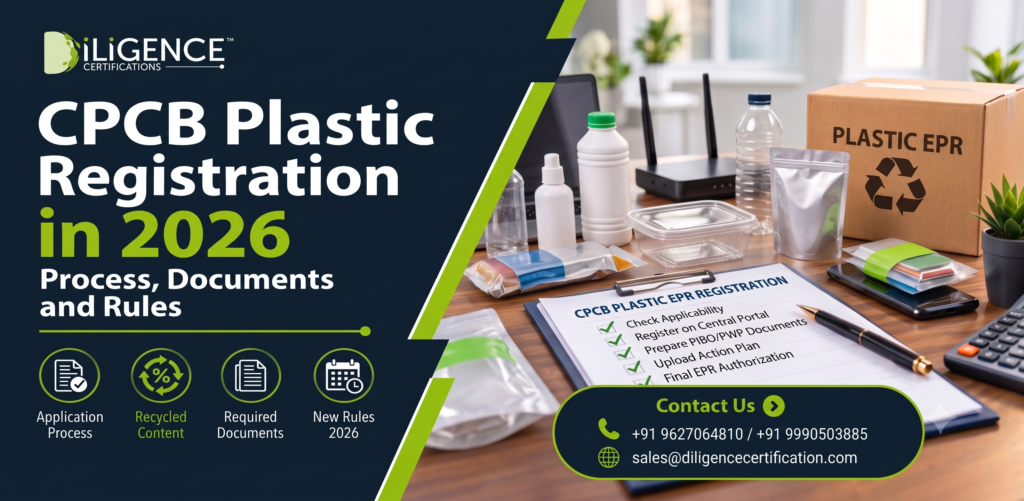
CPCB Plastic EPR Registration: Process, Documents and Rules

abhishek By abhishek Updated October 7, 2026 11 min read
  • You might notice that EPR requirements might affect Producers, Importers and Brand Owners (PIBOs) who deal with packaging.
  • Before applying I suggest businesses first identify their packaging category and determine how plastic they use.
  • Common information that EPR requirements need includes PAN, GST incorporation details, IEC, product details and packaging data for importers.
  • Registration is the step; EPR requirements also demand managing recycling, reuse, recycled content, certificates and reporting.
  • The 2026 amendments bring changes to recycled plastic content and, to packaging compliance.

Introduction

Businesses that bring in or sell products with packaging may need to get CPCB plastic EPR registration under India’s plastic waste management rules.

Extended Producer Responsibility, also known as EPR means that companies have to take care of the packaging they put into the market even if those companies did not make that packaging, on their own.

The process involves checking if the company needs to sign up finding out which kinds of packaging are included calculating how much plastic is used, gathering the papers and finishing the CPCB registration process. Once registered companies have to carry out EPR responsibilities.

This guide explains CPCB plastic EPR registration the documents needed the application steps, the 2026 rules, the recycling goals and the compliance requirements-all, in language.


What Is CPCB Plastic EPR Registration?

CPCB plastic EPR registration forms part of India’s Extended Producer Responsibility system for plastic packaging.

EPR places responsibility on businesses that introduce applicable plastic packaging into the market to support its proper management at the end of its useful life.

In simple terms, a business should know:

  1. How much applicable plastic packaging it introduces into the market.
  2. What category the packaging belongs to.
  3. What EPR obligations apply to that packaging.
  4. How those obligations will be fulfilled and reported.

The framework covers Producers, Importers and Brand Owners. Plastic Waste Processors have separate registration and compliance responsibilities.

EPR should not be viewed simply as an online registration. The information submitted should be supported by business records such as production, purchase, import, sales and packaging data.


Who Needs CPCB Plastic EPR Registration?

The first step is to find out if your business falls under the rules that apply.

1. Producers

If businesses manufacture packaging or fall within the Producer definition businesses must check the EPR obligation.

Examples of businesses that produce bottles, containers and other packaging products illustrate this requirement.

Businesses should always read the definition before deciding whether registration is required.

2. Importers

Importers should carefully examine plastic packaging associated with imported products.

A company may not manufacture the packaging itself, but if it imports packaged products into India, it may have applicable EPR responsibilities.

This can affect businesses importing food products, cosmetics, household products, electronic products and other packaged goods.

3. Brand Owners

Brand owners may also be part of the EPR framework.

For instance a company might sell a product using its brand but get the packaging from a different manufacturer. Just because another company made the packaging doesn’t mean the brand owner is, off the hook.

The business needs to look at how the deal actually works and what the rules say.

4. Plastic Waste Processors

Plastic Waste Processors, including eligible recycling and processing facilities, have separate responsibilities.

Their requirements are different from those applicable to PIBOs. Other environmental permissions and consents may also apply depending on the facility.


What Plastic Packaging Comes Under EPR?

Correct packaging classification is important because obligations can vary by category.

Category I: Rigid Plastic Packaging

This generally includes rigid plastic packaging such as:

  • Plastic bottles
  • Rigid containers
  • Plastic jars
  • Similar rigid packaging

Category II: Flexible Plastic Packaging

This can include:

  • Plastic pouches
  • Flexible wrappers
  • Plastic films
  • Certain plastic sheets
  • Other flexible packaging formats

Category III: Multilayered Plastic Packaging

Multilayer packaging is made of plastic with one or more additional layers and I find that this mixed construction is common in many products.

If a business uses packaging the business should examine multilayer packaging carefully to know which category applies because the rules can differ.

Category IV

Category IV is, for sheet-like plastic packaging and carry bags that are made from compostable plastics and that follow the applicable framework and I think this helps reduce waste.


Why Classification Matters

Businesses should avoid putting every type of plastic packaging into one combined figure.

For example, a company using rigid bottles and flexible pouches should maintain category-wise records.

The business should be able to explain:

  • What the packaging is
  • What material it contains
  • Which category applies
  • How much was introduced into the market

CPCB Plastic EPR Registration Step by Step Process

The online process can change as CPCB updates its portal system. However, businesses can follow a practical preparation process.

Step 1: Check Applicability

Determine whether the business is a Producer, Importer, Brand Owner or another applicable category.

Step 2: Prepare a Product List

List the products connected with plastic packaging and record:

  • Product name
  • Packaging type
  • Packaging material
  • Packaging category
  • Quantity
  • Domestic or imported source

Step 3: Calculate Plastic Packaging Quantity

I will calculate the Plastic Packaging that has been introduced into the Indian market.

I prefer using business records instead of unsupported estimates.

Relevant records may include production data, purchase invoices, import records, sales data and Plastic Packaging specifications.

Step 4: Prepare Documents

Common information may include:

  • PAN
  • GST certificate
  • Incorporation or registration documents
  • Authorised person’s details
  • IEC for applicable importers
  • Product information
  • Packaging details
  • Production data
  • Import data
  • Sales information
  • Relevant consent documents
  • Previous EPR registration details

Step 5: Check the Current CPCB Portal

Businesses should verify the latest CPCB instructions before applying.

This is particularly important in 2026 because EPR administration has been moving towards the Common EPR Portal. Older articles may contain outdated portal instructions

Step 6: Enter Business Details

Check the company name, the PAN, the GST registered address the contact details and the authorized persons information.

All documents must match the business details exactly.

Step 7: Enter Packaging Information

Enter the product and packaging details that apply.

A rule: every quantity you report in the EPR application should be explainable, from your company records.

Step 8:. Respond to Queries

After you review the application submit it via the appropriate CPCB system.

If the authorities ask for clarification or more information respond through the required process.

Step 9: Maintain Compliance After Registration

Getting the registration does not end the EPR obligations.

Your business may still need to manage targets, certificates, records and annual reporting.


Documents Required for CPCB Plastic EPR Registration

The exact requirements depend on the applicant category. Businesses should generally keep the following information ready:

Document / InformationPurpose
PANBusiness identification
GST CertificateBusiness and tax details
Incorporation CertificateLegal identity
IECRelevant for importers
Authorised Person DetailsApplication communication
Product DetailsProduct identification
Packaging DetailsEPR classification
Production DataQuantity calculation
Import DataImporter compliance
Sales DataMarket quantity support
Purchase RecordsPackaging calculation
Consent DocumentsWhere applicable
Previous EPR DetailsExisting applicants

Documents should be checked against each other before submission.

For example the legal name on PAN, GST and IEC must match the business details provided in the EPR application.

Similarly the packaging quantities should have an logical link, to production records, purchase records, import records or sales records.


What Changed in Plastic EPR Rules in 2026?

The Plastic Waste Management (Amendment) Rules, 2026 brought changes about recycled plastic content and packaging. 

For Producers, Importers and Brand Owners who are affected recycled plastic content targets, for Categories I, II and III are listed as follows:

Packaging Category2025-262026-272027-282028-29 onwards
Category I30%40%50%60%
Category II10%10%20%20%
Category III5%5%10%10%

These requirements show that EPR compliance goes beyond recycling.

Businesses that use packaging should also think about recycled‑content rules when buying packaging and planning products.

Need help with this certification?Talk to a Diligence compliance expert. Free, no obligation.
Free Consultation

The rules, for 2026 give a way to handle cases when recycled plastic cannot be used legally because of another law, regulation, required Indian Standard or legal rule.

For Category III packaging the recycled‑content goal is limited to the weight of the layers.

Businesses must therefore know what their packaging is made of before they calculate their compliance duties.


What Are Plastic EPR Recycling Targets?

EPR targets depend on the applicable packaging category and compliance year.

A company should not automatically apply one percentage to every type of plastic packaging.

For example, a business using:

  • Rigid bottles
  • Flexible pouches
  • Multilayer packaging

should maintain separate category-wise records.

An internal EPR sheet can include:

ProductPackagingCategoryQuantityCompliance Year
Product ABottleCategory IActual data2026-27
Product BPouchCategory IIActual data2026-27
Product CMultilayer PackCategory IIIActual data2026-27

Actual figures should always be taken from the company’s records.


Common EPR Portal Changes

Businesses that obtained registration under an earlier system should not assume that their compliance work ends with the old registration.

Companies should check:

  1. Whether existing registration information has migrated correctly.
  2. Whether business details are accurate.
  3. Whether authorised-person information is correct.
  4. Whether previous returns are available.
  5. Whether certificate information is reflected correctly.
  6. Whether historical data matches internal records.
  7. Whether discrepancies require correction.

Older portal guides should therefore be used carefully. Businesses should follow the latest CPCB instructions applicable to their registration.


Records a Business Should Maintain

Strong EPR compliance depends on proper record keeping.

Businesses should maintain records of:

  • Plastic packaging introduced into the market
  • Packaging categories
  • Packaging quantities
  • Production records
  • Import records
  • Sales data
  • Purchase invoices
  • Packaging specifications
  • EPR certificates
  • Recycler or Plastic Waste Processor information
  • Recycled-content information
  • Annual returns
  • Registration amendments
  • Portal acknowledgements
  • Authority communications

The objective is to create a clear audit trail.

If a business is asked how a reported plastic quantity was calculated, it should be able to support the number through its records.


Common CPCB Plastic EPR Registration Mistakes

1. Using an Old Portal Guide

EPR processes can change. An older article may not reflect the current CPCB portal process.

2. Choosing the Wrong Applicant Category

Producer, Importer, Brand Owner and Plastic Waste Processor are different categories. The correct category should be identified first.

3. Mixing Packaging Categories

Rigid, flexible and multilayer packaging should not automatically be combined into one figure.

4. Using Unsupported Estimates

Where actual production, purchase or import data is available, it should be used instead of unsupported estimates.

5. Ignoring Recycled Content

The 2026 changes make recycled-content requirements an important part of plastic packaging compliance.

6. Treating Registration as the End

Registration does not automatically complete ongoing EPR responsibilities.

7. Ignoring Existing Registration Data

Existing businesses must check their information carefully and make sure it matches their internal records.


How EPR Affects Importers

Importers should focus closely on packaging.

For example, a company importing packaged cosmetics may not manufacture the bottle, cap or outer packaging. However, the packaged product is being introduced into the Indian market by the importer.

The importer should therefore examine its position under the applicable EPR rules.

Relevant information may include:

  • IEC
  • Imported product details
  • Packaging material
  • Packaging quantity
  • Import invoices
  • Import records
  • EPR registration
  • Annual reporting information

EPR compliance should ideally be reviewed before large amounts of historical data accumulate.


CPCB Plastic EPR Registration for Growing Businesses

EPR should not be considered relevant only to large companies.

A growing business may begin with one product and later add different packaging formats or imported products. This can change its EPR position.

Before launching a new product, businesses should ask:

  1. Does the product use applicable plastic packaging?
  2. Which category does the packaging belong to?
  3. Who is introducing the packaging into the Indian market?
  4. What quantity is expected?
  5. Does the product change the company’s EPR obligations?

Including these questions in the product-launch process can reduce future compliance problems.


CPCB Plastic EPR Compliance Checklist

Before submitting an application, check:

  • Correct applicant category identified
  • Plastic packaging identified
  • Packaging categories mapped
  • Product list prepared
  • Plastic quantities calculated
  • PAN verified
  • GST details verified
  • IEC checked, where applicable
  • Authorised person’s details verified
  • Production records reviewed
  • Import records reviewed
  • Sales data checked
  • Previous EPR records reviewed
  • Current CPCB instructions checked
  • Recycled-content requirements reviewed
  • Annual compliance plan prepared

Why Choose Diligence Certifications for CPCB Plastic EPR Registration?

Many businesses understand the idea of EPR but struggle to connect the rules with their real work.

A company might know it uses packaging but still find it hard to figure out:

  • Which category applies
  • Whether it is a Producer, Importer or Brand Owner
  • How much plastic should be reported
  • Which documents are required
  • How the registration process works
  • What continuing compliance is required

Diligence Certifications can assist with:

  • EPR applicability assessment
  • Document preparation
  • Plastic packaging classification
  • CPCB application assistance
  • EPR compliance planning
  • Portal-related guidance
  • Recycler coordination
  • Compliance reporting
  • Query support
  • Ongoing compliance assistance

The important objective is to make the EPR application reflect the actual business model and supporting records


Conclusion

CPCB plastic EPR registration should not be treated as just another online certificate.

The process starts with determining whether the business is covered, identifying the correct plastic packaging categories, calculating reliable quantities and maintaining records that support the reported information.

The 2026 changes make this even more important because businesses must pay attention to recycled-content requirements, packaging categories, compliance records and changes in the CPCB online system.

If your business manufactures, imports or sells products using applicable plastic packaging, reviewing your EPR position early can help prevent avoidable compliance problems.

A strong EPR system should connect registration, packaging data, certificates and annual returns.

When these records are accurate and consistent, ongoing plastic EPR compliance becomes much easier to manage.


Frequently Asked Questions.

1. What is CPCB plastic EPR registration?

CPCB plastic EPR registration is part of India’s Extended Producer Responsibility framework for applicable plastic packaging. It requires eligible businesses to register and fulfil their plastic waste management obligations.

2. Who needs CPCB plastic EPR registration?

Producers, Importers and Brand Owners (PIBOs) dealing with applicable plastic packaging may need CPCB plastic EPR registration. Plastic Waste Processors have separate registration requirements.

3. What documents are required for CPCB plastic EPR registration?

Common documents include PAN, GST certificate, incorporation details, IEC where applicable, authorised person details, product information, packaging details, production or import data and relevant compliance records.

4. How to apply for plastic EPR registration online?

Businesses generally need to check applicability, identify packaging categories, calculate plastic quantities, prepare documents, enter business and packaging details on the applicable CPCB system, submit the application and respond to queries.

5. What are the categories of plastic packaging under EPR?

Plastic packaging is generally classified into Category I for rigid packaging, Category II for flexible packaging, Category III for multilayered plastic packaging and Category IV for specified compostable plastic packaging.

6. Is CPCB plastic EPR registration enough for EPR compliance?

No. Registration is only one part of plastic EPR compliance. Businesses may also need to meet applicable recycling, recycled-content and other EPR obligations, maintain records, obtain relevant certificates and complete required reporting

7. What are the 2026 recycled-content targets for plastic packaging?

For 2026-27, the applicable targets in the blog are 40% for Category I, 10% for Category II and 5% for Category III, subject to the applicable rules and conditions.

8. Do importers need plastic EPR registration?

Importers may need CPCB plastic EPR registration when they introduce applicable plastic packaging into the Indian market. They should review their imported products, packaging quantities and specific EPR obligations.

9. What records should businesses maintain after CPCB EPR registration?

Businesses should maintain packaging quantities, product information, production and import records, sales data, purchase records, EPR certificates, recycled-content information, annual returns and relevant CPCB communications.

10. Can a business update its CPCB plastic EPR registration details?

Businesses should check the applicable CPCB portal procedure for amendments or corrections. Registration details and historical data should remain consistent with the company's current legal, product and packaging records.

Get your certification handled by experts

25,000+ businesses served. Talk to a Diligence compliance expert today, free.

+91 99905 03885 WhatsApp
Call WhatsApp