 BIS Certification
 CDSCO
CDSCO
 PESO
PESO
 CPCB
CPCB
 LMPC
LMPC
 WPC Approval
 Global Approvals
 TEC
TEC
 ARAI
ARAI
 BEE
BEE
 ISO Certification
 DGCA Certification
 NOC For Steel
 APEDA Registration



















 Business Registration
 FSSAI Mark Certification












 (32).jpg)
 Legal Services
 Trademark Registration
 Copyright Registration
 Patent Registration
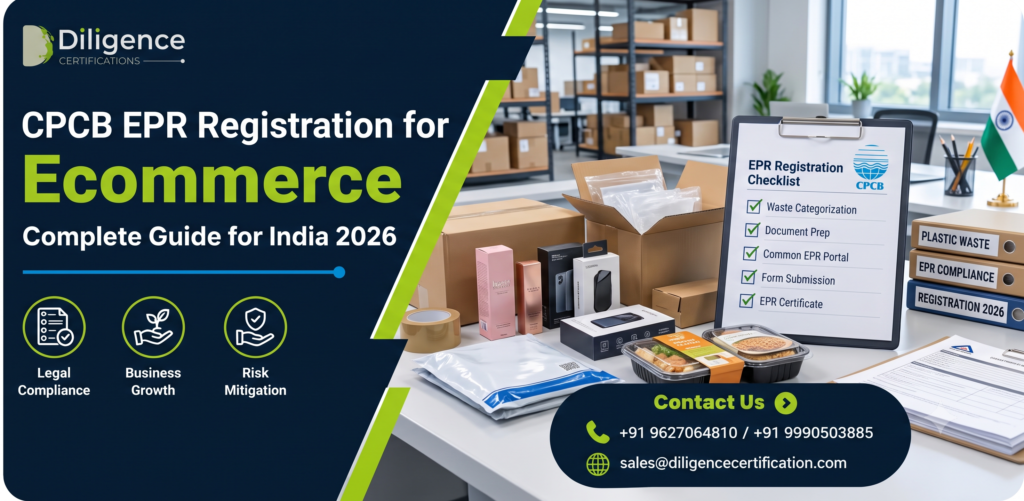
 By
By - Plastic Waste Rules: Mandatory for online brands, importers, and producers using plastic packaging in India.
- Role-Based Duties: Brand owners and importers remain legally liable, even if third parties manufacture goods.
- All Packaging Counts: Covers both primary containers (bottles, pouches) and shipping materials (courier bags, bubble wrap).
- CPCB vs SPCB Route: Register with CPCB for multi-state operations (3+ states/UTs) or with SPCB/PCC for 1-2 states.
- Ongoing Reporting: Demands accurate weight tracking, meeting recycling targets, and filing regular returns.
Introduction
Ecommerce companies that sell beauty products Ecommerce companies that sell ready‑to‑eat food Ecommerce companies that sell technology items or Ecommerce companies that sell home supplies might need to follow rules because of the containers Ecommerce companies use.
Many sellers believe that the makers or online shops are the ones who should handle the waste. That is not always true.
The CPCB EPR registration, for stores could be required for companies, people who bring products into the country and brand owners who meet certain conditions based on their business activities and the laws that apply.
EPR stands for Extended Producer Responsibility. It means that some companies have to manage the waste that comes from their products or the packaging they use. Understanding these rules helps online stores avoid problems and keep their records current.
What is CPCB EPR registration for ecommerce?
CPCB EPR registration for ecommerce is the process that applies to ecommerce businesses that’re part of India’s Extended Producer Responsibility framework.
For packaging the framework is the Plastic Waste Management Rules, 2016 as amended. This set of rules includes the EPR provisions that were added later.
The Central Pollution Control Board, also called CPCB has the job of registering businesses that are covered by the rules. Depending on the kind of business and where it’s located CPCB registration could be handled by the State Pollution Control Board, known as SPCB or, by the Pollution Control Committee, which is called PCC.
In words EPR means that covered businesses have to take care of the waste that comes from their products or packaging according to the rules that apply. This can include registration, data about packaging targets for recycling or other EPR requirements such as keeping records and submitting reports regularly.
For example a company that sells skincare products in packages under its brand might need to look at its obligations, for packaging even if another factory makes the products.
However an online seller is not automatically required to get CPCB registration just because online seller sells things online. The correct category and the legal rules that apply must be checked first.
Why is EPR registration important for ecommerce businesses?
Ecommerce has changed the way products are sold and delivered. A customer might order a product from a company in Delhi while the product is made in another state and sent to a customer in another part of India.
The product may have types of packaging. A cream for the face might come in a container with a lid and a seal while the delivery company adds a bag or some protective wrapping.
When a business puts covered plastic packaging into the market it should know whether it has duties under the EPR framework.
There are reasons to look into these rules early.
1. To find out duties
A business should know if it is considered a producer, an importer or a brand owner. Choosing the category can lead to an application or to not planning properly for compliance.
2. To keep records
Businesses may need details about packaging materials, amounts and sales for each product. Keeping this information organized from the start makes reporting easier later.
3. To get ready for business growth
A seller that operates in one place today may expand to states start private‑label products or begin importing items. These changes can affect how compliance is handled.
4. To avoid delays
papers, inconsistent company details and unclear numbers about packaging can cause questions during the registration process. Getting information, in advance can make the process easier.
5. To handle environmental duties
EPR is not a paper task. The goal is to improve how waste is handled and to push covered businesses to meet their duties under the rules.
Who Needs CPCB EPR Registration When Selling Online?
The answer depends on the business model. A private-label brand, importer, manufacturer, independent reseller and online marketplace may not have the same obligations.
Ecommerce brand owners
I see that if a business sells hair oil, face wash or packaged snacks under its brand the business owns the brand name. Even if a third‑party factory makes the products the business still has to meet the EPR obligations. Hiring another company to manufacture the product does not automatically remove the business’s responsibilities.
I know that an ecommerce business that brings finished goods from another country into India must check whether it is an importer under the rules that apply. For example a business that imports accessories in packaging may need to review product details, import records and packaging data before deciding which environmental registrations are needed. The rules can differ based on product type and waste stream. Plastic packaging EPR is not the same, as e‑waste or battery EPR rules.
Manufacturers and producers
Businesses manufacturing covered plastic packaging or packaged products may fall under the relevant producer category.
The exact obligations depend on the definitions in the rules and the business’s activities. A company manufacturing packaging for other brands should assess its own responsibilities separately from those of its customers.
Marketplace operators
I think an online marketplace is not always treated the way for every seller using its platform.
A marketplace that offers a platform for sellers may have a compliance position than a business that brings in products or sells its own private‑label goods.
The activities, business structure and role of a marketplace under the rules that apply must be examined before making a decision.
Small online sellers and resellers
A reseller selling another companys products is not automatically required to follow the rules as a brand owner or importer.
Some exceptions may be available, for businesses that meet conditions. However a business should not think it is exempt just because it has orders, low sales or a small team.
The main point is: Find out your role then check the registration requirement. Do not make a decision just because you run an ecommerce business.
What Are the Main Rules for Ecommerce EPR Registration?
Plastic packaging Extended Producer Responsibility is controlled by the Plastic Waste Management Rules, 2016 as updated and the related guidelines and official instructions.
The rules that apply set out duties for businesses that are covered importers and brand owners. These duties might involve registration meeting EPR targets keeping records and providing the information that is needed.
Three areas need focus.
Registration: Businesses that are covered must sign up with the authority using the way.
EPR duties: Businesses that are registered must meet the targets and other duties that apply to their type and the kind of packaging they use.
Reporting: Companies must keep information. Finish the reports or other forms needed under the rules.
The exact rules might change because of updates announcements or official instructions. Companies should therefore look at the situation instead of only depending on an old article or a consultants general list.
The official website for the EPR activities is the CPCB Common EPR Portal.
The old Centralized EPR Portal, for Plastic Packaging stopped taking activities on 28 June 2026. People who are registered should follow the official guidance and make sure that their moved records are correct.
Documents Required for CPCB EPR Registration for Ecommerce
Preparing documents before starting the application can save time. The exact checklist depends on the entity category, registration route and current portal requirements.
The following documents and information may be relevant.
Business identity documents
Businesses should prepare their PAN details, business registration or incorporation documents, registered address and other information required to establish the legal identity of the applicant.
GST registration details may also be required, where applicable.
Authorised person’s information
The application may require details of the person authorised to handle the registration and compliance process.
Ensure that the information matches the relevant business records and that the authorised person can respond to application-related queries.
Product and brand details
Prepare information about the products sold, the brands involved, and the business’s role in manufacturing, importing or marketing those products.
This is particularly important for private-label businesses that use third-party manufacturers.
Packaging information
Collect information about the types of plastic packaging associated with the products. This may include bottles, containers, pouches, wrappers, films, plastic courier bags and other relevant components.
Where required, maintain reliable information about packaging weight, material composition and quantities.
Sales and import records
Relevant sales figures, import information and product records may be needed to support the application and calculate applicable obligations.
Keep the source of the data clear. Estimates should not be presented as verified figures.
Existing registration details
If the business already has a registration, prepare the relevant certificate, registration number and account information.
Businesses moving from the previous plastic packaging portal should follow the current migration instructions rather than creating unnecessary duplicate records.
A practical document checklist
Before starting, check that you have:
- Company PAN and applicable GST details.
- Business incorporation or registration documents.
- Registered address and authorised-person information.
- Product, brand and business activity details.
- Relevant packaging material and quantity records.
- Sales and import information, where applicable.
- Existing registration details, if any.
- Declarations and supporting documents required by the current portal.
This is a preparation checklist, not a final legal list. Confirm the requirements for your specific registration category before submitting the application.
Step-by-Step Process for CPCB EPR Registration for Ecommerce
Before you start filling out a form I think you should first review the business.
Step 1: Identify your business category
First I think you should determine whether the business acts as a producer, importer, brand owner or another stakeholder under the rules.
A company may perform than one role. For example I think it might import products under one business line and sell private‑label goods under another.
Review each activity before deciding which registration requirements apply. I believe this will help clarify the steps.
Step 2: Confirm the authority
For plastic packaging covered PIBOs operating in more than two states or union territories generally register with CPCB. Those operating in one or two states or union territories generally register with the SPCB or PCC subject to the applicable provisions and exceptions. I think it is important to check
Do not select the authority only because you deliver products to customers in states. Check the rules and the companys actual operating circumstances. I believe the correct authority depends on operations.
Step 3: Review packaging categories
Identify the packaging associated with the products and determine how it should be classified under the applicable framework. I think clarity here is key.
Ask. Suppliers for reliable packaging details. If a product contains components do not assume that all of them belong to the same category.
Step 4: Collect the required documents
Gather all the business documents, product information, sales data and packaging details that are needed for the application. I think having everything ready and organized will make the process faster and smoother.
Make sure the business name, PAN details, addresses and other information match across all your records. I believe consistency in these details helps avoid delays and keeps things clear.
Step 5: Access the portal
Go to the Common EPR Portal and follow the steps for your waste category. I think reading the instructions carefully is the way to get started.
If you are an existing registrant for packaging check your migrated information. Make sure your records are up to date and follow the process to access or link your existing details.
Step 6: Submit your application
Fill in all information provided. Provide all required documents. Take some time to review the application carefully prior to submitting the application. Some time spent on checking all information would definitely prevent you from making mistakes which might be quite troublesome later. I understand how boring this step may be but taking your time will save you much later.
Provide the accurate numbers for your packaging quantities as well as all details about your business. In case if the portal needs information do not make any assumptions provide facts only. Be always honest and accurate with your provided information.
Step 7: Answer to inquiries
In case if the authorities will consider your application and request documents or answers, answer as soon as possible. Quick answer shows your readiness to collaborate and be responsible.
Always answer the inquiries using the same way how the portal contacts you. Always make copies of all sent documents, all messages you receive from the authorities. This will allow you to keep the evidence of your correspondence in case if any questions arise.
Step 8: Check registration status
Submission of your application does not equal to its registration or approval. You must check the status of your application to know where it is. Make sure the registration or approval has actually been issued. Checking the status keeps you updated and avoids any surprises.
Save the details of your registration in your business records. Keep them with your compliance documents. Good record keeping makes things simpler when auditors come around or when you need to verify something.
Step 9: Manage compliance
After registration keep an eye on the obligations, for your category. These can include keeping packaging data up to date meeting EPR targets submitting returns and updating your information. I think staying alert and informed helps you stay compliant.
Registration is the step. Continuing to meet your responsibilities matters much. I believe both the initial registration and the ongoing compliance are equally important.
How Does Plastic Packaging EPR Apply to Ecommerce Products?
I have noticed that understanding how packaging is categorized helps a business keep its records organized and know what questions to ask suppliers about packaging.
Plastic packaging can be divided into three types: plastic packaging, flexible packaging and multilayered packaging. The. Schedules that apply to plastic packaging determine which classification is needed and what responsibilities come with it.
Rigid plastic packaging, also known as packaging includes items like bottles, jars, tubs and containers. This type of packaging is very common, in industries.
An ecommerce business that sells shampoo, cosmetics or household cleaning products might see these types of packaging. The business must figure out the parts. Keep track of the information required by the rules that apply.
Flexible plastic packaging
includes items such as films, pouches, wrappers and some courier bags. When orders are processed the product may already be wrapped in its packaging before the fulfilment team places a shipping bag or a protective wrapper, around it. The business must examine every part closely. Decide how each part should be treated according to the rules that apply.
Multilayered packaging
refers to packaging that mixes plastic with materials or contains several layers. To determine the type of packaging check the definitions. Examine what the packaging is actually made of. A supplier might provide a description. That may not be sufficient to determine the legal classification.
Product packaging and delivery packaging
Consider an ecommerce business selling a packaged food product.
The product might arrive in a plastic pouch. The fulfilment team then places it inside a courier bag with additional protective material.
These are separate packaging components. The business should understand who introduces each component into the market and how the relevant rules apply to its role.
Do not assume that every piece of packaging creates an identical obligation for every business involved. Classification, responsibility and reporting must be assessed under the applicable framework.
What Are the Responsibilities of an Ecommerce Brand Owner?
An ecommerce brand owner may need to do more than obtain a registration certificate.
Depending on its category and the applicable provisions, responsibilities may include:
- Registering with the appropriate authority.
- Identifying relevant plastic packaging and maintaining reliable quantity data.
- Keeping product, sales and packaging records.
- Meeting applicable recycling, reuse or other prescribed EPR targets.
- Using recognised compliance channels and valid supporting records where required.
- Filing the required returns within the applicable deadlines.
- Updating business or registration information when necessary.
- Monitoring changes to environmental rules and official portal instructions.
Consider a company selling personal care products under its own brand. The manufacturer may provide the bottles and pack the products, but the brand owner should still assess whether it has independent responsibilities under the plastic packaging framework.
A sensible approach is to request packaging data from suppliers and compare it with the company’s product and sales records.
The business should also maintain evidence supporting its compliance calculations. This makes it easier to explain how figures were prepared if questions arise later.
The applicable EPR targets and calculation methods depend on the current rules and the entity’s category. Do not use a target from another waste stream or assume that the same percentage applies to every business.
Common Mistakes Ecommerce Businesses Should Avoid
Many compliance problems begin with an incorrect assumption rather than a complicated legal issue.
Assuming that the marketplace handles everything
A marketplace may have its own seller policies, but those policies do not automatically replace statutory obligations imposed on a seller.
Determine which responsibilities apply to your business and which, if any, belong to another entity.
Believing that the manufacturer is always responsible
A third-party factory may manufacture a product, but the company selling it under its own brand may have separate obligations.
Business agreements should clearly address packaging information and compliance support. However, a private contract cannot automatically remove a legal responsibility imposed by the rules.
Ignoring shipping materials
Some businesses record only the packaging supplied with the product and overlook the materials added during dispatch.
Ask suppliers and fulfilment partners for accurate information, then establish which components are relevant to your obligations.
Using incorrect packaging figures
Incorrect weights, incomplete sales records and unsupported estimates can create problems during reporting.
Maintain a clear method for calculating quantities and retain the source documents used to prepare the figures.
Using outdated portal instructions
The previous plastic packaging portal was discontinued for new activities on 28 June 2026. Businesses should follow current Common EPR Portal instructions and check the accuracy of migrated records.
Assuming registration ends all responsibilities
A registration certificate does not automatically fulfil the company’s future reporting or EPR targets.
Create a compliance calendar and assign responsibility for maintaining records and completing required filings.
What Happens If an Ecommerce Business Does Not Comply?
An obligated business that fails to follow the applicable environmental rules may face regulatory action.
Depending on the facts and the relevant legal provisions, this may include environmental compensation, directions to correct deficiencies or other enforcement measures permitted by law.
The consequences depend on the specific violation, applicable provisions and circumstances. It would be misleading to suggest that every ecommerce seller faces the same penalty.
Businesses should verify the legal basis for any claimed penalty rather than relying on general statements circulating online.
A practical compliance file should include the registration details, supporting calculations, packaging information, submitted returns and relevant correspondence. These records help the business explain its compliance position when required.
How Can Ecommerce Businesses Prepare for EPR Compliance?
A simple internal process can make EPR management easier, particularly for businesses selling many product variants.
Maintain product-wise packaging information
Create a spreadsheet or inventory record containing:
- Product SKU and product name.
- Brand and manufacturer details.
- Import information, where applicable.
- Packaging component and material type.
- Packaging weight per unit, where relevant.
- Units sold during the reporting period.
- Source of the packaging data.
- Applicable EPR category and calculation notes.
This information should be updated when the company launches a new product, changes a supplier or introduces new packaging.
Reconcile sales and packaging data
Sales records can help establish how many units were sold, but sales figures alone may not provide all the packaging information required.
Work with suppliers to understand packaging weights and materials. Compare the available records and investigate significant differences before using the data for reporting.
Assign compliance responsibility
Even a small ecommerce business should decide who will maintain the records, monitor official updates and handle registration-related communication.
If the task is shared between sales, procurement and accounts teams, make sure the information reaches the person responsible for compliance.
Review the rules periodically
Environmental regulations and portal procedures can change. Check the latest official instructions before submitting an application or filing a return.
A process that worked for an earlier reporting period should not be assumed to remain unchanged.
Why Choose Diligence Certifications for CPCB EPR Registration for Ecommerce Certification?
Understanding EPR requirements can be challenging when a company sells several product categories, imports goods or works with multiple manufacturers.
Before applying, it is useful to review the business model, identify the relevant category, organise the required documents and understand the ongoing compliance responsibilities.
Diligence Certifications provides guidance on environmental registration and compliance requirements. Depending on the service and the business’s circumstances, support may include:
Eligibility assessment: Reviewing the business activities and identifying the potentially relevant EPR category.
Document preparation: Helping organise company details, product information, packaging data and supporting records.
Application guidance: Explaining the relevant registration process and current portal requirements.
Compliance planning: Helping the business understand its recordkeeping and reporting responsibilities.
You can review the company’s CPCB and environmental compliance services to understand the available support.
For general information about the organisation and its services, visit the Diligence Certifications homepage.
The first step is to assess your actual products, packaging and business role. Registration or exemption should not be assumed without checking the relevant rules and facts. No consultant can guarantee approval where the final decision rests with the competent authority.
Conclusion
CPCB EPR registration for ecommerce is an important compliance consideration for businesses that introduce covered plastic packaging into the Indian market. However, not every online seller has the same responsibilities.
Start by identifying whether your business acts as a producer, importer, brand owner or another stakeholder. Review your products and packaging, confirm the relevant registration authority, prepare accurate records and follow the current Common EPR Portal instructions.
Do not wait until a reporting deadline approaches to organise your packaging information. A clear process for collecting data, checking applicable targets and maintaining records can make ongoing compliance easier to manage.
If you are unsure whether your ecommerce business needs plastic packaging EPR registration, seek a compliance assessment before submitting an application. Understanding your obligations at the beginning can help you avoid incorrect applications and identify potential compliance gaps early.
Frequently Asked Questions
1. What is CPCB EPR registration for ecommerce?
It is the registration process for ecommerce businesses covered under India’s Extended Producer Responsibility framework. For plastic packaging, this framework comes under the Plastic Waste Management Rules, 2016, as amended. It applies to businesses that put covered plastic packaging into the market.
2. Does every ecommerce seller need CPCB EPR registration?
No. Selling online does not automatically require registration. Your role matters, such as producer, importer or brand owner. A reseller selling another company’s products may not have the same obligations as a private-label brand.
3. Is a brand owner responsible even if a third party manufactures the product?
Yes, it can be. If you sell products under your own brand, hiring a factory does not automatically remove your responsibilities. A brand owner should check its own obligations under the plastic packaging rules.
. Does the marketplace handle EPR compliance for sellers?
Not automatically. Marketplace policies do not replace the legal duties that apply to a seller. Check which responsibilities belong to your business and which, if any, belong to another entity.
. Which documents are required for CPCB EPR registration for ecommerce?
Usually, you should keep these ready:
PAN and GST details (where applicable)
Incorporation or business registration documents
Registered address and authorised person details
Product, brand and packaging information
Sales and import records
The final list depends on your category and the current portal requirements.
6. Where do I apply for EPR registration?
Applications are made on the CPCB Common EPR Portal. The old Centralized EPR Portal for Plastic Packaging stopped taking activities on 28 June 2026. Existing registrants should check that their migrated records are correct.
7. Should I register with CPCB or the State Pollution Control Board?
Generally, PIBOs operating in more than two states or union territories register with CPCB. Those operating in one or two states or union territories generally register with the SPCB or PCC. Exceptions may apply, so check the rules for your actual operations.
8. Does courier and shipping packaging come under EPR?
It may. Product packaging and delivery packaging are separate components, such as a courier bag or protective wrapping. Businesses should ask suppliers and fulfilment partners for accurate details and check which components are relevant to their obligations.
9. Does getting the registration certificate end my EPR responsibilities?
No. Registration is only the first step. Registered businesses may also need to keep packaging records, meet applicable EPR targets, file returns on time and update their information when needed.
10. What happens if an ecommerce business does not comply with EPR rules?
Authorities may take regulatory action, which can include environmental compensation or directions to correct deficiencies. The consequence depends on the violation and the legal provisions involved. Not every seller faces the same penalty.