BIS Certification
 CDSCO
CDSCO
 PESO
PESO
 CPCB
CPCB
 LMPC
LMPC
 WPC Approval
 Global Approvals
 TEC
TEC
 ARAI
ARAI
 BEE
BEE
 ISO Certification
 DGCA Certification
 NOC For Steel
 APEDA Registration























 Business Registration
 FSSAI Mark Certification












 (32).jpg)
 Legal Services
 Trademark Registration
 Copyright Registration
 Patent Registration
 By
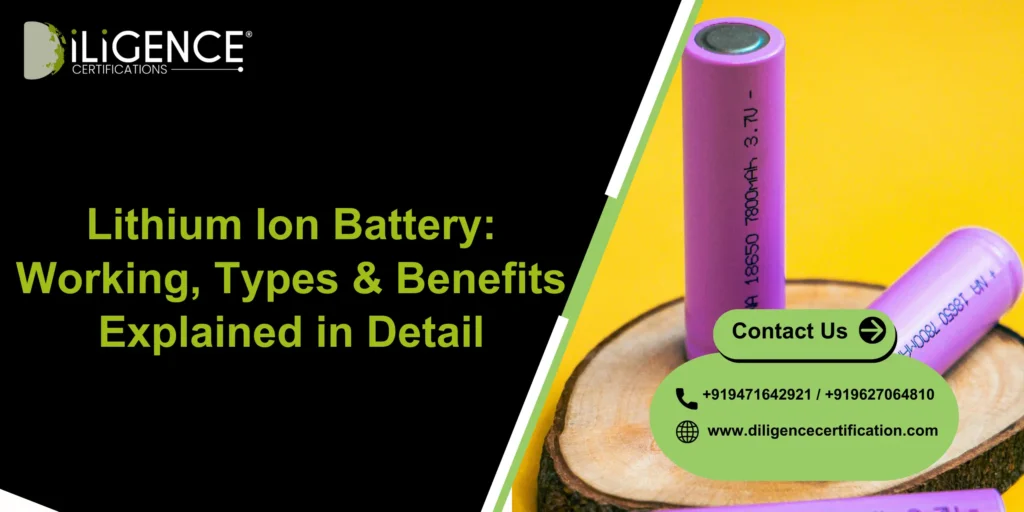
By - BEE Certification for Lithium Ion Battery is an effective battery type for storing energy in today’s electronic and electrical applications.
- It is vital in ensuring high performance, longevity, and constant power supply.
- The necessary paperwork includes technical details, safety information, and test results.
- The procedure entails the following steps: charging, ions transferring between electrodes, storing energy, and discharging.
- Advantages include high energy storage, quick charging, extended lifespan, and increased efficiency.

Introduction
There are a number of manufacturers who encounter problems as a result of failure to use or implement Lithium Ion Battery technology. These may include poor battery lives, slower charging capabilities, and inefficiency in terms of energy usage. This results in negative impacts on product quality and performance. Compliance with current standards and technological innovations becomes difficult without the Lithium Ion Battery technology.Bureau of Energy Efficiency (BEE)
The remedy to the problem is implementing Lithium Ion Battery technology to enable improved performance, energy storage capacity, and enhanced battery life. The devices become efficient in delivering their intended purpose.
It is also imperative for the manufacturer to comply with the appropriate requirements. Compliance guarantees that the product being delivered is safe, efficient, and ready for commercial use. Customer satisfaction will also be realized due to the delivery of certified and safe products.
What is a Lithium Ion Battery?
The Lithium Ion Battery is an energy-storing device that offers efficient energy usage. The battery is commonly utilized in technology because of its high capacity, lightweight construction, and longevity.
Details of the Product:
- A Lithium Ion Battery charges the device via movement of lithium ions between two terminals
- It is highly efficient in delivering a high level of energy
- Provides a high level of charge efficiency
- Ensures the stability of power delivery in different devices
- Has low weight and size to make it appropriate for mobile application
Examples of Products:
- Mobile phones and laptops
- Electric vehicles (EV)
- Portable chargers and electrically operated tools
- Energy storage systems
- Medical and other specialized equipment
Quality & Safety Features:
- Fitted with highly advanced safety systems
- Protects from overheating and overcharging
- Meets global standards of quality
- Proven performance and reliability
Lithium Ion Battery allows for effective energy usage and safe operations.
Why is Lithium Ion Battery Significant?
Lithium Ion Battery is significant since it powers almost all current equipment with excellent efficiency, safety, and sustainability. It significantly contributes to the advancement of today’s technologically-oriented society.
Significance of Lithium Ion Battery:
- Quality assurance through constant and reliable power supply
- Customer confidence due to its safety and sustainable use
- Market acceptance through its extensive application in present-day gadgets
- High-energy efficiency through quick charging and extended usage period
- Minimal maintenance requirements, hence cost-saving to customers
- Compatibility with contemporary electronic and electrical systems
Lithium Ion Battery is crucial for manufacturers since it facilitates the development of efficient and reliable products. Besides, it complies with the relevant safety and quality standards, ensuring higher product certification and minimizing product failure possibilities. To consumers, it provides an enhanced experience, extended battery life, and safe use.
Key Features of Lithium Ion Battery
The Lithium Ion Battery is one of the most popular batteries in today’s devices owing to its superior performance, safety, and longevity. It is manufactured to serve as an effective storage unit for power in different devices.
Key Features:
- Highly durable battery with long life cycle and stability
- Manufactured according to high standards for ensuring safety and quality
- Safety measures to protect against overheating, overcharging, and short circuiting
- Highly reliable battery with constant and stable voltage supply
- Compact size and lightweight nature for easy installation
- Rapid charging process with minimal energy loss
These attributes make the Lithium Ion Battery an ideal choice for users and manufacturers.
Who Needs a Lithium Ion Battery?
Lithium Ion Battery is needed by numerous industries and organizations that rely on effective energy storage and efficient power supply systems. It is employed in many areas, including electronics and electrical appliances, as well as vehicles powered by electricity.
Who needs:
- Companies that manufacture various electronic and electrical devices
- Businesses that supply batteries and other energy supplies
- Firms that export battery-powered products
- Entities that import batteries and other electrical components
Certification is critical for all the parties above because it guarantees compliance with standards for safety, quality, and performance of the Lithium Ion Battery. This will prevent any potential dangers, such as overheating and malfunction, from occurring. Moreover, certification will ensure that the products are trusted by customers, thus increasing their sales in the global marketplace.
Documents Required for Lithium Ion Battery
The documentation process is necessary for a Lithium Ion Battery in order to facilitate safety and compliance. The documents serve as evidence of the quality and performance level of the Lithium Ion Battery.
Documents Required:
- Business registration document for identity purposes
- Product information such as model and capacity
- Description of design and technical aspects of the Lithium Ion Battery
- Test results obtained from recognized laboratories for performance and safety purposes
- Quality assurance documentation throughout the manufacturing process
- Safety data sheets for chemical composition
The above documentation will enable the Lithium Ion Battery to be considered safe and perform optimally within the industry.
Step-by-step Process of Lithium Ion Battery Certification
The Lithium Ion Battery certification process involves documentation, product testing, and evaluation before granting final approval by relevant authorities. Here are the steps:
Step 1: Document Preparation
- Compile necessary documents such as business license, product description, test reports, and other paperwork showing product compliance and identification.
Step 2: Product Testing
- The Lithium Ion Battery undergoes testing in an accredited laboratory. The testing involves measuring its energy capacity, charging efficiency, and temperature tolerance among others.
Step 3: Compliance Evaluation
- Regulatory authorities assess the Lithium Ion Battery to determine whether it satisfies all requirements.
Step 4: Application Submission
- The application form should be submitted to the certification agency together with all documents and test reports.
Step 5: Verification Process
- Officials verify the documents submitted during the application process. Inspections on production facilities may take place.
Step 6: Certification Approval
- Approval is issued upon successful verification. The product can now be marketed.
This process promotes safe and reliable Lithium Ion Batteries. It also helps companies gain regulatory compliance.
Timeline, Cost, and Renewal Process - Lithium Ion Battery
| Category | Details |
| Timeline | 7-15 working days (depends on verification) |
| Testing | 3-7 days in authorized testing facility |
| Cost | Based on battery type, capacity, and classification |
| Validity | 1-5 years (as per certification standards) |
| Renewal | Requires updated documents, test reports, and compliance check |
Key Points to Prevent Delays:
- Submit all required information accurately
- Provide correct technical and safety data
- Use authorized testing facilities
- Respond promptly to queries from authorities
Compliance with regulations during Lithium Ion Battery approval will lead to more efficient processing, safer products, and market acceptance.
Common Mistakes in Lithium Ion Battery
The common mistakes in Lithium Ion Battery could result in delay, rejection or even safety problems. There are many manufacturers who make errors in the crucial steps that need to be taken for compliance, resulting in poor performance and non-approval of the products.
Common Mistakes:
- Incomplete and incorrect documents
- Unapproved and inaccurate test reports
- Disregarding safety & quality requirements
- Technical specification error
- Improper battery design process
- Delay in answering questions from authorities
Prevent Mistakes in Submission:
- Create a checklist of all documents needed
- Submit test report only from approved testing labs
- Abide by all safety & regulatory requirements
- Check technical specifications
- Prompt response to corrections & verifications
Mistake prevention will result in easier approval and safe performance of the Lithium Ion Battery.
Benefits of Lithium Ion Battery
A Lithium Ion Battery comes with numerous benefits to manufacturers, business organizations, and customers. These batteries have proven efficient in offering reliable power with high performance.
Benefits:
- Guarantees quality assurance through consistency in energy delivery
- Builds market trust as the battery has a reliable and safe performance
- Guarantees full compliance with international standards in terms of safety and quality
- Durability in terms of longevity and less wear
- Increased customer satisfaction through quick charging and longer operational periods
- Small in weight and small in size for convenience
- Decreased need for maintenance as it cuts costs
- Improved efficiency of the devices and machines that use it
Lithium Ion Batteries are highly valued in different sectors today owing to the safety, efficiency, and technology involved. These batteries guarantee the smooth operations of devices.
Why Choose Diligence Certification for Lithium Ion Battery?
Getting the right certification for the Lithium Ion Battery will be an easy and hassle-free process with the assistance of Diligence Certification. This certification company can make sure that the whole process goes smoothly.
Reasons Why You Should Get Diligence Certification:
- They offer expert guidance for Lithium Ion Battery certification procedures
- They help with the entire document preparation process
- They ensure fast approval of the application because of efficient handling and submission
- They communicate transparently and keep you updated throughout the process
- End to end service from the beginning to the completion of the process
You can get all the required assistance in getting your Lithium Ion Battery certified with ease.
Conclusion
Lithium Ion Battery is an integral component of our times, used in all devices and providing excellent results in terms of effectiveness, safety, and durability. Whether it concerns the way how lithium ion batteries work or its types, benefits, applications, and certifications, everything plays its role in successful functioning. This innovation plays a crucial part in the improvement of products and energy technologies. BEE Certification
Compliance matters a lot in this case. The proper adherence to standards guarantees safety, efficiency, and successful marketing of the product, as well as promotes consumer confidence.
In order to avoid any trouble during the certification process, professional assistance should be sought. It will make the procedure easy for you.
Frequently Asked for Questions
What is a Lithium Ion Battery?
A secondary battery using lithium ions.
How does a Lithium Ion Battery function?
Through lithium ion movement between electrodes.
What are the types of Lithium Ion Battery?
LFP, NMC, LCO, and NCA.
Where can a Lithium Ion Battery be applied?
In mobile phones, electric vehicles, laptops, and ESS.
Is a Lithium Ion Battery reliable?
Absolutely, if it complies with safety requirements.
What are the advantages of Lithium Ion Battery?
High capacity, fast charging, and longevity.
What is the typical lifecycle of a Lithium Ion Battery?
About 3 to 10 years depending on its use.
What documentation is needed for certification?
Technical specifications, test results, and company information.
Why should Lithium Ion Battery undergo testing?
For safety assurance, efficient operation, and durability.
Who requires Lithium Ion Battery certification?
Producers, sellers, importers, and distributors.