BIS Certification
 CDSCO
CDSCO
 PESO
PESO
 CPCB
CPCB
 LMPC
LMPC
 WPC Approval
 Global Approvals
 TEC
TEC
 ARAI
ARAI
 BEE
BEE
 ISO Certification
 DGCA Certification
 NOC For Steel
 APEDA Registration























 Business Registration
 FSSAI Mark Certification












 (32).jpg)
 Legal Services
 Trademark Registration
 Copyright Registration
 Patent Registration
 By
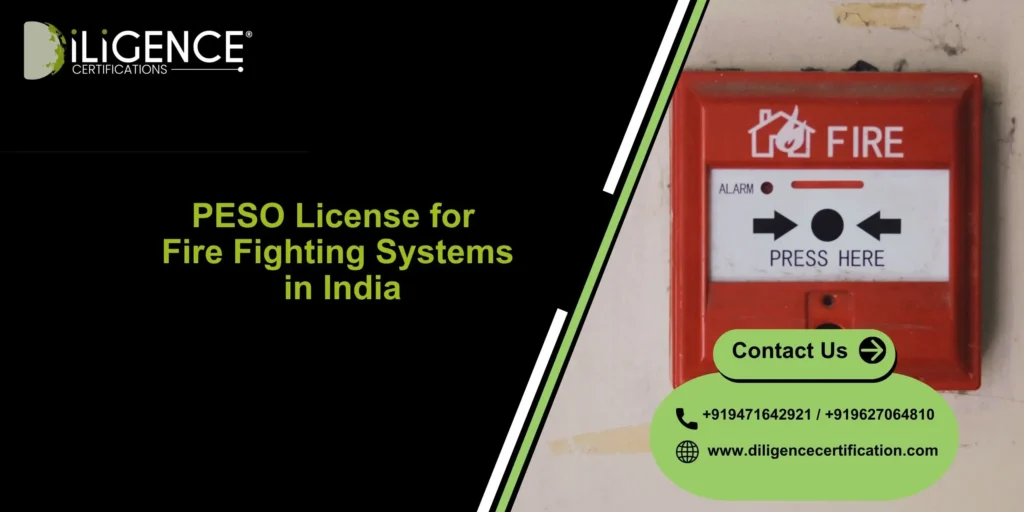
By - PESO for Fire Fighting Systems may be required for fire fighting systems that use compressed gases, pressure vessels, cylinders, petroleum, flammable gases, or equipment installed in hazardous areas.
- PESO ensures that such systems are safe for storage, handling, installation, filling, testing, and operation.
- Fire suppression systems using gases like CO₂, clean agents, nitrogen, or other compressed gases must follow applicable safety rules and technical standards.
- Without proper approval, businesses may face project delays, rejection, penalties, safety risks, or shutdown of operations.
- A consultant helps in documentation, drawings, technical compliance, application filing, and authority coordination.
Introduction | PESO for Fire Fighting Systems
Fire Fighting systems play a vital role in safeguarding industrial safety, commercial buildings, factories, warehouses, oil installations, gas storage areas, and hazardous areas. The fire fighting systems help in protecting human lives, property, equipment, and operational activities from fire accidents.
Some Fire Fighting Systems may need to get the approval or license from PESO in India, especially when using the systems that consist of compressed gas cylinders, pressure vessels, flammable substances, petroleum products, or hazardous area equipment. The full name of PESO is “Petroleum & Explosives Safety Organization”. PESO is a government organization in India which deals with the issues regarding petroleum, explosives, compressed gas, cylinder, and relevant equipment.
Getting approval from PESO is not only an obligation from the legal perspective, but also a huge safety consideration for business organizations.
What is PESO License for Fire Fighting Systems?
A PESO License for fire fighting systems can be defined as a license that is sought when there are some fire protection systems which come under PESO-controlled categories.
The categories that fall under the purview of PESO include compressed gases that are regulated under the Gas Cylinders Rules, petroleum related facilities, and electrical apparatus in hazardous locations as per Petroleum Rules. The Official Standard Operating Procedure (SOP) of PESO regarding Gas Cylinders Rules provides for a list of gases under approval and license, such as toxic, flammable, non-toxic, and non-flammable gases.
Key Points
- It applies to fire systems involving gas cylinders, compressed gases, and pressure equipment.
- It may be required for CO₂ flooding systems, clean agent systems, gas storage, refilling, or cylinder handling.
- It ensures safety in design, storage, installation, testing, and operation.
- PESO approval depends on the product, gas type, location, pressure, capacity, and intended use.
- It helps industries comply with safety rules before installation or operation.
Why PESO License for Fire Fighting Systems is Important
PESO License is vital since fire fighting systems involve pressure, energy stored, release of gases, and in some cases hazardous substances. Failure to design, operate, or maintain fire fighting systems can lead to leakage, rupture of cylinders, malfunctioning of the fire fighting systems, fire propagation, or even severe accidents.
In hazardous locations like petroleum tanks, refineries, plants, laboratories, and explosive zones, fire protection equipment should be appropriate for the degree of hazard involved. According to the PESO Petroleum Rules SOP, approved electrical equipment is compulsory in licensed establishments that store, refill, and dispense flammable gases and hazardous substances.
Key Points
- It reduces the risk of fire and gas-related accidents.
- It confirms that cylinders and pressure systems are safe.
- It supports legal operation in regulated premises.
- It helps avoid inspection objections and authority rejection.
- It protects workers, property, and business continuity.
- It improves trust with clients, auditors, insurers, and government departments.
Importance and Benefits
| Importance | Benefits |
| Legal Compliance | Helps businesses meet PESO and safety regulations. |
| Safety Assurance | Reduces risk of cylinder failure, leakage, and fire accidents. |
| Smooth Approval | Supports project clearance for factories and hazardous premises. |
| Business Protection | Avoids shutdowns, penalties, and legal issues. |
| Technical Validation | Ensures correct drawings, design, pressure rating, and installation. |
| Insurance Support | Helps during insurance inspection and risk assessment. |
| Better Market Trust | Shows that the business follows recognized safety practices. |
| Accident Prevention | Protects employees, assets, and surrounding areas. |
Process for PESO License for Fire Fighting Systems
The PESO approval process depends on the type of fire fighting system, gas used, storage capacity, cylinder design, and installation location. However, the general process includes the following steps:
1. Identify Applicability
First, check whether the fire fighting system requires PESO approval. This depends on whether the system uses compressed gas cylinders, pressure vessels, flammable gases, hazardous-area electrical equipment, or petroleum-linked facilities.
2. Collect Technical Details
Prepare technical information such as gas type, cylinder capacity, working pressure, storage location, system layout, safety devices, installation drawings, and manufacturer details.
3. Prepare Required Documents
Common documents may include company documents, site layout, technical drawings, product specifications, test certificates, safety documents, cylinder approval documents, and details of the installed fire fighting system.
4. Review Applicable Rules
The system must be checked under the correct rules, such as Gas Cylinders Rules, Petroleum Rules, Static and Mobile Pressure Vessels Rules, or other applicable PESO regulations.
5. Online Application Filing
The application is filed through the relevant PESO portal or National Single Window System, wherever applicable. PESO’s official site provides access to licensing, approvals, and online application systems.
6. Scrutiny by PESO
PESO reviews the application, drawings, technical documents, and safety compliance. If any document is missing or incorrect, PESO may raise a query.
7. Query Reply and Correction
Any query must be answered properly with corrected documents, technical clarification, or revised drawings.
8. Inspection or Verification
In some cases, PESO may require site inspection or technical verification before approval.
9. Grant of Approval or License
After successful review, PESO grants the license, approval, or permission as applicable.
10. Renewal and Compliance
The business must maintain records, safety checks, testing reports, and renewal compliance as per applicable rules.
Challenges of Getting This Certification Without a Consultant
Getting PESO approval without expert support can be difficult because the process is technical and rule-based. A small mistake in drawings, gas classification, pressure details, or documents can delay the approval.
Key Challenges
- Difficulty in understanding whether PESO approval is required or not.
- Confusion between gas cylinder approval, site approval, equipment approval, and storage license.
- Incorrect selection of applicable rules and forms.
- Errors in layout drawings, safety distance, and technical specifications.
- Missing test certificates, manufacturer documents, or inspection reports.
- Delay in replying to PESO queries.
- Rejection due to incomplete or mismatched documents.
- Lack of coordination with testing labs, manufacturers, and authorities.
- Difficulty in handling renewal and post-approval compliance.
Why Choose Diligence Certification for PESO License for Fire Fighting Systems?
Diligence Certification helps businesses complete PESO approval in a simple, systematic, and compliant manner. Our team supports manufacturers, importers, contractors, industrial units, and project owners in understanding the requirement and preparing the correct application.
Key Points
- Expert guidance for PESO applicability and license category.
- Complete support for documentation and technical file preparation.
- Assistance in layout drawings, product details, and compliance review.
- Error-free application filing through the correct portal.
- Proper handling of PESO queries and authority communication.
- End-to-end coordination until approval.
- Support for renewal, modification, and compliance maintenance.
- Faster and hassle-free process for businesses.
Conclusion
PESO License for fire fighting systems in India is essential for companies employing any type of fire protection system with gas, compressed gas cylinders, pressure vessel, petroleum plant installations, or fire safety devices for hazardous area applications.
It will help companies in industries, warehouses, plants, and other commercial applications to remain free from legal troubles, delayed projects, risks, and inspections problems. Due to the technical nature of this license process, seeking professional help will help save time and chances of rejection.
Diligence Certification offers full support services for getting PESO License and approvals for fire fighting systems.
Frequently Asked Questions
What is a PESO License for fire fighting systems?
It is an approval required for certain fire fighting systems involving compressed gases, cylinders, pressure vessels, hazardous areas, or petroleum-related premises.
Is PESO License required for all fire fighting systems?
No, it is not required for every system. It depends on the type of system, gas used, pressure, storage, and installation area.
Which fire fighting systems may require PESO approval?
CO₂ systems, clean agent systems, gas cylinder-based systems, pressure vessel systems, and hazardous-area fire safety equipment may require approval.
Who issues PESO License in India?
PESO, also known as Petroleum and Explosives Safety Organisation, issues approvals and licenses under applicable safety rules.
Why is PESO approval important?
It ensures legal compliance, safety, accident prevention, and smooth operation of regulated fire protection systems.
What documents are required?
Documents may include company details, site layout, technical drawings, gas details, cylinder documents, test reports, and safety certificates.
How long does PESO approval take?
Timeline depends on system type, document accuracy, inspection requirements, and query handling.
Can an imported fire fighting system need PESO approval?
Yes, imported systems using compressed gas cylinders, pressure vessels, or regulated equipment may need PESO approval before use.
What happens if PESO approval is not taken?
The business may face rejection, penalties, project delay, shutdown risk, or safety-related legal issues.
How can Diligence Certification help?
Diligence Certification helps with applicability checks, documentation, application filing, query replies, authority coordination, and final approval.