BIS Certification
 CDSCO
CDSCO
 PESO
PESO
 CPCB
CPCB
 LMPC
LMPC
 WPC Approval
 Global Approvals
 TEC
TEC
 ARAI
ARAI
 BEE
BEE
 ISO Certification
 DGCA Certification
 NOC For Steel
 APEDA Registration























 Business Registration
 FSSAI Mark Certification












 (32).jpg)
 Legal Services
 Trademark Registration
 Copyright Registration
 Patent Registration
 By
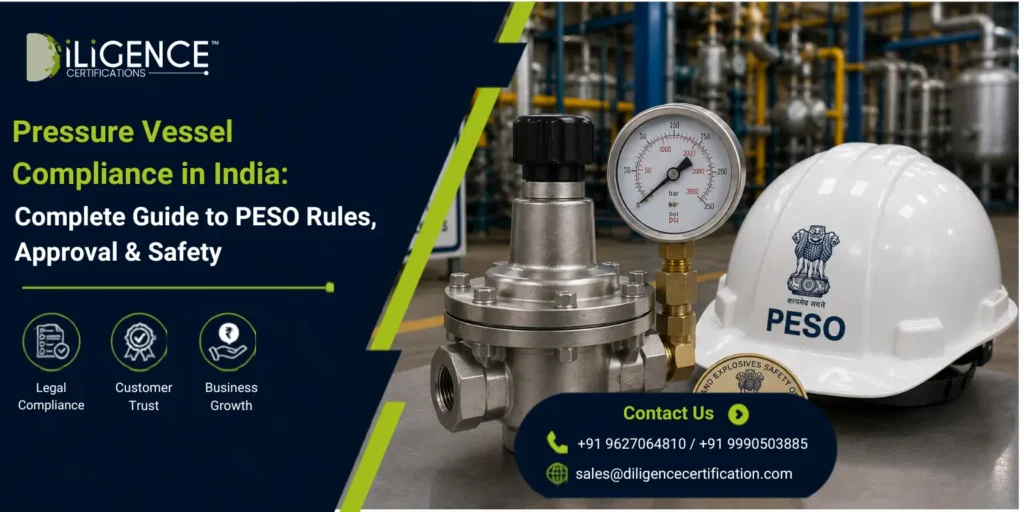
By - Pressure Vessel Compliance in India covers the design, fabrication, inspection, testing, installation, licensing and safe operation of applicable pressure vessels.
- For pressure vessels covered by the Static and Mobile Pressure Vessels (Unfired) Rules, 2016, PESO regulates the storage and transportation of specified compressed gases and cryogenic liquids.
- Compliance is not limited to obtaining a licence. Pressure-vessel design, safety fittings, relief valves, testing, premises, periodic inspection and operational controls must remain aligned with the applicable requirements.
Introduction
A pressure vessel can look like a straightforward fabricated tank from outside. In reality, it is a safety-critical piece of equipment designed to contain gas or other material under pressure.
A few years ago, an industrial project could treat the pressure vessel as one item on the equipment procurement list. Today, that approach creates problems. Design approval, fabrication, inspection, safety fittings, site installation and statutory licensing need to be considered together.
Pressure Vessel Compliance refers to meeting the applicable legal, technical and safety requirements governing a pressure vessel throughout its lifecycle.
For pressure vessels covered by the Static and Mobile Pressure Vessels (Unfired) Rules, 2016 (SMPV(U) Rules, 2016), PESO is the principal regulatory authority. PESO’s current SOP states that the framework covers storage and transportation of compressed gases, including cryogenic liquids, in static and mobile pressure vessels.
Why Is Pressure Vessel Compliance Important
Pressure vessels store energy in compressed gas or pressurised contents. If the vessel, fittings or protection systems fail, that stored energy can be released rapidly.
The result can range from a process interruption to a serious industrial accident.
Good Pressure Vessel Compliance therefore serves two purposes:
- It satisfies statutory requirements.
- It creates a documented safety framework for the equipment.
PESO’s SMPV(U) framework addresses pressure-vessel design, fabrication, inspection, testing, licensing, safety fittings and periodic compliance. Its current SOP specifically identifies activities such as stage-wise fabrication inspection, safety relief valve and fittings testing, periodic pressure-vessel testing, and certificates of safety for premises and vehicles.
Which Rules Govern Pressure Vessel Compliance in India
The principal regulation for applicable static and mobile unfired pressure vessels is the Static and Mobile Pressure Vessels (Unfired) Rules, 2016.
PESO maintains the current SMPV(U) Rules on its official website.
The framework applies to specified compressed gases and cryogenic liquids. PESO’s 2024 SOP identifies categories including:
- Corrosive, toxic and permanent flammable gases
- Non-corrosive, non-toxic and non-flammable gases
- Liquefied flammable gases
- LPG
- LPG for automotive purposes
- LNG
- Cryogenic liquids, including liquid nitrous oxide
- Liquid carbon dioxide
Other laws, rules, Indian Standards and engineering codes may also become relevant depending on the equipment and activity.
What Types of Pressure Vessels Are Covered
Pressure vessels encountered in Indian industry can be broadly divided into static and mobile applications.
Static Pressure Vessels
Static pressure vessels remain installed at a fixed premises.
Typical examples can include vessels used for:
- LPG storage
- LNG storage
- Industrial gases
- Carbon dioxide
- Ammonia
- Chlorine
- Other compressed gases
- Liquefied gases
- Cryogenic liquids
PESO’s SMPV(U) framework specifically regulates static pressure vessels used for storage of applicable compressed gases and related substances.
Mobile Pressure Vessels
Mobile pressure vessels are designed for transportation.
Examples can include:
- Gas tankers
- Road tankers
- Mobile cryogenic vessels
- Certain transport containers
- Other regulated mobile pressure vessels
The compliance requirements for a mobile vessel are not simply the static-vessel requirements placed on wheels.
Vehicle arrangement, mounting, transport safety, registration, inspection and the specific gas being carried must be considered.
Documents Required for Pressure Vessel Compliance
The exact checklist depends on the application, but a typical compliance file can contain several groups of documents.
Business Documents
- Certificate of incorporation or business registration
- PAN
- GST details
- Authorisation letter
- Ownership or lease documents
- Applicant details
Technical Documents
- Pressure-vessel design drawing
- General arrangement drawing
- Design calculations
- Material specifications
- Design-code details
- Nozzle details
- Safety-relief system details
- Technical specifications
Process and Installation Documents
- Process Flow Diagram
- Piping and Instrumentation Diagram
- Site layout
- Foundation details
- Piping arrangement
- Safety-distance drawings
- Fire-safety arrangements
- Emergency systems
Manufacturing and Quality Documents
- Material Test Certificates
- Welding Procedure Specifications
- Welder qualification records
- NDT reports
- Inspection reports
- Calibration certificates
- Hydrostatic/pneumatic test records
Regulatory Documents
- Application forms
- PESO approvals
- Inspection certificates
- Safety certificates
- Safety relief valve test certificates
- Previous licence, where applicable
- Renewal or amendment documents
PESO’s statutory forms also illustrate the type of technical information expected in pressure-vessel applications, including vessel specifications, manufacturer, inspection/testing details, safety-valve specifications and set pressure.
Pressure Vessel Compliance Process in India
A practical compliance workflow looks like this.
Step 1: Determine Applicability
Identify the vessel type, contents, capacity, pressure and intended activity.
Step 2: Select the Regulatory Route
Establish whether the equipment is covered by SMPV(U), Gas Cylinders Rules, Petroleum Rules or another framework.
Step 3: Freeze the Design
Complete the engineering basis before fabrication begins.
Step 4: Prepare Drawings and Calculations
Ensure that design drawings, calculations and specifications correspond.
Step 5: Obtain Required Design Review/Approval
Where applicable, submit the technical documents through the prescribed PESO process.
Step 6: Fabricate Under Controlled Inspection
Follow the applicable fabrication and inspection stages.
Step 7: Complete Testing
Perform the prescribed pressure, NDT and safety-device testing.
Step 8: Prepare the Installation
Ensure the site, foundation, piping, safety distances and protective systems correspond with the approved arrangement.
Step 9: Apply for the Applicable Licence
Submit the required documents and application through the PESO online system.
PESO provides an online application login for Petroleum, Gas Cylinders and SMPV(U) Rules on its official quick-links page.
Step 10: Attend Inspection
The site or vehicle may be inspected to verify compliance.
Step 11: Obtain Licence/Approval
Once the authority is satisfied with the compliance position, the applicable licence or approval can be granted and endorsed according to the rules.
Step 12: Maintain Ongoing Compliance
Continue periodic testing, inspections, renewals and controlled modifications.
Common Pressure Vessel Compliance Mistakes
Starting Fabrication Before Regulatory Review
This can create expensive redesign work.
Selecting the Vessel Code Too Late
The design code affects calculations, materials, fabrication and inspection.
Inconsistent Technical Documents
Drawings, calculations, certificates and test reports must describe the same equipment.
Ignoring Safety Fittings
A vessel is not compliant merely because the shell is satisfactory. Safety relief and measurement devices are part of the protection system.
Poor Modification Control
Changes in vessel location, gas service, piping or safety equipment should be assessed before implementation.
Missing Periodic Testing Dates
A valid initial approval does not remove ongoing testing responsibilities.
How Diligence Certifications Helps With Pressure Vessel Compliance
Pressure-vessel projects often involve several parties: the manufacturer, design consultant, EPC contractor, plant owner, inspection agency and regulatory authority.
Diligence Certifications helps coordinate the compliance side so that these moving parts remain aligned.
Our support can include:
- Regulatory applicability assessment
- SMPV(U) compliance review
- Document checklist preparation
- Technical-document coordination
- PESO application assistance
- Drawing and layout coordination
- Inspection preparation
- Testing coordination
- Safety relief valve compliance support
- PESO query response assistance
- Licence renewal support
- Amendment and modification assistance
- Ongoing compliance guidance
For businesses dealing specifically with fixed installations, our Static Pressure Vessel License guide provides additional information on licensing, documentation, testing and inspection.
Conclusion
Pressure Vessel Compliance is not a single certificate that can be obtained at the end of a project. It is a lifecycle requirement covering design, material selection, fabrication, inspection, testing, safety fittings, installation, licensing and continued operation.
For pressure vessels covered by the SMPV(U) Rules, 2016, PESO’s framework provides a structured regulatory system for static and mobile vessels used with specified compressed gases and cryogenic liquids. The current PESO SOP also makes clear that fabrication inspection, safety relief valve testing, periodic vessel testing and safety certification form part of the wider compliance framework.
The most effective approach is to involve compliance specialists before fabrication or installation begins. When the design, drawings, testing programme, site layout and regulatory documents are prepared together, businesses can avoid many of the costly corrections that appear during inspection.
Frequently Asked Questions
What is Pressure Vessel Compliance?
Pressure Vessel Compliance means meeting the applicable legal, engineering, inspection, testing, licensing and operational safety requirements for a pressure vessel. For applicable compressed-gas vessels, the SMPV(U) Rules, 2016 administered by PESO are a key regulatory framework.
Which pressure vessels require PESO approval?
The requirement depends on the vessel, capacity, stored gas, application and applicable regulatory framework. PESO's SMPV(U) framework covers specified static and mobile pressure vessels used for storage and transportation of compressed gases and cryogenic liquids.
What is the SMPV(U) Rules, 2016?
The Static and Mobile Pressure Vessels (Unfired) Rules, 2016 are Indian regulations governing specified pressure vessels used for storage and transportation of compressed gases and cryogenic liquids. PESO administers the relevant approval, licensing and inspection framework.
What documents are required for pressure vessel approval?
Depending on the application, documents may include design drawings, calculations, vessel specifications, material certificates, fabrication and inspection records, testing reports, safety-valve details, site drawings, safety certificates and statutory application documents.
Is a safety relief valve required on a pressure vessel?
Applicable pressure vessels must have appropriate pressure-relieving protection according to the governing requirements. PESO's SMPV(U) framework specifically identifies safety relief valves as safety fittings directly fitted to pressure vessels.
How often does a pressure vessel need testing?
The applicable testing interval depends on the vessel and governing provisions. The SMPV(U) framework includes periodic pressure-vessel testing under Rule 19 and separate testing requirements for safety relief valves and fittings.
Can an imported pressure vessel be used in India without PESO compliance?
Not automatically. An imported pressure vessel must be assessed against the applicable Indian regulatory requirements. PESO's statutory documentation includes specific requirements for applications involving imported pressure vessels.
What is the difference between a static and mobile pressure vessel?
A static pressure vessel is installed at a fixed premises, while a mobile pressure vessel is designed for transportation. Their regulatory requirements can differ because the installation, vehicle and transportation risks are different.
Can the pressure vessel design be changed after PESO approval?
Design or installation changes should be assessed against the applicable approval conditions before implementation. Changes to vessel specifications, location, safety fittings, gas service or installation can affect the approved compliance position.
How can Diligence Certifications help with Pressure Vessel Compliance?
Diligence Certifications can assist with regulatory applicability, technical documentation, PESO applications, inspection preparation, testing coordination, regulatory queries, licensing, renewal and ongoing compliance for applicable pressure-vessel projects.