BIS Certification
 CDSCO
CDSCO
 PESO
PESO
 CPCB
CPCB
 LMPC
LMPC
 WPC Approval
 Global Approvals
 TEC
TEC
 ARAI
ARAI
 BEE
BEE
 ISO Certification
 DGCA Certification
 NOC For Steel
 APEDA Registration























 Business Registration
 FSSAI Mark Certification












 (32).jpg)
 Legal Services
 Trademark Registration
 Copyright Registration
 Patent Registration
 By
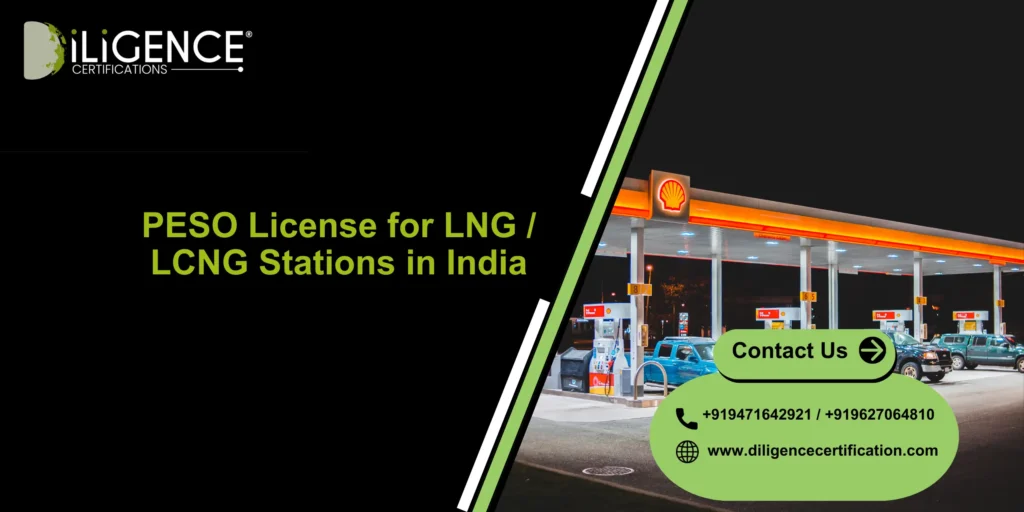
By - PESO License for LNG Stations is mandatory for LCNG stations handling cryogenic and compressed gas systems.
- LNG and LCNG stations need approval for storage, dispensing, safety systems, layout, and equipment installation.
- PESO approval helps prevent fire, leakage, explosion, and operational safety risks.
- Proper documentation, drawings, technical details, and compliance reports are required for approval.
- A professional consultant helps reduce rejection, delay, and technical errors during the licensing process.
Introduction | PESO License for LNG Stations
LNG and LCNG stations are becoming important in India because they support cleaner fuel usage for transport, industries, and commercial operations. LNG means Liquefied Natural Gas, and LCNG means Liquefied to Compressed Natural Gas. These stations deal with high-pressure gas, cryogenic temperature, storage tanks, vaporizers, compressors, dispensers, pipelines, and safety systems.
Because LNG and LCNG are highly sensitive fuel systems, they cannot be installed or operated without proper regulatory approval. In India, PESO plays a major role in approving such facilities. PESO ensures that the station is designed, installed, and operated according to safety rules.
A PESO License for LNG / LCNG Stations in India is required before starting commercial operations. It protects human life, property, nearby areas, and business operations from serious accidents.
What is PESO License for LNG / LCNG Stations?
“PESO License for LNG Stations” is a government certificate provided by Petroleum & Explosives Safety Organisation for establishing and running the LNG/LCNG fuel stations in India. It verifies the station’s compliance with the necessary safety measures pertaining to LNG storage, handling, conversion, compressing, and dispensing.
Natural Gas, when stored in liquefied form, is kept in specially designed cryogenic tanks at very low temperatures. LCNG stations further use LNG and compress it to compressed natural gas for fuel purposes. Both these processes carry technical hazards; hence, all technical aspects are verified by the PESO.
Key points:
- It is required for LNG storage and LCNG dispensing stations.
- It covers safety approval for tanks, pipelines, vaporizers, compressors, dispensers, and electrical systems.
- It verifies layout, distance, emergency systems, and fire safety arrangements.
- It ensures compliance before commercial operation.
- It reduces legal, operational, and safety risks for station owners.
Why is PESO License Required for LNG / LCNG Stations?
The PESO License is necessary since the stations involve handling flammable gas under delicate situations. Anything wrong during installation, test runs, and operations could result in leakage, fire outbreaks, explosions, machine breakdowns, and many more.
It assures you that the whole station has been installed according to the stipulated safety measures. It brings a sense of satisfaction to both the operators of the station and the fuel suppliers among others.
Key points:
- To comply with Indian safety regulations.
- To prevent fire and gas leakage risks.
- To ensure safe LNG storage and LCNG dispensing.
- To get permission before operating the station.
- To avoid penalties, closure, and legal action.
- To maintain public and worker safety.
- To build trust with fuel companies and authorities.
Importance and Benefits of PESO License for LNG / LCNG Stations
| Importance | Benefits |
| Legal approval | Allows the station to operate legally in India |
| Safety compliance | Reduces risk of fire, leakage, and explosion |
| Technical verification | Ensures tanks, dispensers, pipelines, and compressors are safe |
| Business credibility | Builds trust among customers, partners, and authorities |
| Risk control | Helps avoid accidents and operational shutdowns |
| Smooth operations | Supports uninterrupted fuel station activity |
| Regulatory protection | Reduces chances of penalties and legal issues |
| Better planning | Ensures proper layout, safety distance, and emergency systems |
| Investor confidence | Makes the project more reliable and compliant |
| Long-term business support | Helps in renewals, expansion, and future approvals |
Process to Get PESO License for LNG / LCNG Stations in India
The process of getting a PESO License for LNG / LCNG Stations involves technical review, documentation, inspection, and approval. Every detail must be accurate because PESO checks the project from a safety point of view.
Step 1: Project Requirement Analysis
First, the station type, capacity, location, storage system, dispensing system, and operational model are reviewed. This helps identify which approvals and documents are required.
Step 2: Site Layout Preparation
A proper site layout is prepared with details of LNG storage tanks, LCNG units, vaporizers, compressors, dispensers, safety distance, entry-exit points, firefighting systems, electrical area classification, and emergency arrangements.
Step 3: Document Collection
All required documents are collected from the owner, company, equipment supplier, and project team. These may include company documents, land documents, technical specifications, drawings, safety details, and equipment certificates.
Step 4: Technical Drawing and Design Review
The technical drawings are checked before submission. PESO usually requires accurate layout plans, piping drawings, tank details, safety system details, and installation drawings.
Step 5: Application Filing
The application is filed with PESO through the prescribed process. All forms, drawings, declarations, technical documents, and supporting certificates must be submitted correctly.
Step 6: PESO Scrutiny
PESO reviews the submitted application. If any document, drawing, or detail is incomplete, PESO may raise a query. The query must be answered properly with corrected documents.
Step 7: Site Inspection
In many cases, PESO may conduct an inspection to verify the actual installation, safety systems, equipment, and compliance with approved drawings.
Step 8: Query Resolution
If PESO finds any gap during document review or inspection, the applicant must correct it. Proper technical response is important to avoid delay.
Step 9: Final Approval
After successful review and compliance verification, PESO grants the license or approval for the LNG / LCNG station.
Step 10: Renewal and Compliance Maintenance
After approval, the station must continue following safety rules. Renewal, maintenance records, safety audits, and compliance updates are important for long-term operation.
Challenges of Getting This Certification Without a Consultant
Getting PESO License for LNG Stations without a consultant can be difficult because the process is highly technical. It is not just a basic form submission. It includes safety calculations, equipment details, drawing review, regulatory interpretation, and proper communication with authorities.
Many applicants face delays because of incorrect drawings, missing technical documents, wrong application category, incomplete safety details, or poor query response. Since LNG and LCNG stations involve high-risk fuel systems, PESO checks every detail carefully.
Key challenges:
- Difficulty in understanding PESO rules and approval requirements.
- Wrong selection of license category or application type.
- Incomplete layout drawings and technical documents.
- Missing equipment certificates and safety details.
- Improper safety distance planning.
- Errors in tank, compressor, dispenser, and pipeline details.
- Delay in replying to PESO queries.
- Higher chances of application rejection.
- Lack of coordination between owner, vendor, and regulatory authority.
- Difficulty in preparing inspection-ready documentation.
Why Choose Diligence Certification for PESO License for LNG / LCNG Stations?
Diligence Certification helps businesses get PESO License for LNG / LCNG Stations with proper documentation, technical guidance, and regulatory support. Our team understands the safety-sensitive nature of LNG and LCNG projects and supports clients from the first step to final approval.
We help in checking applicability, preparing documents, reviewing drawings, filing applications, coordinating with technical teams, replying to queries, and supporting approval requirements. Our goal is to make the process smooth, accurate, and compliant.
Key points:
- Expert guidance for PESO licensing and approval.
- Support for LNG and LCNG station documentation.
- Assistance in layout and technical drawing review.
- Proper filing of PESO application.
- Query handling and regulatory coordination.
- Reduced risk of rejection and delay.
- End-to-end support from planning to approval.
- Practical guidance for inspection readiness.
- Support for renewal and future compliance.
- Trusted compliance partner for Indian and global businesses.
Conclusion
PESO License for LNG / LCNG Stations in India is a critical approval for businesses planning to store, handle, convert, compress, or dispense natural gas. Since LNG and LCNG stations involve flammable gas, cryogenic systems, pressure equipment, and public safety risks, proper approval is not optional.
A legally approved station protects the business from penalties, shutdown, accidents, and operational delays. It also improves safety, credibility, and long-term business confidence.
With expert support from Diligence Certification, businesses can manage the PESO licensing process in a professional and systematic way. From documentation to approval, proper guidance helps save time, reduce errors, and ensure compliance.
Frequently Asked Questions
What is PESO License for LNG / LCNG Stations?
It is an approval issued by PESO for safe installation and operation of LNG and LCNG stations in India.
Is PESO License mandatory for LNG stations?
Yes, PESO approval is required for LNG storage, handling, and dispensing-related activities.
Is PESO approval required for LCNG stations?
Yes, LCNG stations need PESO approval because they involve LNG conversion, compression, and gas dispensing.
Who issues PESO License in India?
The Petroleum and Explosives Safety Organization issues PESO licenses and approvals in India.
Why is the PESO License important?
It ensures legal compliance, safety, accident prevention, and smooth operation of LNG / LCNG stations.
What documents are required for PESO License?
Documents may include company details, site layout, land documents, technical drawings, equipment certificates, safety details, and application forms.
Can I start an LNG / LCNG station without a PESO License?
No, operating without PESO approval can lead to penalties, closure, and serious legal consequences.
How long does PESO approval take?
The timeline depends on documentation accuracy, project complexity, inspection requirements, and query resolution.
What are common reasons for PESO application rejection?
Wrong drawings, missing documents, incorrect technical details, poor safety planning, and incomplete query replies can cause rejection.
How can Diligence Certification help?
Diligence Certification provides complete support for documentation, application filing, drawing review, query handling, and PESO approval coordination.